
REVIEW · WHALE WATCHING CRUISES
Whale Watching Cruise from Busselton, Augusta or Dunsborough
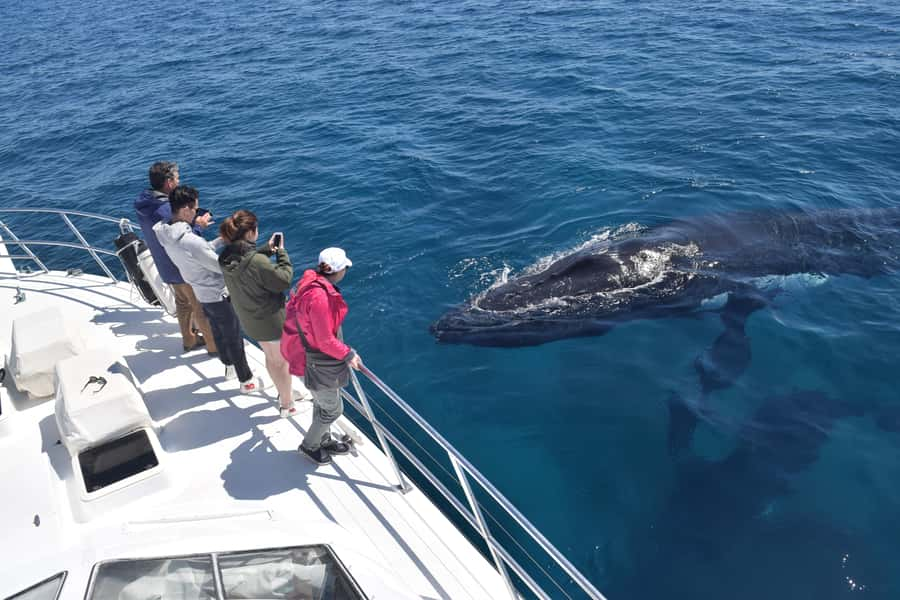
Whales can turn a quiet bay into a theater. This $67 cruise from Busselton, Augusta or Dunsborough combines a purpose-built boat, open viewing areas and a crew that knows how to read the water. I like the small passenger numbers and the chance to have a marine biologist explain what you are seeing. I also like the flexible route, since the departure point matches the whales’ seasonal movement.
The main caution is the sea itself. Conditions can be rough, and one passenger found the ride uncomfortable enough to recommend motion-sickness tablets. The trip lasts about two to two and a half hours, which gives you real time with the wildlife but can feel long for very young children. Still, the chance of seeing humpbacks, dolphins, seals, seabirds and even a pygmy blue whale makes this a strong-value outing.
Key points before you book
- Seasonal departure points: Augusta is used for humpback whales heading north from mid-May to mid-August, while Busselton and Dunsborough are used mainly from late August during the southern migration.
- Purpose-built whale boat: You get two levels and a full walk-around deck, so you can shift position when whales surface on another side.
- Strong whale-sighting record: The skipper has more than 15 years of whale-watching experience and reports fewer than 10 tours without a whale sighting.
- More than humpbacks: Southern right whales, pygmy blue whales, Minke whales, dolphins, seals and seabirds may appear.
- Good onboard teaching: A marine biologist is included on tours, and marine researchers may sometimes join the crew.
- Useful family touches: Tea and coffee are available, and there are books about whales plus simple toys for younger children.
Choosing between Augusta, Busselton and Dunsborough
The best departure point depends on the time of year, not simply on which town is closest to your accommodation. From mid-May to mid-August, the Augusta option follows humpback whales during their northern migration. From late August, departures from Busselton and Dunsborough focus on whales moving south toward Antarctica through Geographe Bay.
That seasonal pattern gives this experience a useful advantage. You are not taking the same generic cruise from one harbor all year. The operator adjusts its location to meet the migration, which can reduce the amount of time spent searching for wildlife.
Augusta may produce an especially quick start. Several trips have seen whales within a minute of leaving the harbor, and one account described sightings within 30 seconds. Of course, wildlife never signs a contract, but those reports show why the Augusta option can be exciting during the northern migration.
Busselton and Dunsborough offer access to Geographe Bay during the southern migration. The exact meeting point depends on the option you choose, so check your booking details carefully and allow time to find the harbor. Hotel pickup and drop-off are not included.
More Whale Watching Cruises in Australia
- Sydney: Whale Watching Adventure Cruise
★ 4.2 · 1,790 reviews - Brisbane Whale Watching Cruise from Redcliffe or Sunshine Coast
★ 5.0 · 997 reviews - Freedom 3/4 Day Hervey Bay Premium Whale Watching Cruise
★ 5.0 · 919 reviews
A boat designed for looking in every direction
The vessel is one of the better reasons to choose this cruise. It has two levels, a full safe walk-around area and enough room to move from one side to another. That matters because whales rarely perform on cue directly in front of your camera.
You might see a blow behind the boat, a tail ahead or dolphins riding alongside. A movable viewing position lets you respond instead of craning over someone’s shoulder. Several passengers especially appreciated having space to use the front, upper level and lower deck.
The operator describes the vessel as purpose-built for whale watching, with stability as a key feature. That does not mean the ride will feel smooth in every condition. One passenger specifically found the water rough and advised taking travel-sickness tablets if you have any doubt about your sea legs.
Anti-nausea wristbands are available onboard for $10, with a stated recommended retail price of $20. I would not wait until you feel sick to think about motion relief. Bring suitable medication if you already know you are sensitive, and wear warm clothing even on a pleasant day.
What the two-hour cruise feels like
The tour generally runs for two to two and a half hours. The early part takes you out from the harbor and into the whale-watching area. During this time, the skipper and crew explain what to look for, including blows, backs, tails, fins and the marks whales leave on the water.
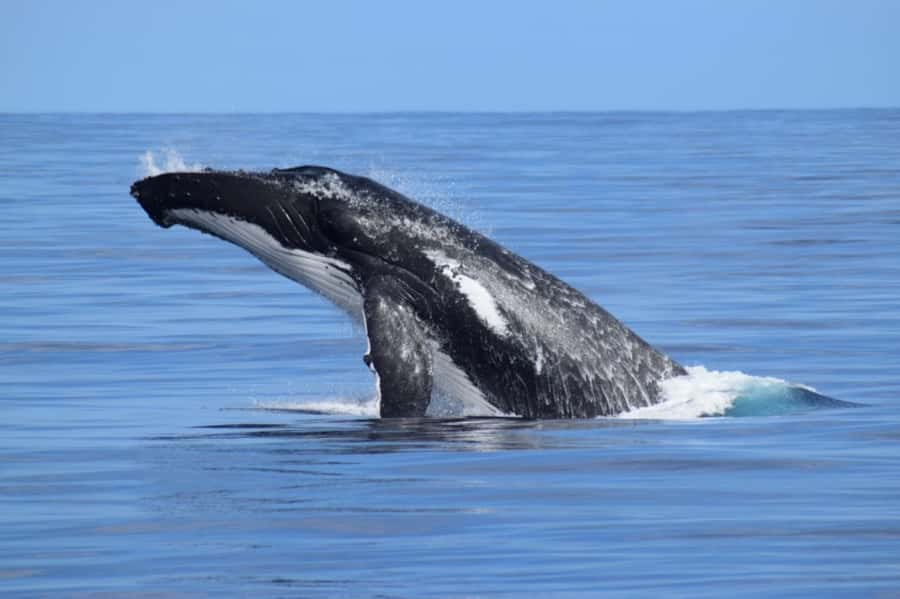
The skipper may point out a whale’s footprint, the smooth patch that can help reveal where an animal has just surfaced. This small lesson is useful. Once you know what to watch for, the open sea becomes easier to read, and you are less likely to miss a whale that surfaces only briefly.
When whales are found, the boat works to give everyone a fair view. Sightings have included single humpbacks, several pods and whales close beside, behind and ahead of the vessel. At times, the boat has stayed out longer because whale activity continued, though you should treat the advertised duration as the reliable plan rather than expect an extra hour.
The crew’s aim is not only to find whales but to explain their behavior. You may hear about migration, calves, tail flicks and mugging, the term used when whales stay close to a boat. That commentary gives the outing more purpose than simply pointing a camera at a distant blow.
The whales you might see
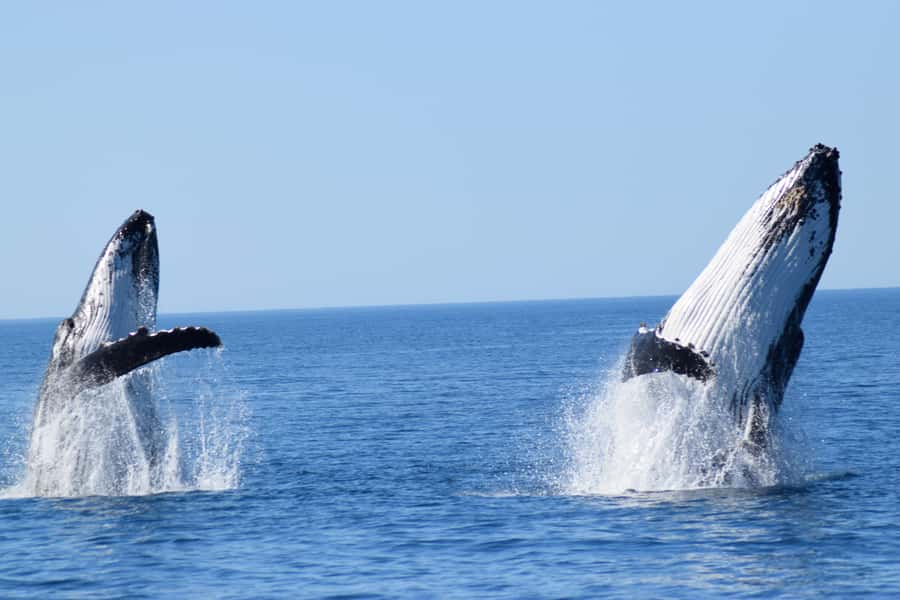
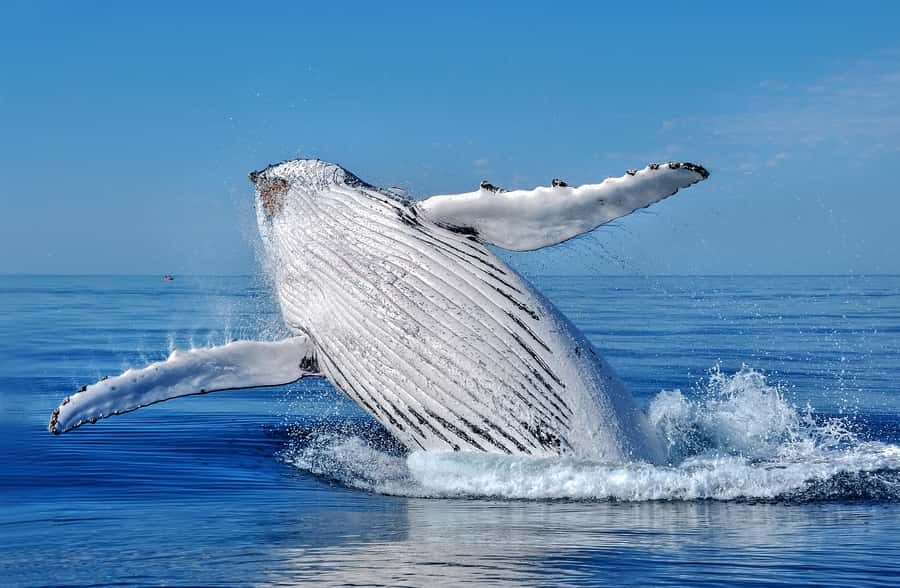
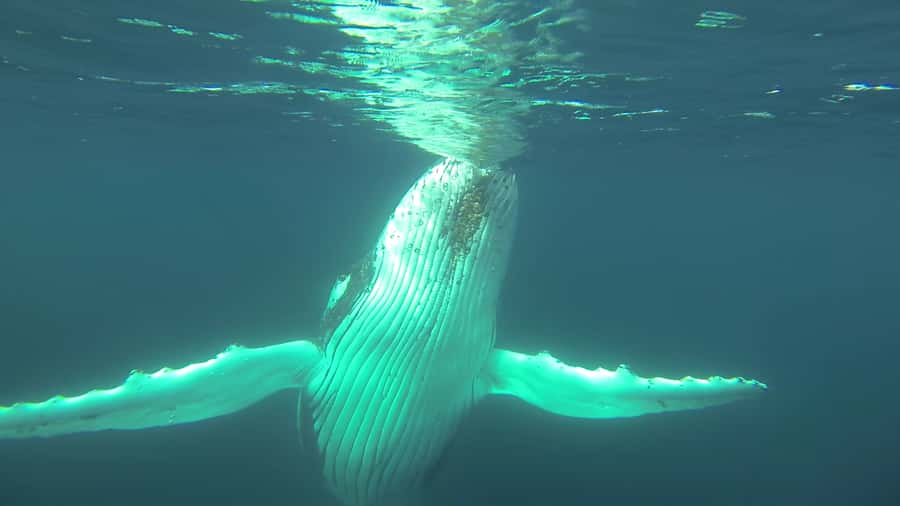
Humpback whales are the main attraction. During migration, they may travel in groups, rest in the bay, surface close to the boat or show more active behavior such as breaching and tail slapping. Sightings have included mothers with calves, escorts and young whales.
The experience can be quiet one minute and busy the next. Some trips have seen just a few migrating whales, while others have encountered multiple pods for much of the cruise. That difference is normal wildlife-watching luck, not a flaw in the operation.
Southern right whales are another possibility, especially during the cooler months. One trip followed a southern right whale and her calf. Pygmy blue whales and Minke whales have also been seen, and blue whale sightings have included several animals during a single cruise.
A blue whale is never something you should count on, but its possibility adds real excitement. The same goes for breaching. You may see a spectacular jump, or you may spend the morning watching backs and blows. The most dependable reward is learning how whales move and migrate in these coastal waters.
Same water, a different boat:
- All Inclusive Blue Mountain,Scenic World,Lunch,Koalas,ferry
★ 5.0 · 7,832 reviews - Great Barrier Reef Snorkeling and Diving Cruise from Cairns
★ 4.5 · 3,714 reviews - From Cairns: Great Barrier Reef Cruise by Premium Catamaran
★ 4.9 · 3,567 reviews - Blue Mountain: Small-Group Tour with Lunch & Scenic World
★ 4.8 · 3,009 reviews
Dolphins, seals and seabirds fill the gaps
Whale watching is the headline, but the rest of the wildlife helps keep the trip interesting while the crew searches. Dolphins have appeared in playful groups, sometimes close enough to provide a separate show. Seals and flying fish are also possible sightings.
Seabirds are seen on every tour according to the operator, so keep looking above the horizon as well as across the water. A flock of birds can reveal feeding activity, and the crew may help explain what is happening.
This variety is important for families. If a whale stays underwater for several minutes, younger passengers still have something to watch. The trip is not a guaranteed parade of breaches, but it is a broader marine-life outing with whales at its center.
The crew adds real value
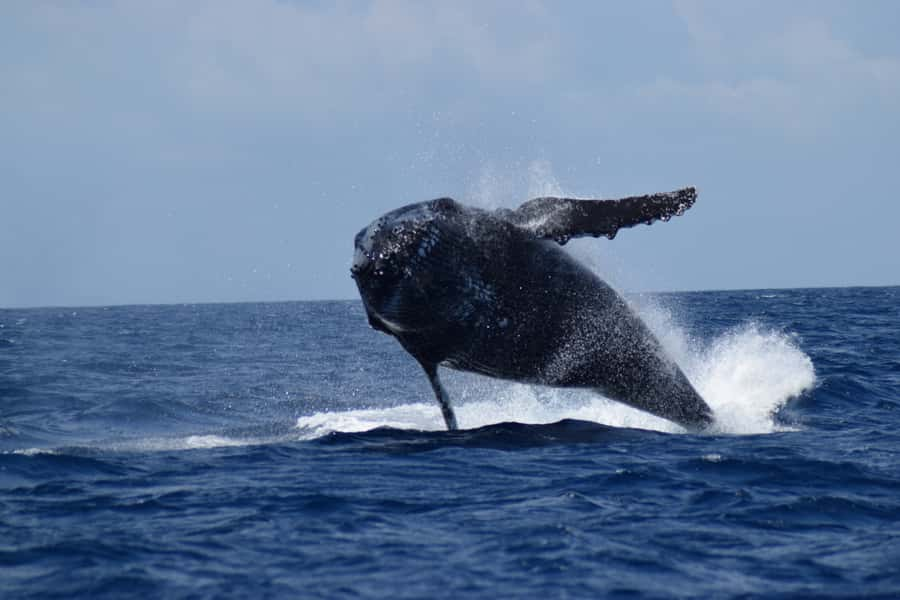
The strongest part of this cruise is the people on the boat. The skipper, known as Captain Zip, has more than 15 years of whale-watching experience and is described as entertaining as well as committed to finding wildlife. Other crew members named during trips include Tesh, Bugsy, Paul, Jess and Pete.
A marine biologist onboard adds useful context. You can ask questions and learn why whales behave differently during migration, how calves stay with their mothers and what you are seeing when a whale tail-slaps or surfaces at an angle.
Marine researchers may also be onboard from time to time. That does not turn the trip into a formal research expedition, but it can add another layer of insight for anyone curious about marine science.
The crew also works with other charter boats in the area to help people get good views without creating unnecessary confusion. That cooperative approach matters when several boats are watching the same pod.
Family comfort and onboard extras
The boat has a cabin where children can sit when they need a break from the wind or motion. There are toys for younger children and educational whale books for older kids. One parent found the two-hour duration a little long for young children, but the cabin helped keep the outing manageable.
Tea and coffee are available onboard. Warm clothes are still essential because wind can make the boat feel cooler than the harbor, even on a sunny day. Bring a camera, but keep your attention on the water too. The best moment may happen on the opposite side of the boat.
Pets are not allowed. Since hotel transportation is not included, you will need to arrange your own way to the relevant meeting point. Parking is described as available near at least some departure locations, including Augusta, but the meeting point can change by booking option.
Is $67 good value?
At $67 per person, this is competitively priced for a two-hour-plus marine wildlife cruise, especially given the spacious vessel, experienced skipper and possible marine biologist. You are paying for more than transport across the bay. The boat, wildlife search, safety setup and commentary are all part of the value.
The price looks even better when the trip produces several pods, dolphins or a rare blue whale sighting. But you should judge the value fairly. No operator can guarantee breaching, close approaches or a particular species. You are buying a well-organized opportunity to see wild animals, not a staged performance.
The repeat-tour promise helps reduce the risk. If no whales are sighted in the unlikely event that happens, you are offered a complimentary repeat tour. You would still need to arrange time for another outing, so this matters most if your schedule allows flexibility.
Free cancellation up to 24 hours before departure and a reserve-now, pay-later option make planning easier. These terms are useful for a weather-dependent activity, but always check the exact option and meeting point before finalizing your day.
Who will enjoy this most?
I would recommend this cruise to anyone who wants a serious chance to see migrating whales without paying for a luxury charter. The open deck and full walk-around design suit photographers, families and first-time whale watchers who want to shift position easily.
It is also a good fit if you value explanation as much as excitement. The crew’s commentary and marine biology input make quiet stretches more interesting, and you may come away understanding the animals rather than simply collecting a few photographs.
Families should consider the sea conditions and duration. Children who enjoy animals will have plenty to watch, but two hours or more can test a young child’s patience. The cabin, books and toys help, but they do not remove the motion or wind.
If you are prone to seasickness, prepare before boarding. The boat is described as stable and purpose-built, but stable does not mean motionless. Warm clothing and nausea protection are the two most practical things you can bring.
Should you book this whale cruise?
I would book it if you are in southwest Western Australia during the right migration period and can spare a flexible morning or afternoon. The strongest reasons are the reasonable price, spacious viewing areas, experienced skipper and unusually broad range of possible wildlife.
Choose Augusta from mid-May to mid-August for the northern migration. Choose Busselton or Dunsborough from late August for the return south. If whale watching is a bucket-list priority, leave room in your schedule for the complimentary repeat tour in case nature refuses to cooperate.
This is not the right pick if you need a guaranteed close-up encounter, dislike boat motion or have only a tightly packed schedule. For most people who accept those limits, it offers a thoughtful, family-friendly and very good-value way to meet Western Australia’s migrating whales.
FAQ
How much does the whale-watching cruise cost?
The advertised price is $67 per person.
How long does the cruise last?
The cruise lasts about two to two and a half hours, listed as 2 to 150 minutes.
Where does the cruise depart from?
Departures are available from Augusta, Busselton or Dunsborough. The meeting point varies according to the option booked.
When should I choose Augusta?
Augusta is used from mid-May to mid-August, when humpback whales are traveling north.
When should I choose Busselton or Dunsborough?
Busselton and Dunsborough departures operate from late August as humpbacks travel south toward Antarctica.
What whales might I see?
Possible sightings include humpback whales, southern right whales, pygmy blue whales and Minke whales.
Can I see other marine life?
Yes. Dolphins, seals and marine birds may also be seen. Flying fish have been spotted on a previous trip.
What happens if no whales are seen?
In the unlikely event of no whale sightings, you are offered a complimentary repeat tour.
Is a marine biologist onboard?
A marine biologist is onboard the tours, and marine researchers may also sometimes join the trip.
What should I bring?
Bring warm clothing and a camera. Pets are not allowed, and hotel pickup and drop-off are not included.
Just added around Australia
- From Hervey Bay: Remote K’gari Tour by Boat with Lunch★ 4.9 · 1,229 reviews
- Port Douglas: Quicksilver Outer Barrier Reef Full-Day Cruise★ 4.8 · 506 reviews
- Port Stephens: Dolphin Discovery Cruise★ 4.4 · 926 reviews
- Port Douglas: Sunset Sailing Cruise on Luxury Catamaran★ 4.6 · 342 reviews
- Port Douglas: River Cruise, Crocodile Spotting, Drink/ Snack★ 4.6 · 353 reviews
- Port Douglas: Outer Great Barrier Reef Snorkeling Cruise★ 4.9 · 711 reviews
- Port Douglas: Low Isles Glass Bottom Boat & Snorkeling Tour★ 4.7 · 469 reviews
- Port Arthur Tasman Sights with Harbour Cruise★ 4.8 · 358 reviews
Whale Watching Cruises, compared.
Eco-Yacht Whale and Dolphin Watching and Swimming
Read our review →
Los Cristianos Respectful No-Chase Whale and Dolphin Safari
Read our review →

Costa Adeje: Whale & Dolphin Eco-Cruise with Snacks & Drinks
Read our review →
Los Gigantes: Dolphin & Whale Watching Cruise with Swim Stop
Read our review →Browse the lists this tour appears in