
REVIEW · WHALE WATCHING CRUISES
Monterey: Monterey Bay Dolphin and Whale Watching Boat Tour
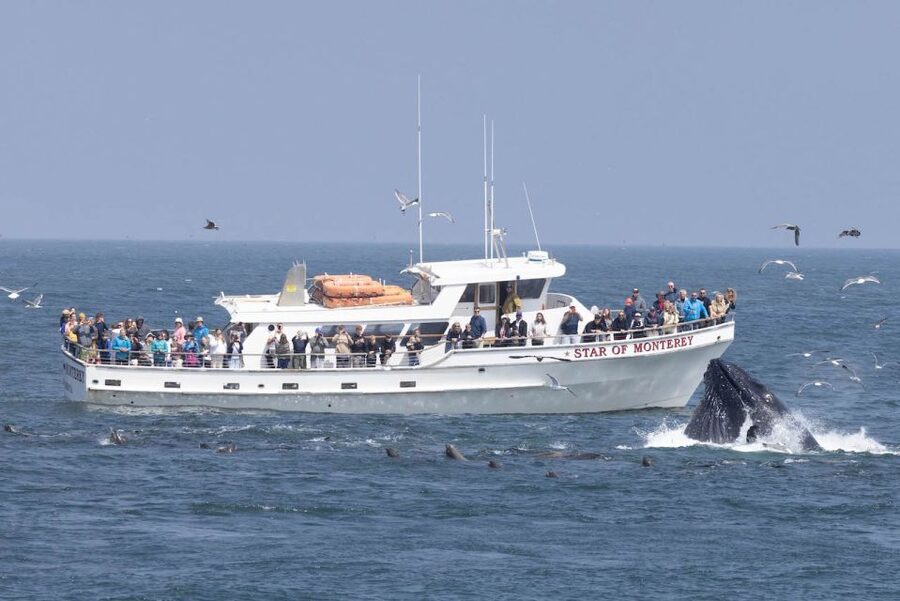
Whales can turn a calm bay into theater. This three-hour cruise from Old Fisherman’s Wharf gives you a strong chance to see humpback and gray whales, dolphins, sea lions, seabirds, and other marine life while a guide explains Monterey Bay’s fragile ecosystem. I especially like the small-boat feel reported on many departures, since it can give you better sightlines than a large sightseeing vessel. I also like the crew’s friendly, hands-on approach, with guides such as Kevin and captains such as Harry and Tinker praised for helping people spot animals and stay comfortable.
The main caution is the ocean itself. Choppy water and even very large waves have been reported, and one person became seriously seasick despite the crew’s help. Parking instructions also need more care than the simple wording suggests, so allow time to find the correct area at the wharf.
Key points at a glance
- Three hours on Monterey Bay: Long enough to reach whale areas without turning the outing into an all-day commitment.
- Small boats on some departures: A group of roughly 15 people was reported on one boat, offering wide views and a more personal feel.
- Humpbacks are the main stars: Sightings can include feeding, breaching, tail slaps, mothers with calves, and whales close to the boat.
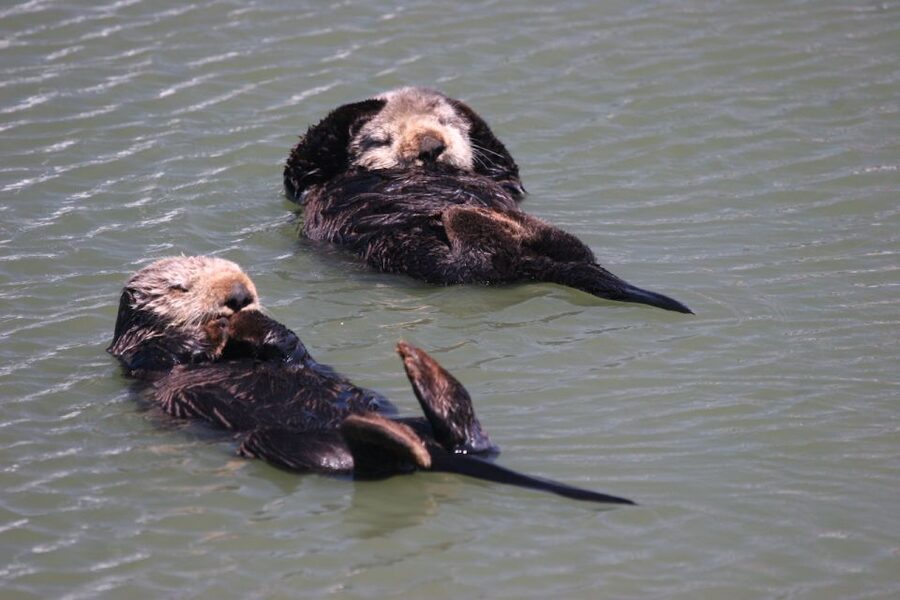
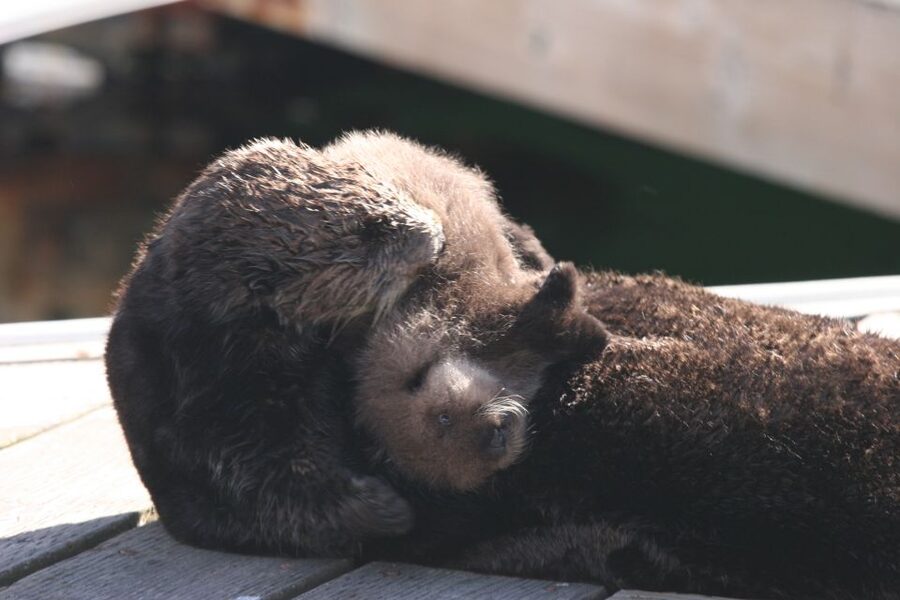
- Plenty beyond whales: Look for sea lions, harbor seals, sea otters, dolphins, porpoises, birds, turtles, sharks, and possibly orcas.
- Strong crew praise: Kevin is often singled out for humor, ecology knowledge, and attention to passengers, while captains are praised for safe handling.
- $62 can be good value: You get a guided three-hour cruise, but the value depends on sea conditions and how much wildlife is active that day.
Leaving Old Fisherman’s Wharf
The outing begins at 48 Fisherman’s Wharf #1 in Monterey, near the restaurants, shops, and harbor activity of Old Fisherman’s Wharf. The stated parking address is 201 Washington Street, followed by the walk to the wharf departure point. In practice, this is the part I would plan most carefully.
The parking directions have confused some people, and one passenger said closer parking was available but not obvious from the instructions. I would arrive early, use the exact addresses in your booking information, and allow extra minutes for walking along the wharf. A late arrival would be a poor start to a trip that depends on a boat leaving on time.
The harbor itself gives you a useful opening scene. Keep watch near the shallow banks for birds and otters before the boat reaches open water. This early stretch also helps you understand that the trip is not only about chasing a large whale. Monterey Bay supports many smaller creatures, and the guide may point out signs of that busy food chain right away.
More Dolphin Watching Boat Trips in the USA
- Shell Island Snorkel and Dolphin Catamaran Cruise with Island Time
★ 5.0 · 4,362 reviews - Sunset & Dolphin Catamaran Cruise with Island Time
★ 5.0 · 1,867 reviews - Small Group 2 Hour Dolphin Cruise with Snorkeling to Shell Key
★ 5.0 · 1,523 reviews
The first ride across Monterey Bay
Once the boat clears the harbor, the tour becomes a proper sea outing. The captain works toward areas where wildlife has been seen, while the guide explains the bay’s ecology, seasonal whale movements, migration, and mating patterns. That context makes the waiting more interesting, especially during quiet stretches when the animals are below the surface.
The route can include views toward sandy beaches and rocky ledges along the Monterey coastline. One outing included a run toward Carmel and back, though the exact route depends on wildlife, conditions, and the captain’s judgment. You are not taking a fixed scenic loop with a guaranteed list of stops. The crew adjusts the trip to make the most of current sightings.
That flexibility matters. Whale watching is not a zoo visit, and no ethical operator can promise a breach on command. The boat may spend time following a humpback group, move toward reports of another sighting, or pause near feeding sea lions. The best outings described here included whales close to the boat, but you should book for a wildlife search, not a scripted performance.
Humpback whales, breaching, and feeding activity
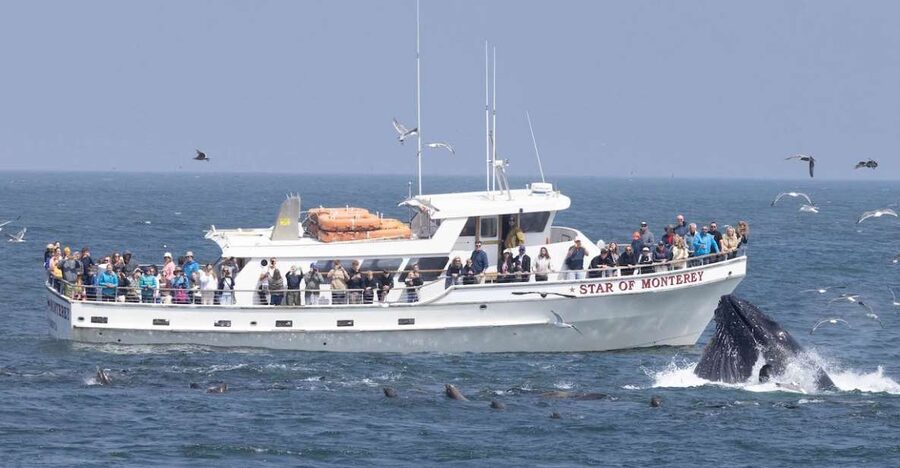
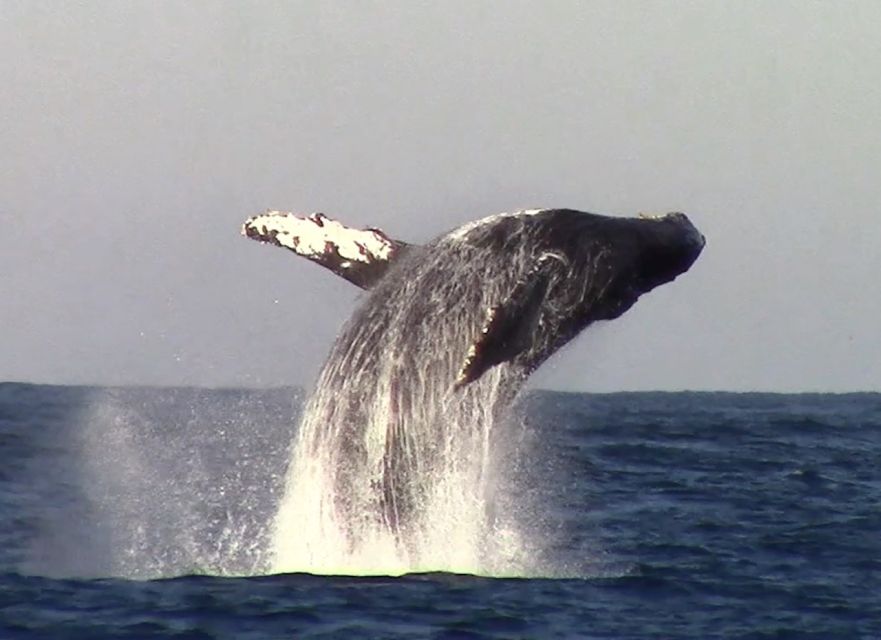
Humpback whales are the most consistently praised highlight. Sightings have included several whales close to the boat, pairs breaching, individual breaches, repeated tail displays, and a mother with her calf. One especially memorable outing spent about 45 minutes with a humpback cow and calf, giving passengers time to watch behavior rather than simply glimpse a back and move on.
You might also see humpbacks feeding near sea lions. Several trips featured a sea lion feeding frenzy, a noisy and exciting scene that can be as entertaining as the whales themselves. Sea lions may leap, bark, and compete for food while birds gather above the action.
The boat’s size can help here. A smaller vessel may let more people see over the rail without crowding around one viewing platform. One passenger described a boat carrying about 15 people and felt that the arrangement gave everyone good visibility. Another noted that the boat was older and somewhat awkward to move around, so small does not necessarily mean polished or spacious.
Guides make a real difference during whale sightings. Kevin received repeated praise for explaining animal behavior, answering questions, walking around the boat, and keeping the mood lively. Lauren was also described as attentive, while other trips had guides who combined marine facts with personal stories. The quality of the commentary may vary by departure, but the strongest reports describe a guide who actively helps you understand what you are seeing.
Dolphins, orcas, seals, and smaller wildlife
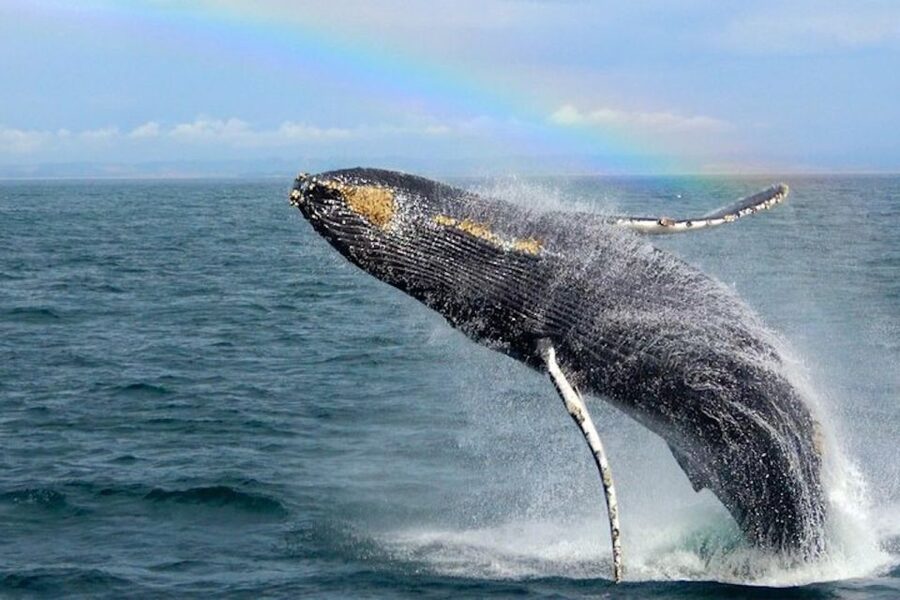
Whales get the billing, but Monterey Bay can keep you busy even when a humpback disappears. The listed wildlife includes bottlenose dolphins, porpoises, turtles, sharks, harbor seals, elephant seals, sea lions, sea otters, and many kinds of birds. Sightings in the supplied trip accounts included dolphins playing near the boat, otters, seals, sea lions, cormorants, albatrosses, and migrating birds.
Dolphins can be quick and unpredictable. You may see them leap near the bow or move alongside the boat for a short spell. That is a good reason to keep your camera ready, but also to look up from the screen. A phone may capture a splash, while your eyes catch the whole movement.
The birds deserve attention too. Cormorants and other seabirds often reveal where fish are concentrated, and an albatross can be an impressive sight on its own. The guide may connect these birds to the wider food web, showing why the bay is considered one of the most ecologically varied marine areas nearby.
Orcas are possible, but they should not be treated as a normal part of every trip. The experience description includes killer whales, and one departure saw orcas along with humpbacks and sea lions. That is a fortunate sighting, not a promise. The same rule applies to turtles and sharks.
More Whale Watching Cruises in the USA:
- Boston: City Cruises Whale Watching Cruise
★ 4.5 · 4,710 reviews - City Cruises Boston Whale Watching Cruise by High-Speed Boat
★ 4.5 · 3,115 reviews - San Diego Whale Watching Cruise
★ 5.0 · 2,317 reviews - Luxury Snorkel Cruise, Local Buffet with Whale & Dolphin Watch
★ 4.5 · 1,334 reviews
Learning about a fragile bay
The ecological talk is one of the better reasons to choose a guided cruise instead of simply renting a boat. You learn about the nearby kelp forest, the underwater terrain, the habits of different whale species, and the protection work aimed at keeping Monterey Bay healthy.
The kelp forest is not just scenery. It helps explain why so many kinds of animals gather here. Whales, sea lions, seabirds, seals, and fish are connected by the food available in and around the bay. A guide who explains that relationship gives you a much clearer picture than a list of animal names.
Seasonal timing also shapes the experience. Humpbacks may be present during feeding periods, while gray whales follow migration routes. The trip description also discusses mating patterns and seasonal movements, giving you useful context for why one month may bring different sightings from another.
The guide commentary appears strongest on departures led by people who enjoy teaching. Kevin was frequently praised for being funny, attentive, and well informed about marine life. One passenger did note that a small-boat trip had almost no explanation of whale behavior, so you should not assume every guide will provide the same level of detail.
The ride itself: small boat advantages and rough-water limits
The crew has earned praise for handling difficult conditions. Several people described choppy seas, and one mentioned waves around five meters. Captains were credited with finding wildlife while keeping the boat safe, and crew members helped passengers who became seasick.
That does not make rough water comfortable. If you are prone to seasickness, this is a serious consideration, not a minor footnote. The open bay can move sharply, and a three-hour trip gives you plenty of time to feel the effects. Wear comfortable clothes and shoes, but also think carefully about your own tolerance for motion.
Some boats are older, and moving around may be awkward. Still, passengers often stopped caring about the boat once whales, sea lions, and birds appeared. I would frame the choice this way: you are paying for access to the bay and the crew’s wildlife-finding skills, not for a luxury yacht.
The smaller format has a second advantage. It can feel more direct and social, with the guide able to speak to people around the boat rather than addressing a distant crowd. The tradeoff is less room, less shelter, and possibly more motion than you would feel on a larger vessel.
Is three hours the right length?
Three hours is a sensible compromise. It gives the captain time to leave the harbor, reach active wildlife areas, watch animals for a while, and return without consuming your entire day in Monterey.
Several passengers felt the duration was just right. One person who had seen humpbacks, dolphins, seals, and other wildlife found three hours long enough to see what the bay had to offer. That timing also leaves room to eat or explore around Fisherman’s Wharf before or after the cruise.
Still, three hours at sea can feel long if conditions are rough or sightings are slow. This is not a quick harbor ride. You should be ready for open-water movement and stretches of scanning the horizon. The reward is that a quiet period can suddenly turn into a close whale encounter or a feeding rush.
What to bring and how to prepare
The official advice is simple: bring comfortable shoes, a camera, and comfortable clothes. I would take that seriously. You will want stable footwear on a moving deck, layers for changing conditions, and a camera that can react quickly to a whale surfacing for only a few seconds.
Keep your camera ready, but do not watch the whole outing through a screen. Whales may appear in a different direction from the one you expect, and the guide’s call can come only moments before a breach or tail slap.
You should also prepare for spray and motion. The information supplied does not specify food, drinks, restrooms, or onboard shelter, so do not assume those services are included. The listed inclusions are the boat cruise and an English-speaking guide.
The tour is not suitable for wheelchair users. If mobility access is important for your group, confirm the boat arrangement before booking rather than relying on a general harbor-access assumption.
What $62 means in practical value
At $62 per person, this is a fair price for a three-hour guided wildlife cruise, especially when you consider the captain, naturalist-style commentary, and access to a part of Monterey Bay that you cannot experience from the wharf. The strongest trips produced multiple whale sightings, close approaches, dolphins, sea lions, and birds, making the cost feel very reasonable.
The value is less certain if your main goal is one specific animal. Orcas, turtles, sharks, and gray whales are possible but not assured. Humpbacks appear to be the most dependable headline sighting based on the recorded outings, yet nature still controls the schedule.
I also like the flexibility of reserving now and paying later, along with free cancellation up to 24 hours before departure for a full refund. Those terms help if your Monterey plans are still moving around, though you should always check the exact conditions attached to your reservation.
Who should book this Monterey cruise?
I would choose this outing if you want a focused half-day activity with a real chance of seeing several marine species. It suits families, couples, photographers, wildlife fans, and anyone who enjoys learning while looking for animals in the wild.
It is also a good fit if you prefer a smaller boat and personal contact with the crew. Kevin’s repeated praise, along with positive comments about captains Harry and Tinker, suggests that the human side of the trip can be a major part of the fun.
I would hesitate if you dislike boat motion, need wheelchair access, or expect a polished luxury vessel. I would also avoid treating the tour as a guaranteed orca trip. The best mindset is patient and flexible: you are entering a living bay, not buying a timed animal show.
Should you book it?
Yes, if you can handle open-water conditions and want a strong-value wildlife outing from Monterey. The combination of a three-hour schedule, small-boat sightings on some departures, enthusiastic guides, and frequent humpback encounters makes the $62 price appealing.
Book with realistic expectations, arrive early because the parking directions can be unclear, and dress for motion and changing conditions. If the sea is kind, you may see breaching whales, a mother and calf, dolphins, sea lions, and a busy flock of birds in one memorable morning. If it is rough, the crew may work hard and still leave you feeling every wave.
FAQ
How long is the Monterey whale watching tour?
The cruise lasts three hours, including the ride out from Old Fisherman’s Wharf and the return trip.
Where does the boat tour meet?
The meeting point is 48 Fisherman’s Wharf #1 in Monterey, California. The parking information gives 201 Washington Street as the address to use before proceeding to the wharf.
How much does the experience cost?
The listed price is $62 per person.
What animals might I see?
Possible sightings include humpback and gray whales, dolphins, porpoises, sea turtles, harbor seals, elephant seals, sea lions, sea otters, sharks, seabirds, and possibly killer whales.
Is an English-speaking guide included?
Yes. The boat cruise and a live English-speaking guide are included.
What should I bring?
Bring comfortable shoes, a camera, and comfortable clothing suitable for a boat ride.
Can I cancel for a full refund?
You can cancel up to 24 hours in advance for a full refund, according to the stated booking conditions.
Is the tour suitable for wheelchair users?
No. The activity is listed as not suitable for wheelchair users.
Just added around the USA
- San Francisco: Bridge to Bridge Cruise (90-minutes)★ 4.7 · 1,010 reviews
- San Francisco: Skip-the-Line 1-Hour Bay Cruise by Boat★ 4.6 · 1,483 reviews
- San Francisco Bay Sunset Cruise by Luxury Catamaran★ 4.8 · 1,097 reviews
- San Francisco: Golden Gate Bridge Catamaran Cruise★ 4.9 · 499 reviews
- San Diego: Patriot Jet Boat Thrill Ride★ 4.8 · 395 reviews
- Alcatraz Island Prison Tour & Bay Cruise Combined Package★ 4.6 · 399 reviews
- San Francisco: Inside Alcatraz Tour with Bay Cruise★ 4.5 · 1,577 reviews
- San Francisco: Alcatraz with San Francisco Bay Cruise★ 4.5 · 1,049 reviews
Whale Watching Cruises, compared.
Eco-Yacht Whale and Dolphin Watching and Swimming
Read our review →
Los Cristianos Respectful No-Chase Whale and Dolphin Safari
Read our review →

Costa Adeje: Whale & Dolphin Eco-Cruise with Snacks & Drinks
Read our review →
Los Gigantes: Dolphin & Whale Watching Cruise with Swim Stop
Read our review →Browse the lists this tour appears in