
REVIEW · RIVER CRUISES
From Aswan: 4-Day Nile Cruise from Aswan to Luxor with Guide
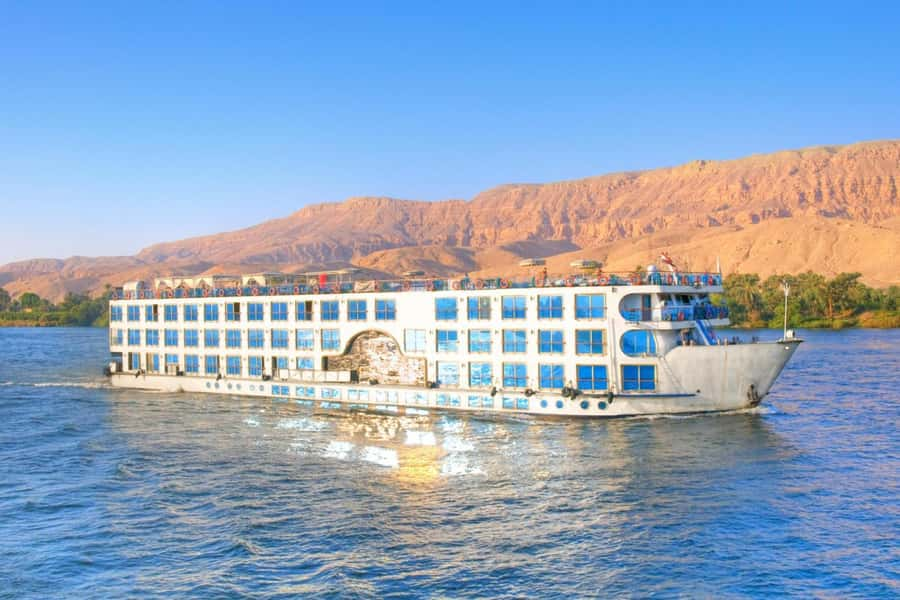
The Nile turns sightseeing into a journey. This four-day cruise from Aswan to Luxor combines a comfortable floating hotel, full-board meals, and guided visits to Egypt’s most famous Upper Nile monuments. You begin with Philae Temple, sail north through desert scenery, stop at Kom Ombo and Edfu, then finish with the Valley of the Kings, Hatshepsut Temple, Karnak, and Luxor Temple.
I like the way the cruise joins several major sights without forcing you to repack every morning. I also like the strong practical support, including hotel transfers and WhatsApp updates from the tour operator. The main drawback is Day 4, which packs a great deal into one day, while some visits, especially Edfu, can feel rushed. The ships can also vary in age and condition, despite the advertised 5-star category.
Key points to know before booking
- Philae Temple begins the trip beautifully: You reach the island temple by boat, with colonnades and sanctuaries set against the Aswan skyline.
- Abu Simbel is optional: The early start adds one of Egypt’s biggest monuments, but it turns an already full day into a long outing.
- Kom Ombo is unusual and easy to understand: Its paired design honors Sobek and Horus, with each deity receiving its own side of the temple.
- Edfu is a major payoff: The Temple of Horus is remarkably complete, though the visit may be short because of sailing times.
- Luxor’s final day is packed: The Valley of the Kings, Hatshepsut, Memnon, Karnak, and Luxor Temple all appear before your evening hotel drop-off.
- Guide quality matters: Guides such as Mary, Mariam, Ahmed Sony, Manal, and Shaimaa Baheeg have received especially warm praise, but guide assignments can change.
Why a Nile cruise works so well here

Upper Egypt is a string of monuments spread along the river. You could arrange separate car transfers between Aswan, Kom Ombo, Edfu, and Luxor, but that would mean repeated packing, hotel changes, and long hours on the road.
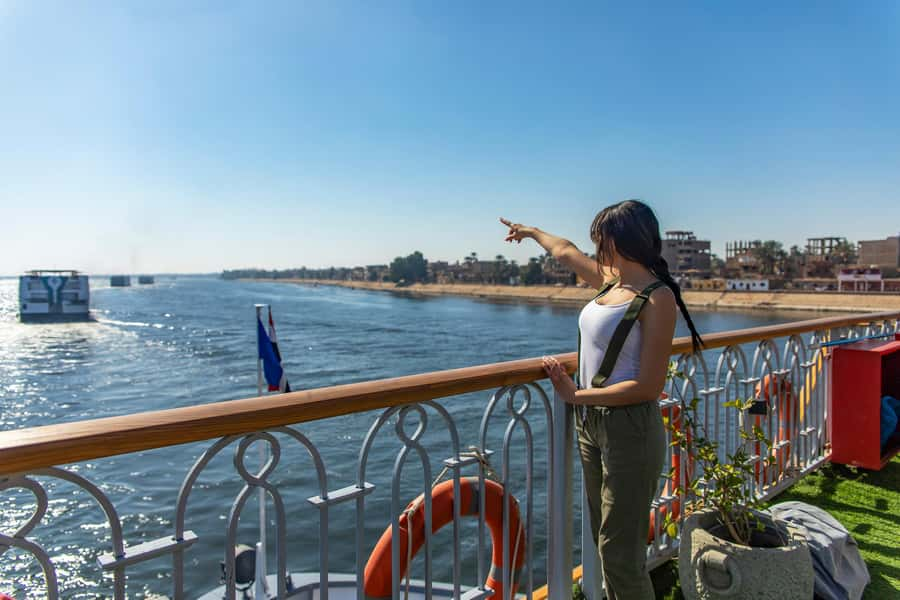
This cruise gives you a moving base. During the day, you visit temples with a guide. Between stops, you return to the ship for lunch, a swim or rest, and views of the riverbanks. I like this rhythm because it leaves room for the journey itself, not just the monuments.
You pay about $830 per person for four days, including three nights aboard the ship, full-board meals, guiding, drivers, hotel pickup and drop-off, and lunch at a local restaurant in Luxor. Entry fees and drinks are extra. The price is not cheap, but it can represent fair value if you want the main sights arranged for you and prefer comfort over independent logistics.
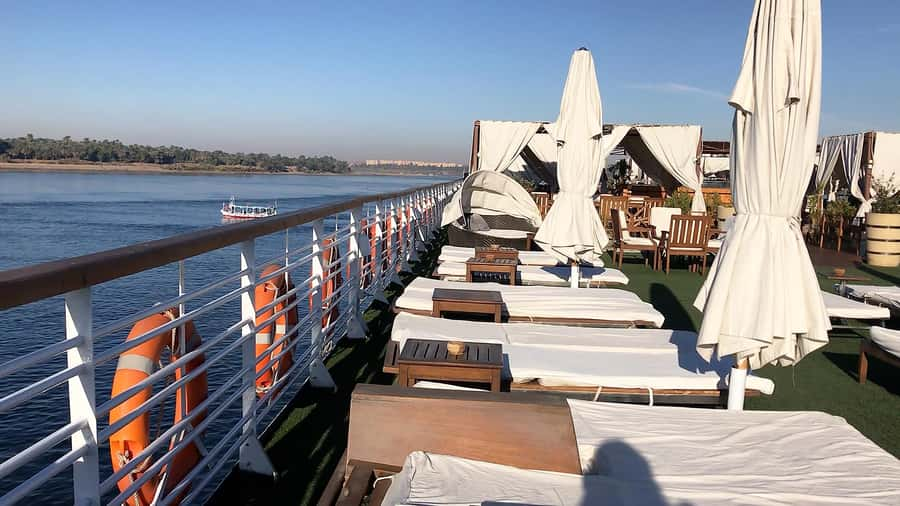
The phrase 5-star ship needs a little caution. Some people describe their boat as luxurious, clean, modern, and very comfortable. Others note that their ship was older than expected, and the fleet can vary. A Nile cruise is not always a polished international hotel at sea. Think of it as a comfortable sightseeing base with a good dining room, friendly staff, and public spaces, but with standards that may differ from ship to ship.
More River Cruises in Egypt
- 4-Days Nile Cruise From Aswan To Luxor including Abu Simbel and Hot Air Balloon
★ 5.0 · 3,142 reviews - Cairo: Dinner Cruise on the Nile River with Entertainment
★ 4.2 · 2,190 reviews - Cairo: Nile Sunset Dinner Cruise, Show & Optional Transfer
★ 4.1 · 2,184 reviews
Day 1: Philae Temple and your first night on the Nile
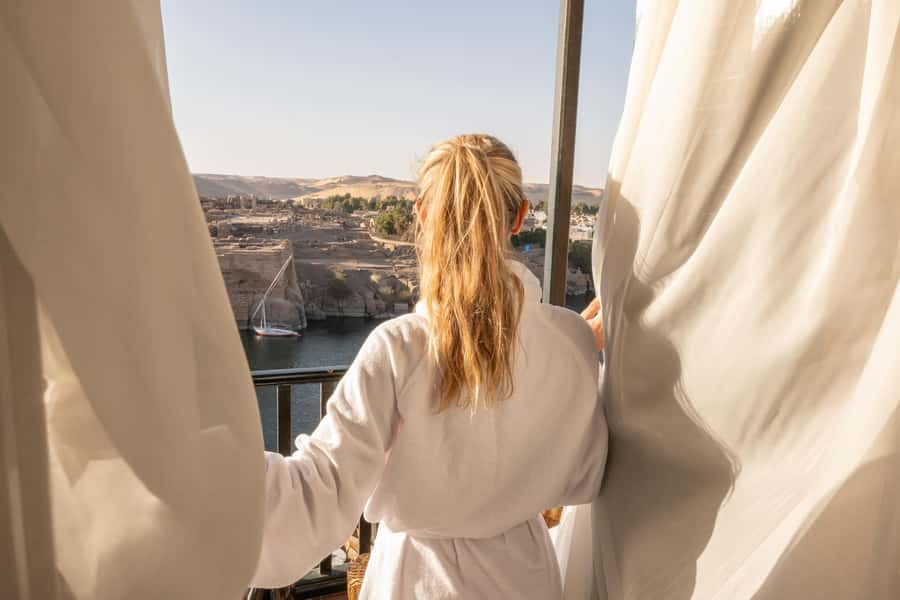
Your guide collects you from your Aswan hotel and takes you to Philae Temple. The temple sits on an island, so the approach by boat is part of the experience. You see the monument rise above the water, with its columns, sanctuaries, and carved walls creating one of Aswan’s most memorable arrivals.
Philae is often called the Pearl of Egypt, and the nickname fits its setting. The complex brings together Graeco-Roman buildings, colonnades, kiosks, and sacred spaces. Your guide should explain how the temple’s design reflects different periods of construction and why the monument had to be protected after the building of the Aswan High Dam.
The best part of this stop is the balance between a guided explanation and free time. Several guides, including Mary, Mariam, Maryam Luka, Heba, and Ahmed, have been praised for clear explanations and for allowing time to take photographs. That matters at Philae, where you will want to look closely at the carvings rather than hurry from one room to the next.
After the visit, you go to the cruise ship for lunch. The rest of the day is free onboard, which gives you a chance to settle into your cabin, watch Aswan slide away, and get used to the pace of river travel.
You should not expect the ship to move continuously during every sightseeing period. Sailing times can change because of river conditions and operational needs. The operator also notes that plans may be adjusted when sailing conditions require it.
Day 2: Abu Simbel, Kom Ombo, and a night sailing north
The second morning offers the trip’s major choice. You can join the optional guided excursion to Abu Simbel or enjoy free time on the ship.
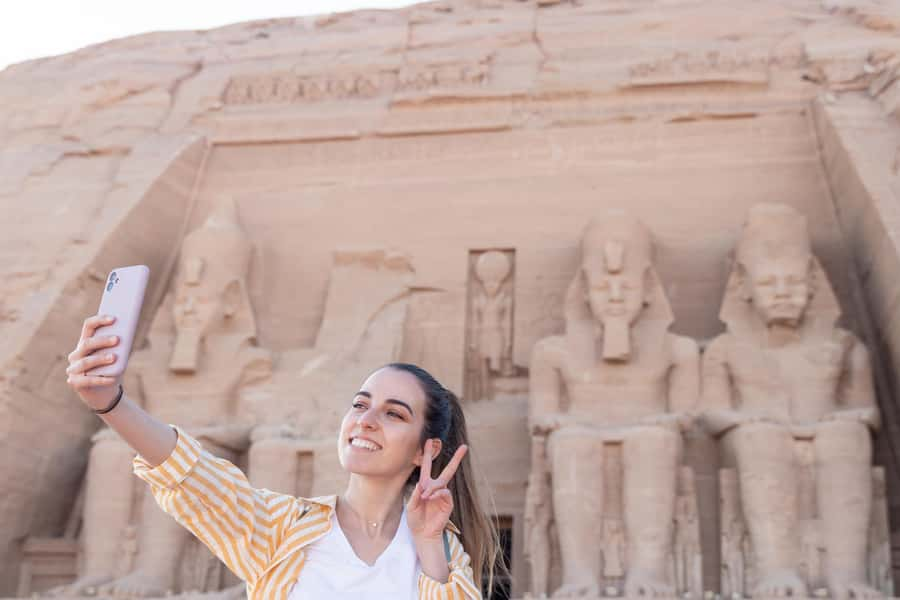
Abu Simbel is far from Aswan, but its scale makes the effort worthwhile for many visitors. Ramses II ordered the great temple complex, with its huge seated figures cut into the rock face. The site also has a remarkable modern story because the temples were moved to higher ground when Lake Nasser rose.
The important practical point is timing. Abu Simbel is not a small add-on between breakfast and lunch. It requires an early start and makes Day 2 more demanding. If seeing the temples built by Ramses II is high on your Egypt list, the optional trip can be one of the best additions available. If you already have several early mornings planned, the free morning on the ship may be the wiser choice.
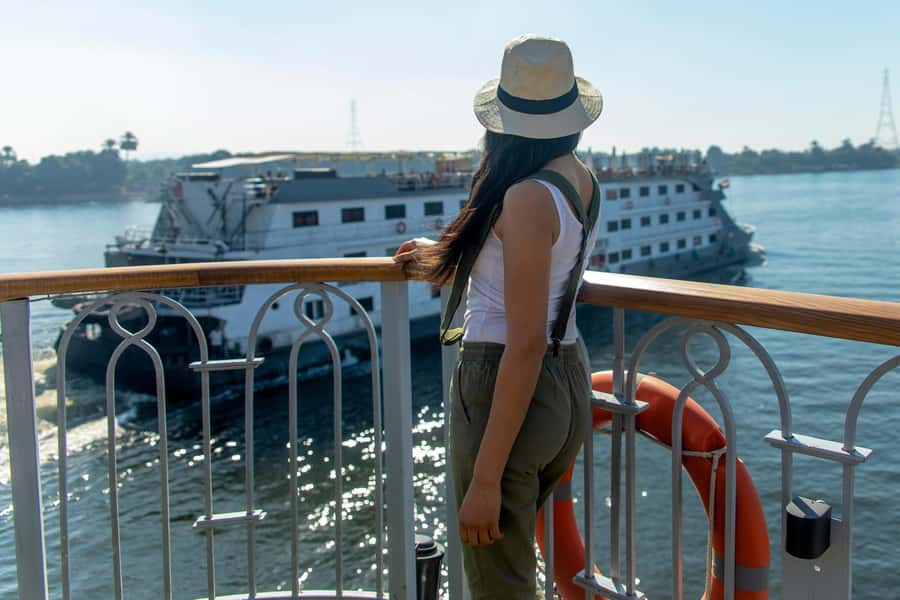
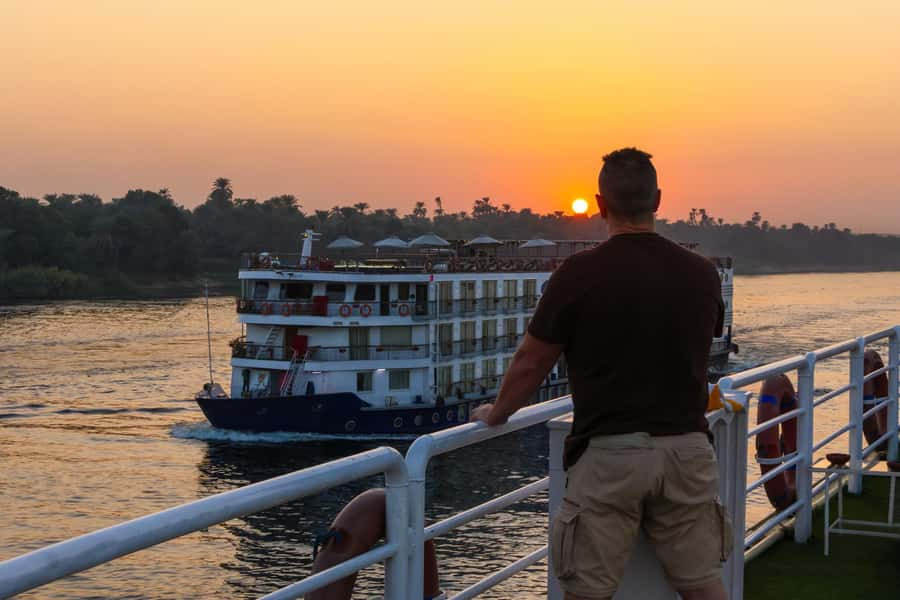
After lunch, the ship sails toward Kom Ombo. This is when the cruise earns its keep. You can rest, eat, and watch the riverbanks change from cultivated strips of farmland to dry desert beyond the water.
Kom Ombo is dedicated to two gods: Sobek, the crocodile god, and Horus, the falcon-headed god. The temple’s layout is unusual because it is effectively two temples joined together. Each side has its own gateways, chapels, and sacred areas.
A guide can make this stop much more than a quick photo opportunity. Ask your guide to point out how the paired arrangement works and how the reliefs reflect the temple’s religious purpose. The site is also a good place to notice the contrast between the formal stone architecture and the open desert around it.
After the visit, you return to the ship for dinner and sail overnight toward Edfu. Some people enjoy the gentle movement and the sound of the engines. Others find the motors noisy, especially at night. If you are a light sleeper, bring earplugs and keep your expectations realistic.
Day 3: Edfu and the Temple of Horus
After breakfast, your guide takes you to Edfu, home to the Temple of Horus. This is one of the best-preserved large temples in Egypt, and its scale becomes clear as you approach the massive entrance and falcon imagery.
The temple honors Horus, one of ancient Egypt’s major deities. Statues of the falcon-headed god appear throughout the complex, while long wall carvings record religious scenes, rituals, and details from the Hellenistic period.
Edfu’s condition makes it especially rewarding for anyone who wants to understand how an Egyptian temple once worked. You can see the sequence from the entrance toward the inner sanctuary, rather than having to imagine the missing sections of a ruin. The walls also give guides plenty to explain, from mythology to the role of priests and temple ceremonies.
The weakness here is time. Sailing schedules can leave only a short window for the visit, and some people have had to move quickly to return to the ship. I would listen carefully to your guide’s meeting time and avoid wandering too far from the main route.
This stop also shows why a private guide can improve the cruise. The carvings are dense, and it is easy to look at a wall without understanding what you are seeing. Guides such as Ahmed Achraf have been praised for explaining temple construction and historical details clearly, while others have been noted for using pictures to make the sites easier to follow.
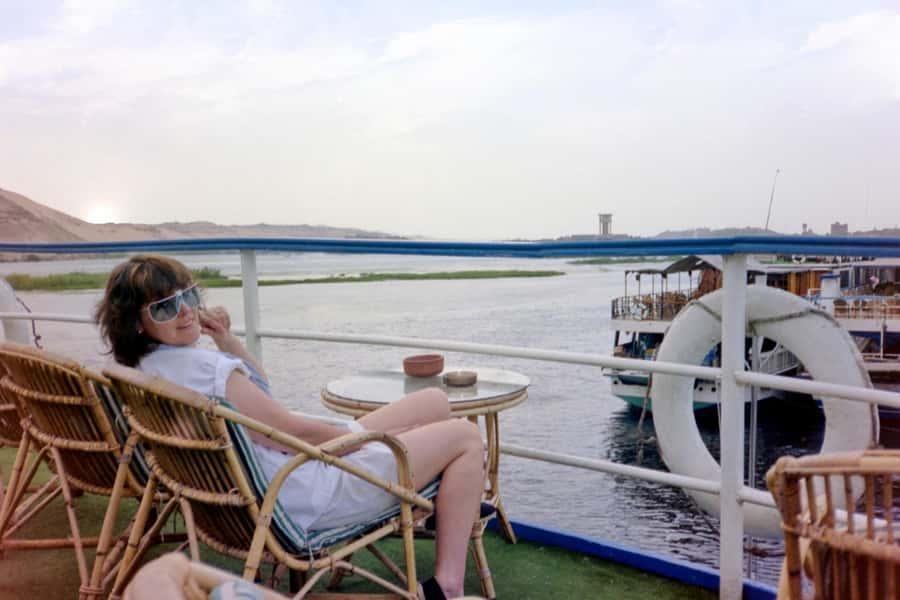
The rest of the day is spent aboard the ship. Meals are included, and the boat provides a welcome pause before the demanding Luxor program. The cruise is social by nature, with people from different countries sharing the same route, dining room, and sightseeing schedule.
Same water, a different boat:
- Hurghada: Luxury Cruise Trip to Orange Bay with Lunch
★ 4.9 · 5,451 reviews - Hurghada: Orange Bay Island Boat Trip w/ Breakfast and Lunch
★ 4.9 · 5,345 reviews - Hurghada: Royal Seascope Submarine Cruise with Snorkel Stop
★ 4.4 · 4,637 reviews - Hurghada: 3 Islands, Dolphins & Snorkel Yacht Trip w/ Lunch
★ 4.7 · 4,609 reviews
Day 4: The Valley of the Kings and Hatshepsut
After breakfast, you leave your luggage at reception and begin your Luxor sightseeing day. The first major stop is the West Bank and the Valley of the Kings.
Here, you enter royal tombs built for pharaohs of the New Kingdom. The corridors lead underground through painted scenes, hieroglyphs, and images connected with the afterlife. The tombs are not all alike, and the exact selection can vary, so listen to the guide’s advice about which interiors are open and worth your time.
The Valley is not a place to rush through with your camera raised. Look at the colors and the repeated symbols. Your guide can explain how the scenes relate to the journey after death and why the tombs were placed in this dry valley rather than built as exposed pyramids.
Next comes the mortuary temple of Queen Hatshepsut. Its terraces rise against the cliffs, creating one of the most dramatic settings on the West Bank. Hatshepsut admired the temple of Mentuhotep II and ordered her own monument to echo it, but on a much larger scale. The older temple sits nearby, making the comparison especially clear.
Guides such as Khaled Galal and Manal have been praised for making this part of the day easy to follow, particularly when explaining Hatshepsut’s unusual position as a female ruler. A strong guide can also help you notice the temple’s levels, ramps, reliefs, and relationship with the surrounding cliffs.
You then stop at the Colossi of Memnon. These huge seated figures are a brief visit, but they are worth seeing because of their size and their place in the ancient approach to the West Bank monuments. Do not expect a long guided stop here. It is mainly a chance to take photographs and hear the story of the statues.
Lunch is served at a local restaurant in Luxor. This meal is included, unlike drinks and monument entry fees. It gives you a proper break before the East Bank visits, which is important because the final afternoon is full.
Karnak and Luxor Temple: a powerful finish
Karnak is the largest and most sprawling temple complex on the route. It contains three main temple areas, smaller enclosed sanctuaries, and outer buildings added over roughly 1,500 years.
The scale can be overwhelming. Rather than trying to understand every structure, I suggest focusing on a few key elements with your guide: the great columns, the processional route, the sacred lake area, and the way different rulers added their own buildings. Karnak is best understood as a long record of changing power, worship, and royal ambition.
The visit to Luxor Temple follows. Amenhotep III began the temple, and Tutankhamun completed important sections. It served a central role in the annual Opet celebrations, when sacred images and royal ceremony linked Luxor with Karnak.
Luxor Temple feels different from Karnak. It is more compact and easier to read as a ceremonial space, especially as the day begins to cool. The combination of columns, statues, reliefs, and later layers of use gives the site a particularly strong sense of continuity.
This final day is also the tour’s biggest challenge. You cover the West Bank in the morning, stop for lunch, then cross to the East Bank for two large temple complexes. Some guides make the schedule feel smooth, but others may move too quickly. If ancient Egypt is your main reason for coming, consider adding an extra day in Luxor after the cruise so you can revisit the sites or explore without a clock.
At the end of the day, your driver takes you to your Luxor accommodation. Airport and train station transfers are not included, so arrange those separately if needed.
Guides, organization, and the small irritations
The strongest part of the service is the human support. Tour operators have used WhatsApp to send next-day schedules, pickup details, and reminders. Coordinators such as Zeinab and Asma have been praised for quick replies and for checking that plans are running properly.
Guide quality can vary, as it does on most escorted Egypt trips. Mary, Mariam, Ahmed Sony, Manal, Shaimaa Baheeg, Mohamed Abdu, and Waleed Adnan are among the names associated with especially warm feedback. Guests have valued clear English, patience with families, help with photographs, and the ability to explain complicated temple scenes with pictures.
You should also know about two recurring annoyances. Some guides may push for tips or ask you to write a review while you are still with them. Tourist shops can also appear after temple visits, with prices that may be far above the value of the goods. You are free to decline, and you should agree on expectations with your coordinator if shopping stops become uncomfortable.
Bring small tip money, but do not feel pressured into buying souvenirs. One useful warning from a past passenger is to be cautious with papyrus prices. Compare prices before purchasing, and do not assume a guide-recommended shop offers the best deal.
Food onboard has generally been described as good, with plenty of choices. Staff are often praised for friendly service, towel decorations, and small thoughtful touches. Water safety matters in Egypt, so use bottled water for drinking and brushing your teeth.
Who should book this Nile cruise?
I would recommend this trip if you want the major Aswan to Luxor sights handled in one organized package. It suits first-time visitors, families, and anyone who values a private guide, included meals, and a hotel that moves with you.
It is also a strong choice if you want Abu Simbel available as an option rather than as a separate booking. Families have found the guides patient with children, and several guides have been praised for giving people time to take photographs.
I would hesitate if you dislike fixed schedules, early starts, or organized shopping stops. Independent visitors may prefer more nights in Luxor and extra time at each monument. You should also accept that a ship described as 5-star may be older than expected, and sailing conditions can alter the plan.
At $830 per person, the value rests in convenience. You are paying for transport between sites, three nights onboard, full board, guides, drivers, hotel transfers, and a full final day in Luxor. Entry fees and drinks remain extra, so budget for those separately.
Should you book it?

Book this cruise if you want a well-supported introduction to the Nile and prefer seeing the headline monuments without arranging every transfer yourself. The river views, Philae approach, Kom Ombo, Edfu, and Luxor temples create a satisfying route, while the crew and coordinators add comfort.
Choose it with two conditions: confirm the ship assigned to you, and plan for Day 4 to be intense. If possible, add a free day in Luxor. That small change gives you time to enjoy the cruise at an easier pace and prevents the Valley of the Kings, Karnak, and Luxor Temple from becoming one long blur.
FAQ
How long is the Nile cruise?
The experience lasts four days and includes three nights aboard the Nile cruise ship.
Where does the cruise begin and end?
It begins in Aswan and ends in Luxor, where a driver takes you to your accommodation.
Is Abu Simbel included?
Abu Simbel is optional. It is included only if you select the option that adds the guided Abu Simbel tour.
Are meals included?
Full-board meals are included on the cruise. Lunch at a local restaurant in Luxor is also included. Drinks are not included.
Are entry fees included?
No. Monument entry fees are not included in the listed price.
What languages are available for the guide?
Guides are available in Arabic, English, French, German, and Spanish.
Are airport and train station transfers included?
No. The included transfers cover hotel pickup and drop-off. Airport and train station transfers are excluded.
Can the schedule change?
Yes. Some changes may occur because of sailing conditions. The exact timing of temple visits can also depend on the ship’s schedule.
More 4-Day Experiences in Egypt
- From Aswan:4 Days Nile Cruise Luxor Abu Simbel & Air Balloon
★ 4.4 · 310 reviews - Freedom 3/4 Day Hervey Bay Premium Whale Watching Cruise
★ 5.0 · 919 reviews
More Multi-Day Boat Trips in Egypt
- 4-Day 3-Night Nile Cruise from Aswan to Luxor&Abu Simbel+Balloon
★ 5.0 · 2,023 reviews - Hurghada: 2-Day Luxor Tour with Hotel, Balloon, & Boat Ride
★ 4.5 · 1,113 reviews - 4-Day 3-Night Nile Cruise from Aswan to Luxor including Abu Simbel, Air Balloon
★ 4.5 · 612 reviews - From Aswan: 3-Day Cruise to Luxor with Hot Air Balloon
★ 4.3 · 598 reviews
Just added around Egypt
- Hurghada: White Island Speedboat Tour, Snorkeling, & Lunch★ 4.7 · 301 reviews
- Hurghada: 2-Day Luxor Tour with Hotel, Balloon, & Boat Ride★ 4.5 · 1,113 reviews
- Hurghada: Panoramic Semi-Submarine Cruise with Snorkeling★ 4.4 · 972 reviews
- Hurghada: Semi-Submarine Boat Tour w/ Snorkeling & Transfer★ 4.2 · 1,052 reviews
- Hurghada: Royal Luxury VIP Cruise to Orange Bay with Lunch★ 4.9 · 606 reviews
- Hurghada: Hula Hula Island Boat Trip with Snorkeling & Lunch★ 4.5 · 483 reviews
- Hurghada: Giftun Island Orange Bay Speedboat Cruise & Lunch★ 4.7 · 1,233 reviews
- From Sharm: Ras Muhammed & White Island By Boat & intro Dive★ 4.7 · 493 reviews
River Cruises, compared.
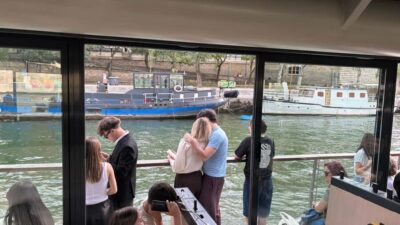
1-Hour Seine Cruise departing from the Eiffel Tower
Read our review →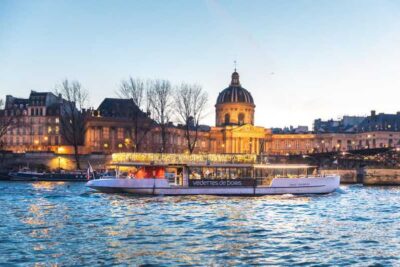

Douro Valley w/ Boat Tour, Wine Tasting & Lunch
Read our review →
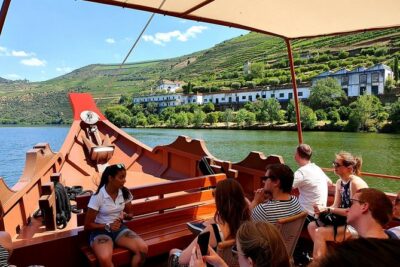
Complete Douro Valley Wine Tour with Lunch, Wine Tastings and River Cruise
Read our review →
Illuminations River Cruise with Audio Commentary
Read our review →
Seine Cruise & Crepe Tasting near the Eiffel Tower
Read our review →Browse the lists this tour appears in