
REVIEW · RIVER CRUISES
Chicago Architecture Center River Cruise aboard First Lady
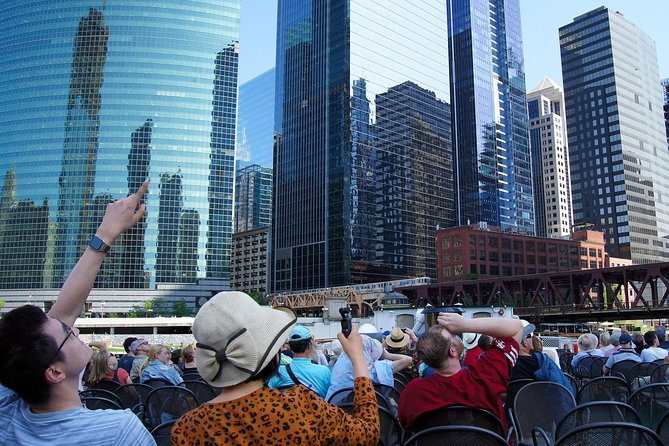
Chicago’s skyline tells stories. This 90-minute cruise turns those stories into a moving lesson, with Chicago Architecture Center docents explaining why the river, bridges, and buildings shaped the city. I especially like the excellent guides, including Cynthia, Laura, Amy, Nick, Mark, and Russell, and the chance to see major landmarks without crossing busy downtown streets. The main drawback is simple: the river route may feel shorter than expected if you want a wide tour of Chicago.
I also like the open-air upper deck and heated lower salon, which make the boat useful in both sunshine and cold weather. At $57 per person, it is not a cheap boat ride, but the price makes sense if you value clear architectural context instead of only a quick view of tall buildings. Bring warm layers, arrive early, and do not expect assigned seating.
Key points to know before you go
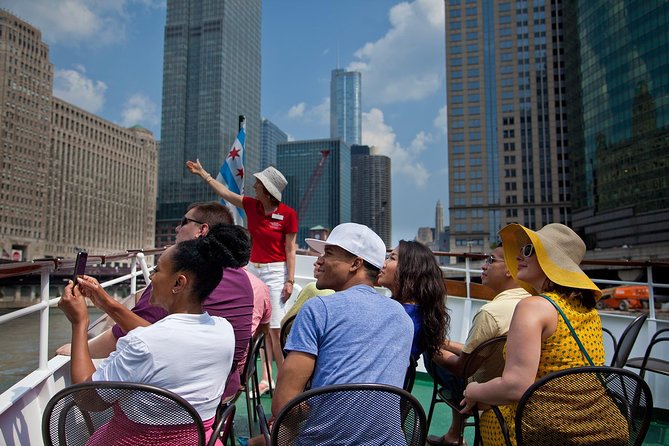
- Chicago’s best skyline lesson from the water: The docent explains the city’s buildings, bridges, river, and urban growth in one compact outing.
- A 90-minute route packed with major landmarks: You pass Marina City, Willis Tower, Navy Pier, 150 North Riverside, and more.
- First-come, first-served seating: Tickets may show seat numbers, but the seats are not assigned.
- Useful in poor weather: The upper deck is open-air, while the lower salon has climate control and large windows.
- Arrive 30 minutes early: The dock is reached from the Riverwalk, and there is no elevator access to the boat dock.
- Best for adults and older children: The operator does not recommend the cruise for children younger than 12.
Why this river cruise is worth your time
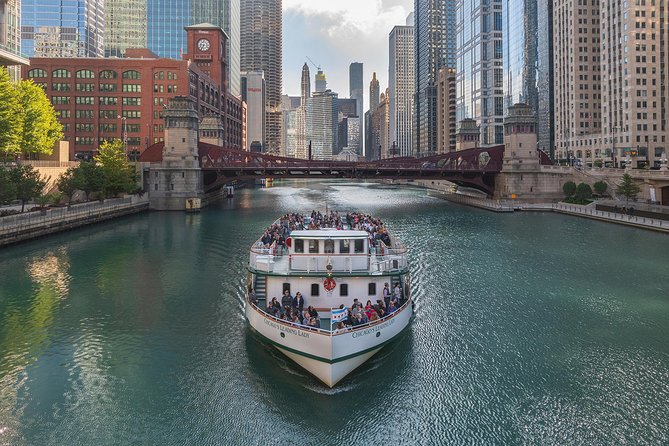
Chicago has plenty of architecture tours, but the river gives you a useful advantage: the buildings rise on both sides of the boat. You can look up without traffic, parked cars, or pedestrians blocking the view. The moving route also helps you understand how the city grew around its waterways.
The Chicago Architecture Center provides trained volunteer docents, and that matters. This is not simply a ride past glass towers with a recorded voice in the background. The guide connects buildings to architects, business, transportation, migration, engineering, and city planning. Several guides have earned especially strong praise for lively delivery, including Cynthia, Laura, Amy, Nick, Mark, and Russell.
The cruise earns a 4.9 rating from more than 5,500 ratings, with 98 percent of people recommending it. Those numbers fit the main strength of the experience: the guide usually makes the difference. A clean boat and handsome views are nice, but a good explanation turns a skyline into a story.
I would make this one of your first Chicago activities. The cruise gives you names and ideas that help you recognize buildings later while walking downtown. It works as a fast orientation, especially if your Chicago visit is short.
More River Cruises in Chicago:
- Chicago Architecture River Cruise
★ 5.0 · 15,756 reviews - Chicago River: 1.5-Hour Guided Architecture Cruise
★ 4.8 · 8,046 reviews - Chicago: Architecture River Cruise Skip-the-Ticket Line
★ 4.8 · 4,325 reviews
Boarding at 112 East Wacker Drive
The meeting point is at 112 E. Wacker Drive, along the Chicago Riverwalk. The dock sits close to Michigan Avenue, about three blocks north of Millennium Park and near the Magnificent Mile. The entrance is at street level on the northeast corner of Michigan Avenue and Wacker Drive.
Plan to arrive at least 30 minutes before departure. That advice is more important in summer, when downtown sidewalks and the Riverwalk can be crowded. The ticketing office is on the Riverwalk level, and a phone confirmation may not be the final boarding ticket, so give yourself time to check in and receive the proper ticket if needed.
The dock has no elevator access. You will need to manage the stairs or access route down to the boat, so keep that in mind if anyone in your group has mobility concerns. Service animals are allowed, and most people can take part, but the dock access deserves attention before you book.
All seating is general admission. Printed seat numbers can be ignored, and boarding is first come, first served. If you care about sitting outside or want a particular side of the boat, early arrival gives you a better chance.
There is no luggage storage at the dock or on the boat. Leave suitcases at your hotel. A stroller can come aboard, but you must remove the child before boarding, fold the stroller, and store it in the salon.
The Chicago River sets the scene
The river is the main subject, not just a convenient path between buildings. Its story moves through industry, shipping, transportation, pollution, recreation, and renewal. As the boat travels, the guide explains how the waterway changed along with Chicago.
That background gives the buildings more meaning. The towers are not a random collection of expensive offices. They reflect waves of migration, commercial power, technological changes, suburban growth, and renewed interest in the center of the city.
You will spend about 90 minutes on the river, with the boat returning to the same meeting point. The route, vessel, and schedule can change without notice, but the central purpose remains the same: connect Chicago’s major architecture to the river that runs through it.
Navy Pier and the city’s habit of reuse
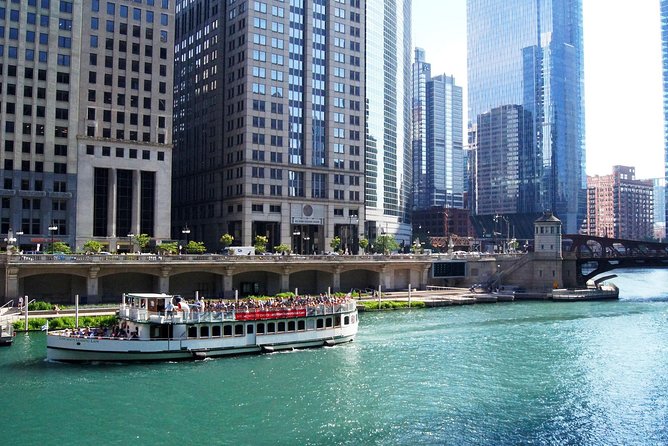
Navy Pier appears as one of the major sights along the route. Its past includes use as a naval base, a university campus, and a shipping center before becoming an entertainment destination.
That makes Navy Pier a good example of adaptive reuse. The lesson is practical: Chicago often gives old structures new jobs instead of treating them as frozen monuments. From the boat, you get the setting and scale of the pier, though the cruise is not a walking visit to its attractions.
If Navy Pier is on your personal must-see list, save time for a separate visit. The cruise offers context and a water-level view, not a complete exploration of the pier.
A few more days afloat around Chicago worth a look
- Chicago: 45-Minute Family-Friendly Architecture River Cruise
★ 4.7 · 2,304 reviews - Chicago: 1.5-Hour Lake and River Architecture Cruise
★ 4.7 · 2,050 reviews - Chicago by Night River and Lake Cruise
★ 4.6 · 791 reviews - Chicago: Shoreline Lake Michigan Skyline Cruise
★ 4.6 · 758 reviews
Marina City and Chicago’s urban experiment
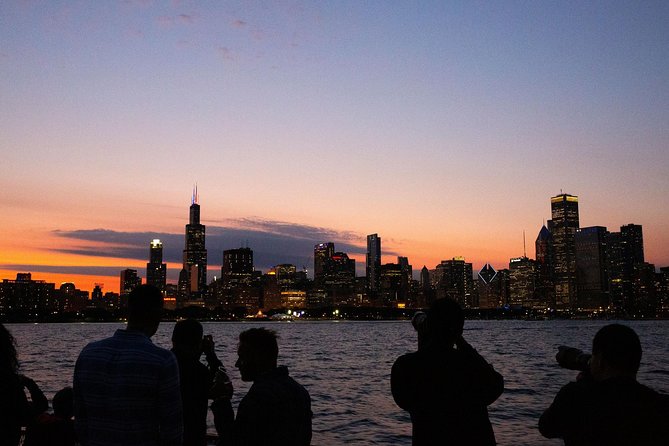
The twin cylindrical Marina City towers are among the most recognizable buildings on the route. Architect Bertrand Goldberg designed them as an urban experiment at a time when many middle-class Chicagoans were moving to the suburbs.
The towers were intended to bring people back toward the city by combining different kinds of urban life in one development. Their rounded forms also provide a welcome change from the usual straight-edged skyscraper wall.
This is one of the places where the boat’s position helps. From the river, you can understand the towers as part of a larger composition, rather than seeing only one façade from a sidewalk. Look for the way Marina City relates to neighboring buildings and the water.
Trump Tower and the idea of architectural conversation
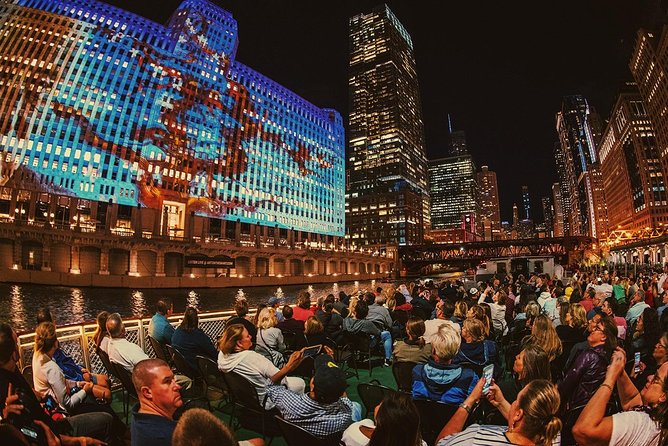
The Trump International Hotel & Tower offers another lesson about how new buildings respond to old surroundings. The guide explains that its relationship to the city is not only about shiny glass and steel. Its shape, placement, and riverfront setting connect it to the buildings around it.
That idea comes up often during the cruise: architecture is not isolated. A tower changes the view of its neighbors, affects the river corridor, and adds a new layer to a district that has already changed many times.
You do not need a background in architecture to follow the commentary. The strongest guides explain the visual details in plain language and connect them to Chicago’s broader development.
Mies van der Rohe and 150 North Riverside
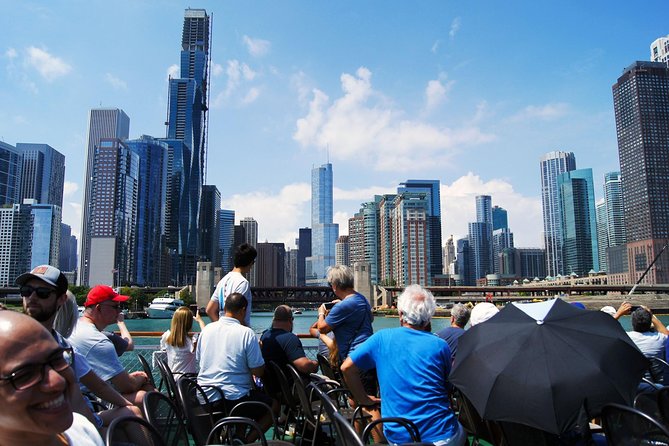
The cruise passes one of the last American projects designed by Ludwig Mies van der Rohe. The Modernist building occupies a prominent place on the river, making it easy to compare its simple, forceful design with newer towers nearby.
Then comes 150 North Riverside, a building famous for its dramatic engineering. Its narrow base and broad upper section create the impression that the tower is balancing above the riverfront.
This is a good moment to pay attention to structure, not just height. Chicago architecture often turns engineering into part of the visual experience. The guide helps you see why a building looks the way it does, instead of asking you to admire it only because it is tall.
The boat also provides a view of Boeing’s international headquarters at 100 N. Riverside Plaza. It is one of several buildings that make this stretch of river useful as a quick survey of different eras and styles.
Willis Tower and the scale of Chicago
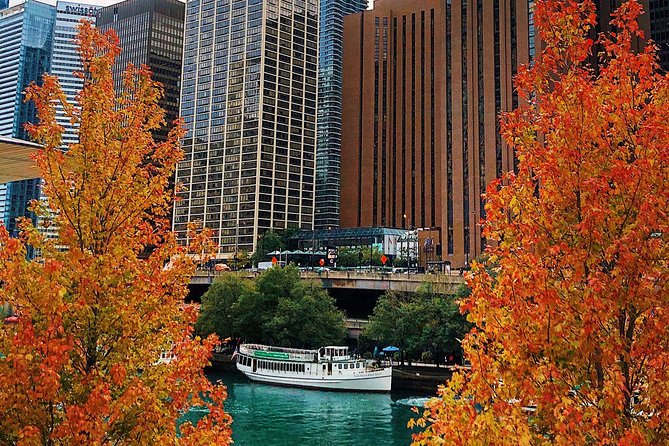
Willis Tower, formerly the Sears Tower, held the title of the world’s tallest building for nearly 25 years. From the river, its size becomes easier to grasp because the boat gives you distance and a long sightline.
You will not visit the Skydeck on this cruise, and that is worth knowing. The boat supplies an exterior view and the story of the tower’s place in Chicago’s history. If you want to look out from the top, that requires a separate ticket and visit.
The river perspective also keeps the tower from becoming just another downtown landmark. You can see how it relates to the rest of the skyline, including older commercial buildings and newer residential towers.
The Merchandise Mart and Chicago’s working past
The Merchandise Mart is another major stop. When it was completed in 1930, it was the largest building in the world. It operated as Marshall Field’s wholesale warehouse, where retailers bought stock.
That use tells you something about Chicago’s identity. The city was not built only around grand civic buildings and famous towers. It was also a center of trade, distribution, manufacturing, and commerce. The building’s size reflects the scale of that business.
The river view gives you a strong sense of the structure’s bulk. You may find that this is one of the most useful stops for understanding how commercial Chicago worked before the modern office tower became the city’s main symbol.
The Chicago Mercantile Exchange and Tribune Freedom Center
The route includes the Chicago Mercantile Exchange Building at 20 S. Wacker Drive. Its presence points to Chicago’s role in finance and commodities, another part of the city that is easy to miss if you focus only on famous towers.
The Chicago Tribune Freedom Center also appears along the route. Together, these sights widen the tour beyond architecture as decoration. You see buildings connected to newspapers, markets, wholesale trade, transportation, and office work.
That range is one reason the cruise feels more useful than a simple sightseeing loop. The commentary links the physical city to the work that happened inside it.
What the boat is like in real use
The vessel includes an open-air upper deck and an enclosed, climate-controlled lower salon with large windows. On a sunny day, the upper deck gives you the clearest feeling of being in the middle of the skyline. On a cold or rainy day, the lower level protects you while still allowing broad views.
Dress for the conditions. Several people found the shade chilly even on otherwise pleasant days, and the heated lower area was a welcome retreat. Bring sunglasses, a cap, or a visor because glare can interfere with your view of the buildings.
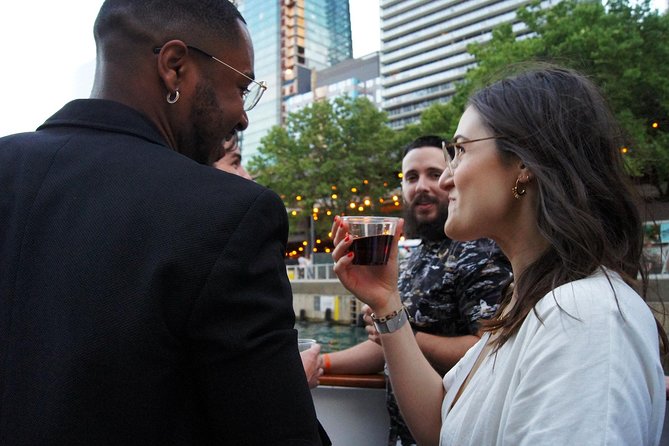
There is a restroom onboard, though the restrooms close 15 minutes before the end of the tour for safety reasons. A full bar sells drinks, and snacks and light food can be purchased. Hot chocolate has received special praise on cold outings, so it may be worth ordering if available.
WiFi is not provided. That is hardly a problem on a short cruise, but download anything you need before boarding. The boat is clean, spacious, and comfortable, but all seating remains general admission.
The maximum group size is 250 people. That is large enough to create a real crowd, particularly at popular departure times, but the boat has enough room for the experience to feel organized rather than cramped.
Choosing the best departure time
Multiple departure times make it easier to fit the cruise into a full Chicago day. Daytime sailings are useful if you want to study architectural details and photograph façades in natural light.
An evening sailing can be especially appealing. The buildings take on a different character as the light changes, and the river corridor becomes a more dramatic setting. The tradeoff is that smaller details may be harder to see, depending on the time of year and conditions.
The experience operates in all weather. Rain does not automatically cancel the cruise, and the enclosed lower salon helps, but you should not book it expecting perfect open-deck conditions. Check the forecast, wear layers, and treat the upper deck as a bonus rather than a guarantee.
The $57 price and who gets good value
At $57 per person, this is more expensive than a basic sightseeing boat ride. You are paying for the boat, the river route, and a live architectural presentation from a Chicago Architecture Center docent.
I think the price is fair if you want substance. A good guide can cover Chicago’s river, bridges, architects, engineering, and major buildings in 90 minutes. You also avoid paying for separate downtown transportation between many of the sights.
The value drops if your main goal is a long cruise or a quiet ride. The route does not cover every part of Chicago, and one and a half hours can pass quickly. You may also find the price harder to justify if you prefer exploring buildings from inside.
The Chicago Architecture Center is directly across Wacker Drive from the docks. Showing your cruise ticket provides discounted admission of $5 per person, which adds value if you want a follow-up visit focused on models, exhibits, and city planning.
Who should book this cruise
I would recommend it to first-time Chicago visitors, architecture fans, couples, friends, solo visitors, and families with older children. It is also a smart choice for anyone with limited time who wants a clear introduction to downtown.
Children must be accompanied by an adult, and the activity is not recommended for children younger than 12. Younger kids may enjoy the boat itself, but the detailed commentary is better suited to people who can follow a sustained explanation.
This is also a strong rainy-day option, since the lower salon has climate control and large windows. It is less suitable for anyone carrying luggage, anyone who needs elevator access to the dock, or anyone hoping for flexible changes after booking. Tickets are non-refundable and cannot be transferred to another departure, so choose your time carefully.
Should you book the First Lady river cruise?
Book it if you want Chicago’s skyline explained rather than merely photographed. The excellent docent commentary, comfortable boat, and wide range of buildings make this one of the best ways to get oriented during your first days in the city.
Skip it if you dislike group activities, need a fully accessible dock route, or want a longer journey beyond the central river corridor. For everyone else, $57 buys a focused 90-minute introduction that can improve the rest of your Chicago visit. Arrive early, dress warmer than you think necessary, sit where you can see the buildings, and let the river do the organizing.
FAQ
Where does the Chicago Architecture Center River Cruise depart?
It departs from 112 E. Wacker Drive along the Chicago Riverwalk. The Riverwalk entrance is at street level near the northeast corner of Michigan Avenue and Wacker Drive.
How early should I arrive?
Arrive 30 minutes before departure. Allow additional time during summer, when the area can be busy.
Is seating assigned?
No. Seating is general admission and boarding is first come, first served. Any seat numbers printed on tickets are not valid.
Is the cruise offered in bad weather?
Yes. The cruise operates in all weather conditions. The upper deck is open-air, while the lower salon is enclosed and climate-controlled.
Is there a restroom onboard?
Yes. Restrooms are available onboard, but they close 15 minutes before the tour ends.
Can I buy drinks or snacks on the boat?
Yes. A full bar is available, and drinks plus light snacks can be purchased.
Can I bring luggage?
No. Luggage cannot be brought onboard, and there is no luggage storage at the dock.
Are pets allowed?
Pets are not allowed. Service animals are permitted.
Can I bring a stroller?
Yes. Children must be removed from the stroller before boarding. The stroller must be folded and stored in the salon during the cruise.
Is the boat accessible by elevator?
No. There is no elevator access to the boat dock.
Just added around Chicago
- City Cruises Chicago: Seadog Lakefront Speedboat Ride★ 4.4 · 642 reviews
- City Cruises Chicago: 75-min Speedboat Architecture Cruise★ 4.5 · 268 reviews
- City Cruises Chicago: Premier Lunch or Dinner Cruise★ 4.3 · 334 reviews
- Chicago: Fireworks Cruise with Lake or River Viewing Options★ 4.3 · 551 reviews
- Chicago: Shoreline Lake Michigan Skyline Cruise★ 4.6 · 758 reviews
- Chicago: Architecture Center Cruise on Chicago’s First Lady★ 4.7 · 456 reviews
- Chicago by Night River and Lake Cruise★ 4.6 · 791 reviews
- Chicago: Narrated Sightseeing River and Lake Cruise★ 4.7 · 268 reviews
River Cruises, compared.
1-Hour Seine Cruise departing from the Eiffel Tower
Read our review →

Douro Valley w/ Boat Tour, Wine Tasting & Lunch
Read our review →
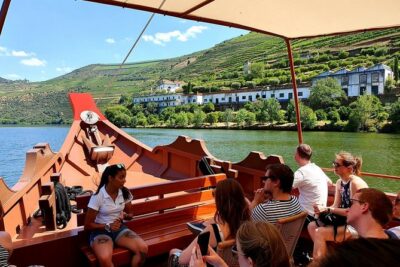
Complete Douro Valley Wine Tour with Lunch, Wine Tastings and River Cruise
Read our review →
Illuminations River Cruise with Audio Commentary
Read our review →
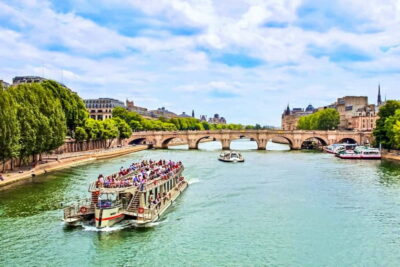
Seine Cruise & Crepe Tasting near the Eiffel Tower
Read our review →Browse the lists this tour appears in