
REVIEW · RIVER CRUISES
4-Days Nile Cruise From Aswan To Luxor including Abu Simbel and Hot Air Balloon
Ancient temples, one river, four demanding days. This Aswan to Luxor cruise packs in Abu Simbel, Philae, Edfu, Kom Ombo, Luxor, and Karnak, with a sunrise hot-air balloon ride added for good measure. I like the smooth transfers and the chance to see southern Egypt without arranging every taxi, ticket, and guide yourself. I also like the guides, especially Mohamed Gobran, Mohamed Goran, Saber, and Mahmoud, who are repeatedly praised for clear explanations, patience, and good group care.
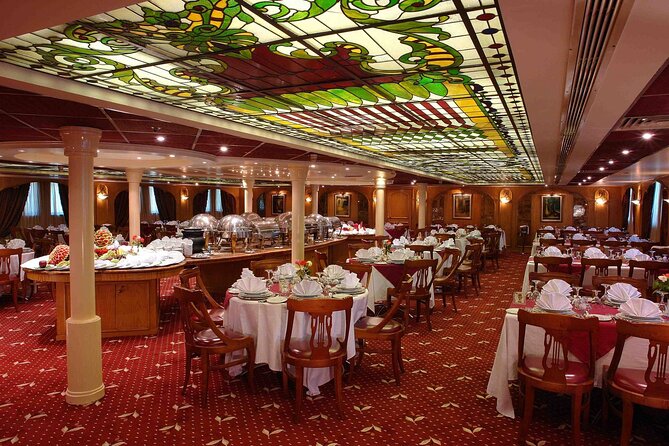
The trade-off is pace. You will rise around 4:30 or 5:00 a.m. on more than one day, and the Abu Simbel drive takes roughly four hours each way. The cruise ships are sold as five-star, but comfort can vary. Some cabins and public areas feel clean and comfortable, while older vessels can feel dated, cramped, or tired.
The five details that shape this Nile cruise
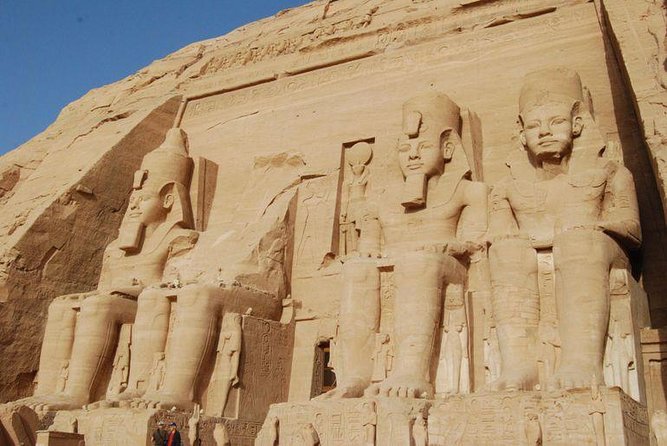
- Abu Simbel is included on day two: You leave before dawn, ride in a shared small group, and return in time for lunch and the afternoon sailing.
- The balloon flight is part of the package: The flight lasts about 30 to 45 minutes, with the full early-morning outing taking around two hours.
- The schedule favors major sights over slow exploration: You see a remarkable number of temples, but most visits allow a guided explanation followed by limited free time.
- The price is $349 per person: Three nights aboard a Nile cruise, meals, transfers, guiding, and the balloon ride create strong value, but entrance tickets and drinks cost extra.
- Guide quality matters here: Mohamed Gobran is especially praised for his organization, care, and ability to make ancient sites easy to follow.
- Pickup and drop-off are practical but not entirely universal: Aswan east-bank hotels are included, while some west-bank pickups and drop-offs cost an additional $10 per person.
Is $349 a fair price for four days?
At $349 per person, this is a low-cost way to cover a lot of Egypt in a short time. You receive three nights on a cruise ship, full-board meals according to the package, an English-speaking Egyptology guide, air-conditioned road transfers, Abu Simbel transport, and the hot-air balloon ride over Luxor.
That sounds like a five-star bargain, but read the label with care. The cruise category does not guarantee a polished modern vessel. The assigned ship can vary, and some boats, including the King of Thebes and M/S Nile Jewel, have been described as older. Rooms may be clean and comfortable, but towels, bathrooms, furnishings, and public areas can show their age.
The value is strongest if you care more about access and convenience than ship design. You can see Abu Simbel, the major temples between Aswan and Luxor, the Valley of the Kings, and Luxor’s west bank without booking several separate tours. A private Nile cruise with newer accommodation would cost more, while independent arrangements require more planning and usually more transport coordination.
Keep extra money aside for entrance fees. The listed attractions are not included in the $349 price, despite the inclusion of guiding and transfers. Drinks are also extra, and onboard Wi-Fi costs more. If you want to keep the total under control, buy bottled water and other drinks from a local supermarket before sailing, if permitted by your arrangements.
More River Cruises in Egypt
- Cairo: Dinner Cruise on the Nile River with Entertainment
★ 4.2 · 2,190 reviews - Cairo: Nile Sunset Dinner Cruise, Show & Optional Transfer
★ 4.1 · 2,184 reviews - 4-Day 3-Night Nile Cruise from Aswan to Luxor&Abu Simbel+Balloon
★ 5.0 · 2,023 reviews
Day one: the High Dam and Philae Temple
Your first morning begins with pickup from an Aswan hotel, airport, or railway station. An English-speaking representative takes you by air-conditioned vehicle to the ship, where you check in before lunch.
The first sightseeing stop is Aswan High Dam. It is not an ancient monument, but it explains modern Egypt’s relationship with the Nile. Completed in 1960, the dam helped control flooding and generate electricity. Your visit lasts about an hour, and the stop gives you a useful introduction to the engineering and politics that shaped present-day Egypt.
Then you board a small motorboat for Philae Temple. The ride across the water is part of the pleasure. Philae sits on an island setting, away from Aswan’s traffic, and the approach feels calmer than many temple visits in Egypt.
The temple complex is dedicated mainly to Isis and contains Greek and Roman-era work alongside older Egyptian religious traditions. Your guide will explain the reliefs, columns, and stories, then you have time to look around before returning by boat.
Dinner is served back aboard the ship, followed by a folkloric show. The evening entertainment can be modest rather than spectacular, but it gives you a pleasant first night on the river. You sleep aboard near Aswan before the early Abu Simbel departure.
Day two: the long road to Abu Simbel
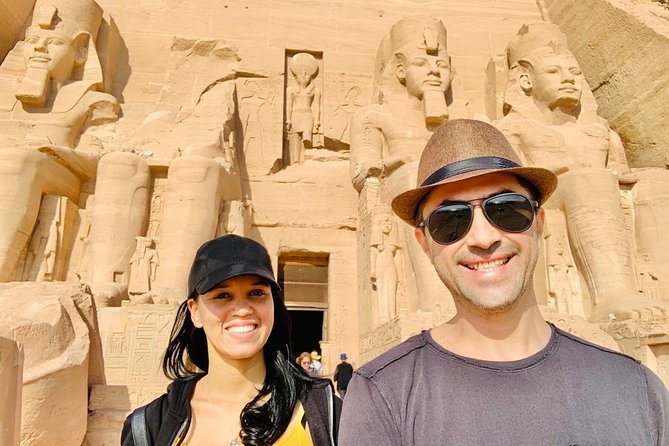
This is the hardest day physically, but Abu Simbel is the reason many people accept the early start. Pickup is around 4:30 a.m., and the journey to the temple complex takes about four hours each way. You travel in a shared small group with an English-speaking guide.
That is a lot of road time for a visit lasting around two hours, yet Abu Simbel earns its place. The rock-cut temples, with their enormous seated figures, are among the most memorable monuments in Egypt. The scale is easy to understand only when you are standing in front of the facades.
Your guide helps explain Ramses II, the temple imagery, and the relocation of the monuments during the creation of Lake Nasser. The information matters because the site is more than a grand photo stop. It represents royal power, religious symbolism, and one of Egypt’s major modern preservation projects.
You return to the ship around lunchtime. The early departure means you may receive a simple breakfast box rather than a full breakfast. Plan for bread, juice, or similar basic provisions, and carry water.
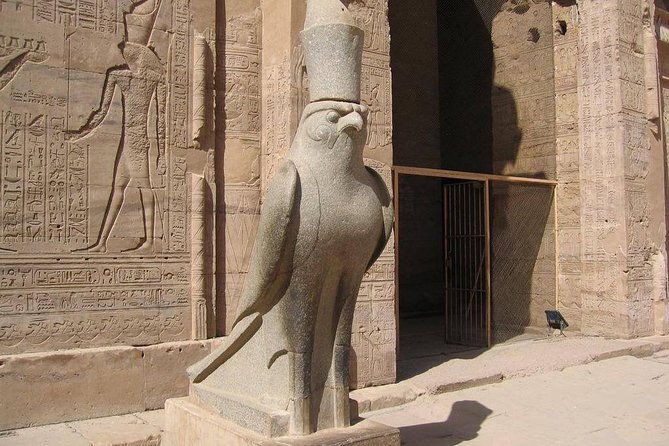
Later, the ship reaches Kom Ombo. The temple is unusual because it is dedicated to two gods, Sobek, the crocodile god, and Horus, the falcon god. The dual design makes this visit different from the more familiar single-deity temple layouts.
The Kom Ombo stop lasts about an hour. It is enough for a guided overview and photographs, but not for a leisurely study of every relief. After dinner, the ship sails toward Edfu for the night.
Day three: Edfu by carriage and Luxor after dark
After breakfast, you leave the ship for a horse-and-carriage ride to the Temple of Horus. The ride is short and practical, but it also gives the morning a different feel from the road transfers used elsewhere.
Edfu’s Temple of Horus is one of the best-preserved Egyptian temples. Its walls, entrance pylons, and reliefs remain unusually clear, making it easier to picture how the temple once worked as a religious center. A good guide can turn the carved scenes into a readable story rather than a wall of symbols.
Allow about two hours for the Edfu visit. The schedule is still brisk, so listen closely during the explanation and then use your free time carefully. If you want to photograph details, do that after the main talk rather than waiting until the last few minutes.
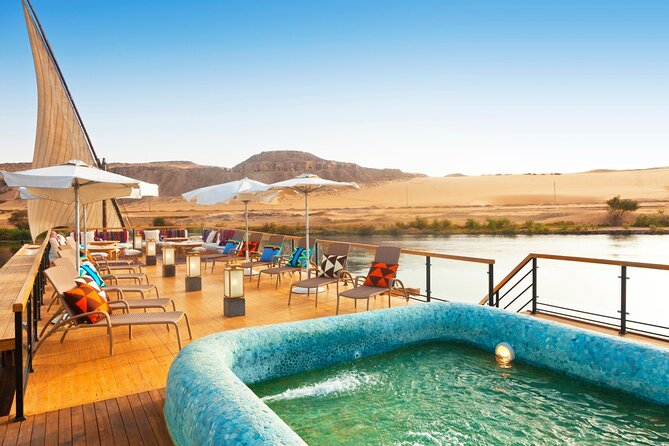
Back on board, the pace changes. You get time to watch the Nile pass by, eat lunch, and take afternoon tea. This is one of the best features of a cruise. After early alarms and hot temple courtyards, you can sit down without having to repack a vehicle or search for the next transfer.
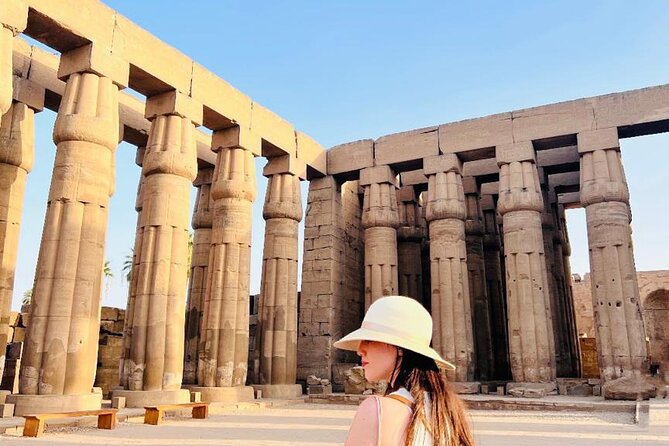
The ship reaches Luxor later in the day. You are taken to Luxor Temple on the east bank, usually in the cooler late afternoon or evening. The temple shows layers of Egyptian, Christian, and Islamic use, which makes it more than a single-period monument.
The evening visit is especially useful because the columns and courtyards take on a different character after sunset. Karnak may also be visited on this day, depending on timing. If it is not, the final morning includes a possible Karnak stop.
Dinner is followed by a belly dance show, although entertainment arrangements can change. One scheduled show may be canceled, so consider the performances an extra rather than a central reason to book.
Same water, a different boat:
- Hurghada: Luxury Cruise Trip to Orange Bay with Lunch
★ 4.9 · 5,451 reviews - Hurghada: Orange Bay Island Boat Trip w/ Breakfast and Lunch
★ 4.9 · 5,345 reviews - Hurghada: Royal Seascope Submarine Cruise with Snorkel Stop
★ 4.4 · 4,637 reviews - Hurghada: 3 Islands, Dolphins & Snorkel Yacht Trip w/ Lunch
★ 4.7 · 4,609 reviews
Day four: sunrise from a hot-air balloon
The balloon morning begins around 5:00 a.m. You cross toward the west bank and take a flight lasting roughly 30 to 45 minutes. The full activity takes about two hours, including the early transfer and preparation.
The reward is a broad view over Luxor’s west bank, the Nile, fields, desert, and nearby monuments. Sunrise gives you a fresh way to understand the relationship between the river and the ancient sites. From ground level, the temples can feel scattered. From above, their position beside the Nile becomes easier to grasp.
There are practical limits. Cameras are not allowed in the balloon basket, although you can use a cellphone for photographs. Children under six cannot take part. The flight depends on weather, and if it is canceled for that reason, the stated refund is $25 per person.
After the balloon ride, you return for breakfast and check out. On this morning, breakfast may be a snack box rather than a full meal, so do not expect the same buffet you receive on a normal cruise morning.
The west-bank visits begin with the Valley of the Kings. Pharaohs of Egypt’s New Kingdom cut tombs into the hills here, hoping to protect their burials from thieves. The tombs are the main event, not just the surrounding valley. Which tombs are open can vary, and entrance charges are not part of the tour price.
Next comes the mortuary temple of Hatshepsut at Deir el-Bahari. Its terraces rise against the rock, and the story of Hatshepsut, a powerful female ruler who faced challenges from her nephew, gives your guide plenty to explain. The temple is visually different from the underground tombs, so the combination works well.
The west-bank circuit ends with a photo stop at the Colossi of Memnon. These huge seated statues once guarded a much larger temple complex. The stop is brief, but it provides a quick look at one of Luxor’s most recognizable monuments.
You then return to the east bank for Karnak Temple if it was not covered the previous evening. Karnak is enormous, built and expanded over roughly 2,000 years, with a complex covering about 63 acres. The Great Hypostyle Hall, huge columns, obelisks, and long ceremonial paths need more time than the scheduled hour really allows.
Still, the guided visit gives you the main structure and a useful sense of scale. Afterward, the company transfers you to a Luxor hotel, airport, or railway station. A west-bank hotel drop-off costs an additional $10 per person.
The guide can make or break the experience
The strongest part of this trip is often the guide rather than the ship. Mohamed Gobran receives particular praise for being attentive, punctual, organized, and generous with explanations. He is also described as helpful with practical matters, including transport after the cruise and ticket discounts when applicable.
Mohamed Goran is also praised for friendly organization and for taking care of the group through the packed schedule. Saber is noted for making temple history easy to understand, adding humor without losing the thread, and helping the group reach sites early.
Mahmoud is praised for strong site explanations and a good sense of humor. These details matter because the group can include different ages, nationalities, and levels of interest. A patient guide keeps the experience from becoming a procession of photo stops.
The maximum group size is 40 people, although the actual group may be smaller. Smaller groups make it easier to ask questions and stay close during temple visits. Even with a good guide, you should expect a set schedule rather than a private tour.
Food, cabins, drinks, and life aboard ship
The cruise includes meals, and the food is generally described as a buffet with enough variety to find something suitable. Salads receive particular praise, while desserts and cakes may be less memorable. The meals are practical fuel for a demanding sightseeing program, not a major culinary attraction.
Breakfast needs special attention. On the Abu Simbel morning and the balloon morning, you may receive a basic snack box instead of a full breakfast. If you need a substantial meal early in the day, plan ahead.
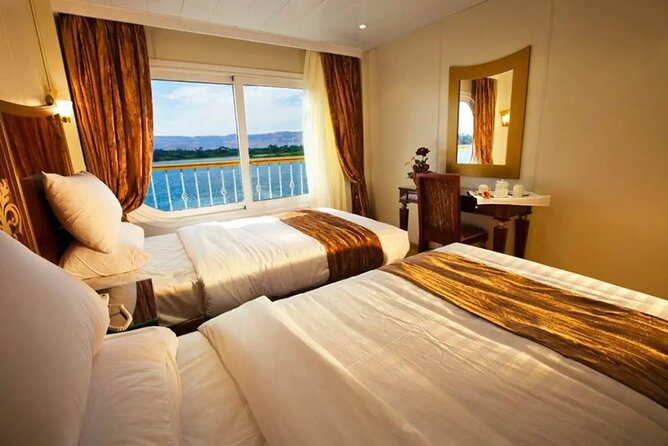
Cabins are often reported as clean and comfortable, but condition varies by vessel. Some ships have a small roof pool and pleasant places to rest after sightseeing. Other boats smell old or show outdated fittings, and amenities such as conditioner or cotton swabs may not be supplied.
Drinks are not included, including water. Wi-Fi is available for an additional charge, but it is not unlimited broadband. I would treat the ship as a functional base with a view, not as a luxury hotel.
Who should book this four-day cruise?
I would choose this trip if you have limited time and want the major southern Egypt sights handled in one package. It suits first-time visitors who want an Egyptologist guide, organized road transfers, and a clear route from Aswan to Luxor.
It also suits active people who do not mind early alarms, long drives, heat, and several hours of temple walking. The balloon ride adds a memorable finish, while the river sailing gives you breaks between visits.
I would hesitate if you want quiet mornings, long museum-style visits, or a modern ship with polished facilities. You may also prefer hotel-based sightseeing if you dislike shared transport or find four hours each way to Abu Simbel too tiring.
Book with realistic expectations about the accommodation. If possible, ask which vessel is planned and whether a newer ship is available. Also confirm the exact entrance-fee arrangements, because those costs are separate from the advertised price.
Free cancellation is available up to 24 hours before the start time. Changes or cancellations inside that window are not refunded, and poor weather can affect the balloon flight.
Should you book it?
Book this Nile cruise if your priority is seeing a large number of major monuments for $349, with transfers and guiding taken care of. The route gives you Philae, Abu Simbel, Kom Ombo, Edfu, Luxor Temple, the Valley of the Kings, Hatshepsut, Karnak, and a balloon flight in four days.
Skip it if you need a relaxed schedule or high-end ship facilities. The strongest version of this trip comes from a good guide, early arrivals, and the sheer range of sites. The weakest points are the rushed visits, extra entrance fees, paid drinks, and the possibility of an aging boat.
For many first visits to Egypt, I think the access is worth the inconvenience. Just pack lightly, sleep whenever you can, carry water, and treat the cruise as an efficient archaeological route rather than a floating resort.
FAQ
How long is the Nile cruise from Aswan to Luxor?
The experience lasts approximately four days and includes three nights of accommodation aboard a five-star Nile cruise.
Is Abu Simbel included?
Yes. Abu Simbel is visited on day two in a shared small group with an English-speaking guide. The road journey takes about four hours each way.
Is the hot-air balloon ride included?
Yes. The balloon ride over Luxor is included and lasts about 30 to 45 minutes. The full activity takes around two hours.
What happens if bad weather cancels the balloon ride?
If poor weather cancels the balloon trip, you will be offered another date or a full refund for the canceled experience. The stated balloon refund is $25 per person.
Are entrance fees included in the $349 price?
No. Entrance fees for the listed attractions are separate. Drinks and cruise Wi-Fi also cost extra.
Are meals included on the ship?
The package includes three nights with full-board accommodation. On the Abu Simbel and balloon mornings, breakfast may be provided as a simple snack box rather than a full breakfast.
Where can pickup and drop-off take place?
Pickup is available from Aswan airport, railway station, and hotels on Aswan’s east bank. West-bank Aswan pickup costs an additional $10 per person. In Luxor, drop-off at west-bank hotels also costs an additional $10 per person.
Can young children join the balloon ride?
Children under six are not allowed to take the hot-air balloon ride. Children aged six to 11 can share with parents, with a maximum of two children in one room, and children must be accompanied by an adult.
More Balloons in Egypt
- Hurghada: 2-Day Luxor Tour with Hotel, Balloon, & Boat Ride
★ 4.5 · 1,113 reviews - 4-Day 3-Night Nile Cruise from Aswan to Luxor including Abu Simbel, Air Balloon
★ 4.5 · 612 reviews - From Aswan: 3-Day Cruise to Luxor with Hot Air Balloon
★ 4.3 · 598 reviews - From Aswan:4 Days Nile Cruise Luxor Abu Simbel & Air Balloon
★ 4.4 · 310 reviews
Just added around Egypt
- Hurghada: White Island Speedboat Tour, Snorkeling, & Lunch★ 4.7 · 301 reviews
- Hurghada: 2-Day Luxor Tour with Hotel, Balloon, & Boat Ride★ 4.5 · 1,113 reviews
- Hurghada: Panoramic Semi-Submarine Cruise with Snorkeling★ 4.4 · 972 reviews
- Hurghada: Semi-Submarine Boat Tour w/ Snorkeling & Transfer★ 4.2 · 1,052 reviews
- Hurghada: Royal Luxury VIP Cruise to Orange Bay with Lunch★ 4.9 · 606 reviews
- Hurghada: Hula Hula Island Boat Trip with Snorkeling & Lunch★ 4.5 · 483 reviews
- Hurghada: Giftun Island Orange Bay Speedboat Cruise & Lunch★ 4.7 · 1,233 reviews
- From Sharm: Ras Muhammed & White Island By Boat & intro Dive★ 4.7 · 493 reviews
River Cruises, compared.
1-Hour Seine Cruise departing from the Eiffel Tower
Read our review →

Douro Valley w/ Boat Tour, Wine Tasting & Lunch
Read our review →
Complete Douro Valley Wine Tour with Lunch, Wine Tastings and River Cruise
Read our review →
Illuminations River Cruise with Audio Commentary
Read our review →
Seine Cruise & Crepe Tasting near the Eiffel Tower
Read our review →Browse the lists this tour appears in