
REVIEW · WHALE WATCHING CRUISES
Auckland: Whale and Dolphin Watching Half-Day Eco Cruise
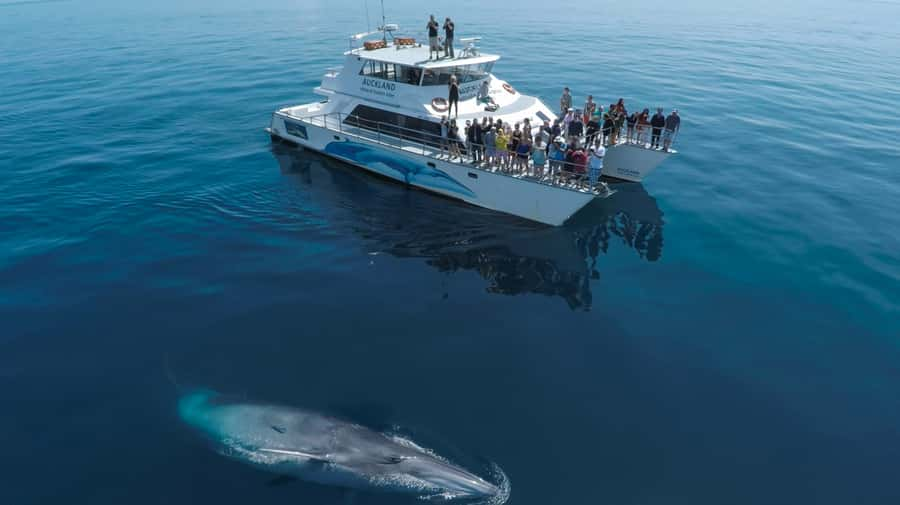
Dolphins may steal the show. Auckland Whale & Dolphin Safari takes you from the city waterfront into Hauraki Gulf Marine Park on a 4.5-hour eco-cruise, with possible sightings of bottlenose dolphins, orcas, Bryde’s whales, penguins, sharks, gannets, and shearwaters. I like the comfortable 65-foot catamaran and the fact that marine scientists combine wildlife watching with real research. I also like that one dollar from every ticket supports the Hauraki Gulf Guardians fund.
The main catch is simple: wild animals do not follow a timetable. You could see pods of dolphins for half an hour and still miss every whale, or spend much of the trip scanning empty water. At $130 per person, that uncertainty matters, although the company offers a second cruise free if you see no marine mammals.
Quick takeaways from the Auckland eco-cruise
- Auckland departure: Board at Berth 9, Eastern Viaduct Marina, opposite the Maritime Museum.
- Wildlife targets: Look for bottlenose dolphins, orcas, Bryde’s whales, penguins, sharks, gannets, and other seabirds.
- Research at sea: The crew may collect plankton samples and explain how marine mammals are tracked.
- Strong viewing setup: The catamaran is large enough for comfort but not so large that the animals feel far away.
- Weather matters: Bring warm layers, a showerproof jacket, sunscreen, and seasickness medication if you need it.
- No-sighting promise: If you see no marine mammals, you receive the chance to take the cruise again.
Leaving Auckland from the Eastern Viaduct
The trip begins in a very convenient part of Auckland. The boat is docked at Berth 9 at Eastern Viaduct Marina, reached from the western end of Quay Street and directly opposite the Maritime Museum.
You should arrive 30 minutes before departure. Crew members check you in at the top of the boarding ramp, and check-in closes 15 minutes before departure. That is not the time to be wandering around the Viaduct looking for coffee.
The location works well if you are staying in central Auckland or fitting this cruise between other city activities. You do not need a long transfer out of town. The tradeoff is that Auckland’s waterfront can be busy, so give yourself enough time to find the marina and reach the correct berth.
Once aboard the Dolphin Explorer, you get a quick water-level look at the city before heading farther into the gulf. This early section is useful because it turns the trip into more than a wildlife search. You see Auckland from a different angle, with North Head and Devonport forming part of the opening view.
More Whale Watching Cruises in New Zealand:
- Kaikoura: Whale Watching Cruise
★ 4.6 · 3,089 reviews - Whale Watching in Kaikoura by Boat
★ 4.5 · 2,906 reviews - Auckland: Tikapa Moana Whales, Dolphins and Islands Cruise
★ 3.9 · 292 reviews
North Head, Rangitoto, and the first open-water views
The route passes North Head and Devonport before moving toward Rangitoto Island and the wider Hauraki Gulf. Rangitoto is one of Auckland’s most recognizable natural features, and its volcanic outline gives you an excellent point of reference as the boat moves away from the city.
I like this part of the outing because the scenery begins immediately. Even on a day when whales stay hidden, you still get a changing view of islands, harbor entrances, and open water. It also helps you understand Auckland’s setting. The city is not simply beside the sea. It is wrapped around a large marine park filled with islands, channels, feeding areas, and wildlife routes.
The boat is a 65-foot luxury catamaran. Its size offers a useful balance. It is substantial enough to feel stable and provide indoor and outdoor seating, yet small enough for the crew to bring you relatively close to marine mammals. You are not watching a tiny fin from an enormous ship.
That said, the sea can still be rough. Several departures have dealt with wind, swell, or rain, and the operator can cancel a trip for safety reasons. A catamaran can make the ride more comfortable, but it cannot turn a windy day into a calm one.
Searching for dolphins, whales, and orcas
Once the boat reaches the Hauraki Gulf Marine Park, the pace becomes less predictable. The skipper and marine team scan the water, watch for feeding birds, and look for signs of marine mammals.
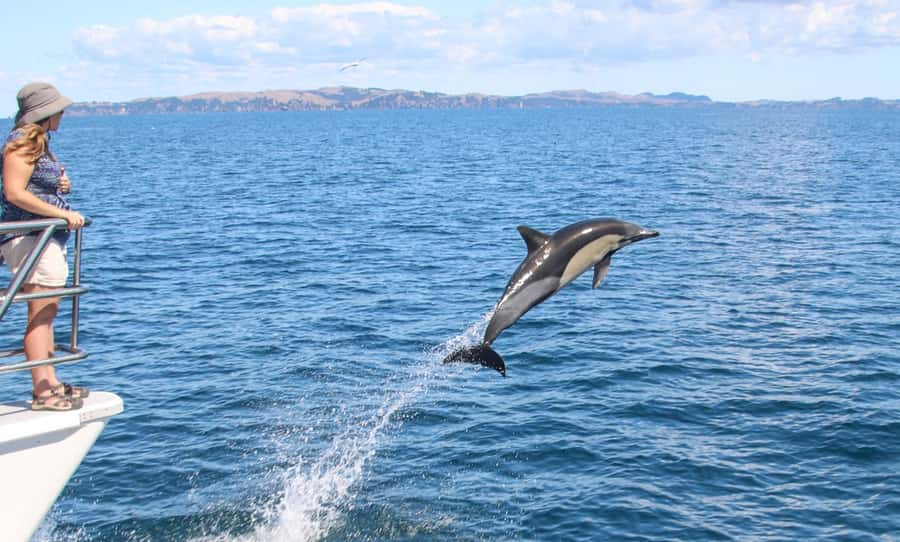
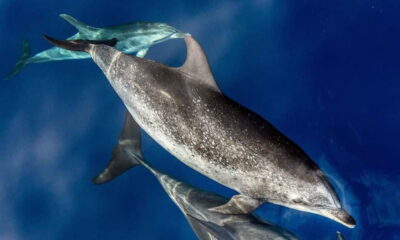
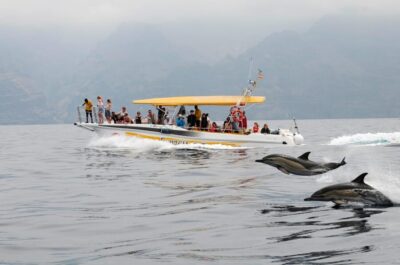
The best sightings can be remarkably close. Dolphins may swim alongside the boat, pass beneath it, or travel in large groups. One February trip recorded more than 100 dolphins, while other outings have produced several pods and young dolphins moving with adults.
Bottlenose dolphins are a regular target, but common dolphins also appear. Their behavior can be lively and quick, so you will want to keep your camera ready rather than waiting for a perfect pose. A baby dolphin briefly breaking the surface can be more memorable than a long, distant whale sighting.
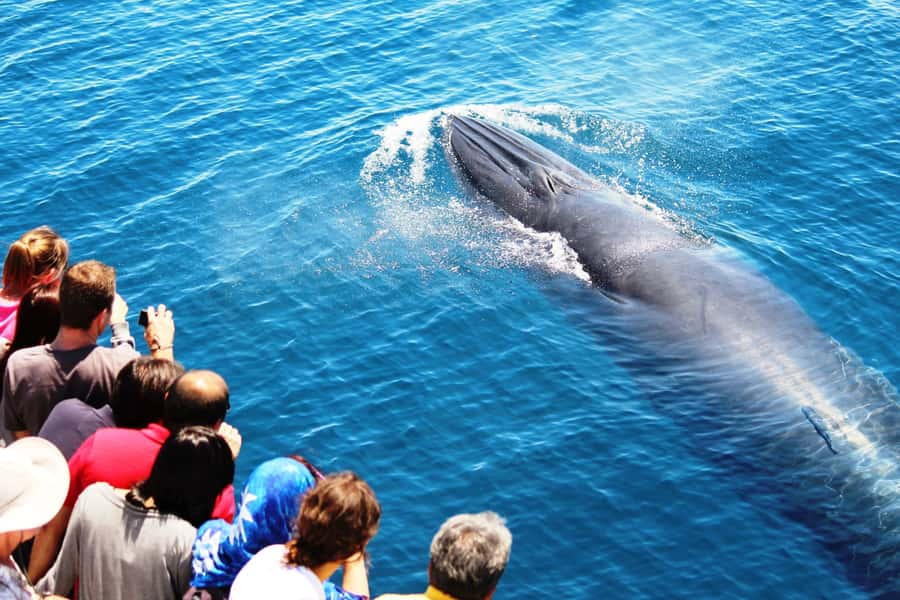
Whales are less predictable. Bryde’s whales have appeared on several trips, sometimes more than one at a time. They may remain in the distance, which means binoculars can help. Orcas are another possible sighting, but you should treat them as a lucky bonus rather than a promised part of the day.
The crew uses feeding activity to help locate animals. Large groups of seabirds can point toward fish below the surface, and that activity may bring dolphins or whales nearby. Gannets are especially exciting to watch as they drop rapidly toward the water after spotting food.
You may also see blue penguins, shearwaters, or a shark. A few trips have included blue sharks and even a hammerhead shark. These sightings are not guaranteed, but they show why the trip is better understood as a marine safari rather than a whale-only outing.
A science lesson that feels useful, not forced
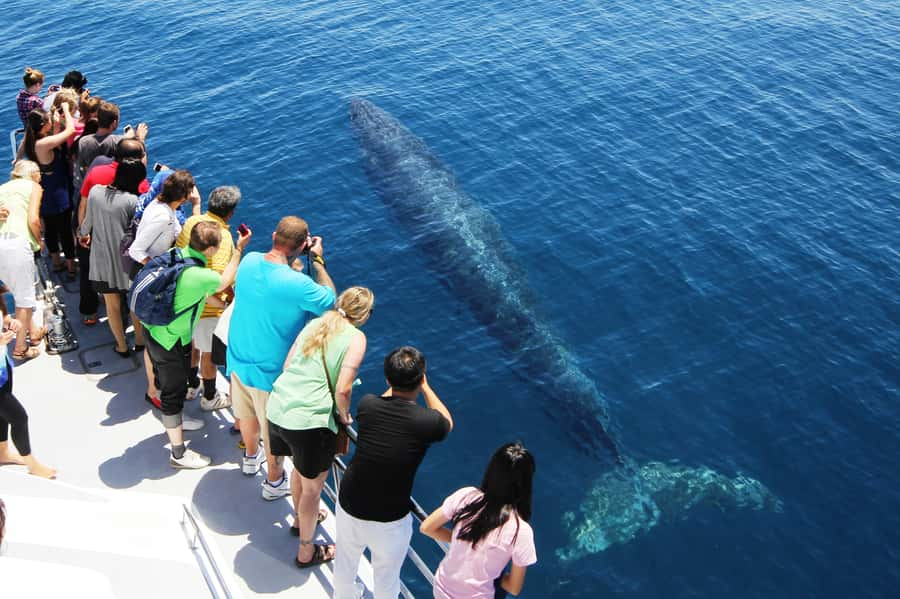
The strongest part of this cruise is the connection between tourism and marine research. The boat is also used as a research vessel, and the team may stop to collect a plankton sample or carry out other work during the trip.
That detail changes the mood onboard. You are not just waiting for a fin to appear. You are learning how scientists read the sea, how they study plankton, and how they use bird activity and other signs to track marine mammals.
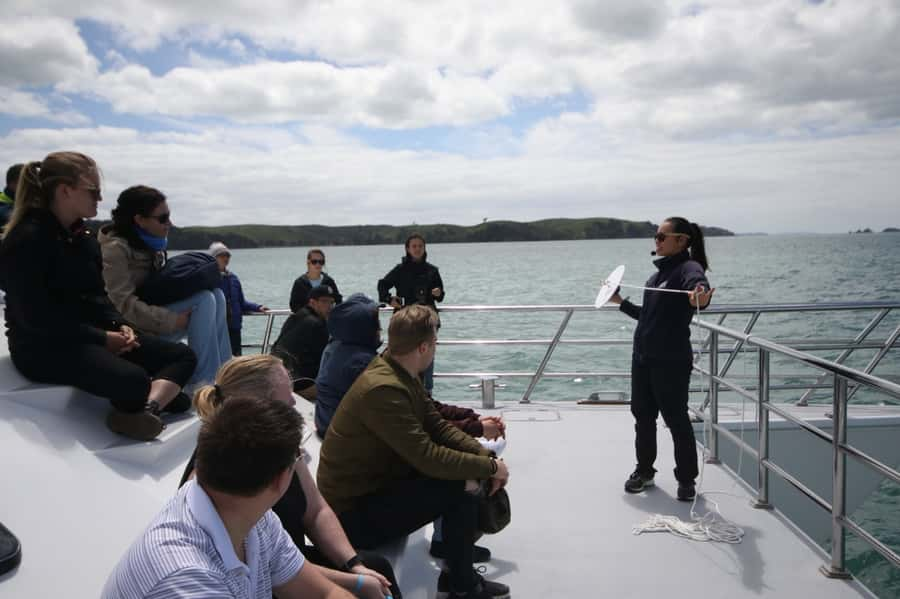
Crew members provide commentary about the animals, seabirds, geography, and the surrounding marine park. Some guides are marine biologists, which allows them to explain behavior in more detail than a basic sightseeing narration.
The talks seem to work best when the animals are not immediately visible. One quiet outing still included explanations about marine science, natural surroundings, geography, and birdwatching. That is important because the ocean can offer long stretches of nothing obvious.
The crew also appears to take animal welfare seriously. The boat keeps a respectful distance and allows enough time for viewing without harassing the animals. For me, that is a key part of the value. A close sighting means more when it does not come at the cost of the animal’s safety.
The conservation contribution is modest but meaningful. One dollar from each ticket goes to the Hauraki Gulf Guardians fund, which supports regeneration and protection work. This is not a reason to ignore the price, but it does make the purchase feel more connected to the place you are visiting.
More Dolphin Watching Boat Trips in New Zealand:
- Akaroa Dolphins ~ Harbour Nature Cruise
★ 5.0 · 2,143 reviews - Paihia/Russell: Hole in the Rock, Dolphins & Island Cruise
★ 4.6 · 821 reviews - Akaroa: Dolphin Nature Cruise
★ 4.9 · 440 reviews - Tenerife: Eco-Yacht Whale and Dolphin Watching and Swimming
★ 4.7 · 15,619 reviews
What the 4.5 hours feel like onboard
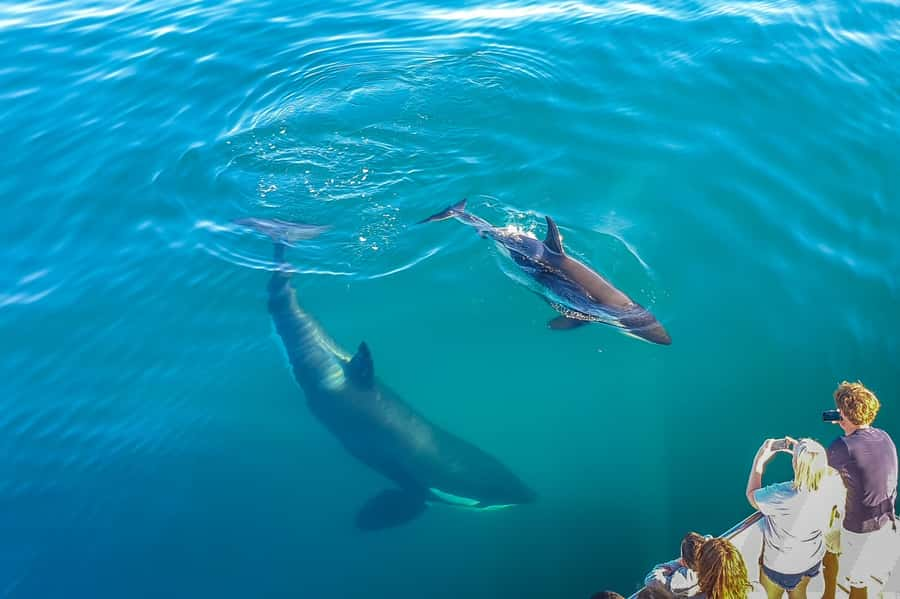
Four and a half hours is long enough to reach productive water, but it is also a serious amount of time at sea. You should not book this as a quick one-hour harbor ride.
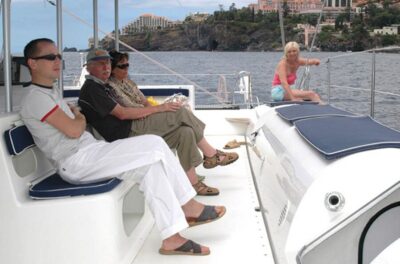
The catamaran has several seating options, and its size gives people room to move around for better views. Still, conditions change constantly. You may spend part of the trip outside watching the water, then move inside when the wind picks up or rain arrives.
Bring warm clothes even if Auckland feels mild at the dock. Add a showerproof jacket, sun hat, sunscreen, camera, binoculars, and any personal medication. Seasickness medicine should be taken before boarding, not after the first large swell.
Food and drinks are not included, but a small selection of snacks, hot food, and drinks is available to buy onboard. Beer and wine are also sold. I would not rely on the onboard selection as a full meal, so eat beforehand if you know you need something substantial.
Children under five can join only with close supervision from a parent or guardian. Unaccompanied minors are not allowed. The boat is not wheelchair accessible because of stairs and narrow doorways, and the activity is not suitable for heavily pregnant women.
How reliable are the wildlife sightings?
The short answer is that dolphins appear to be the safer expectation, while whales remain a bonus. Many outings have seen dolphins, sometimes in large numbers and at close range. Whale sightings range from several Bryde’s whales to a distant single animal, and some trips see none.
That uncertainty is not a flaw in the natural setting. It is simply part of choosing a wild-marine-life experience. If you need a guaranteed whale encounter, this is not the right product.
The no-sighting policy does improve the value. If you see no marine mammals, you can take the cruise again for free. Note the wording: the promise concerns marine mammals, not a guaranteed whale. You might miss whales but still see dolphins, penguins, sharks, and large seabird groups.
The crew has also shown flexibility when conditions are poor. On storm-warning days, passengers have been offered a refund or rebooking. Weather can change quickly in the gulf, so check your messages before heading to the marina.
Is $130 a fair price?
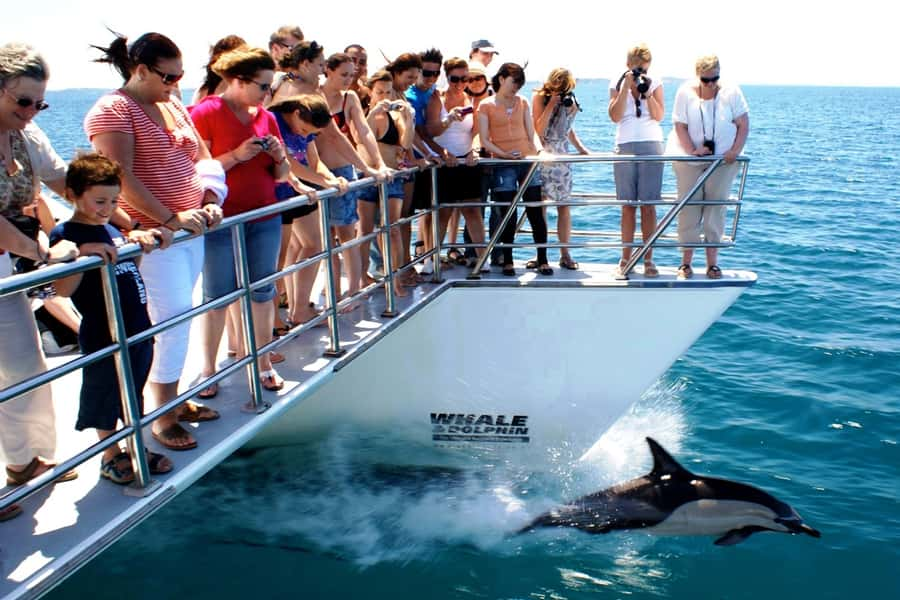
At $130 per person, this is not a cheap Auckland activity. You are paying for four and a half hours on the water, a catamaran with good viewing space, a guide team, marine research, and the chance to see wildlife close to the city.
The price makes more sense if you value the full experience, not just a whale photograph. You get harbor scenery, Rangitoto views, seabirds, scientific commentary, and time in a protected marine park. The conservation contribution adds a small but worthwhile benefit.
The value is weaker if your only goal is a whale. You could spend the entire trip seeing dolphins and birds, or have a quiet day with no marine mammals. One booking described the trip as slightly overpriced even after a good dolphin experience, which is a fair concern at this rate.
The free second cruise if no marine mammals appear helps protect your investment. If your schedule allows a second attempt, the policy is useful. If you are leaving Auckland the next morning, it may not help much.
The crew makes a real difference
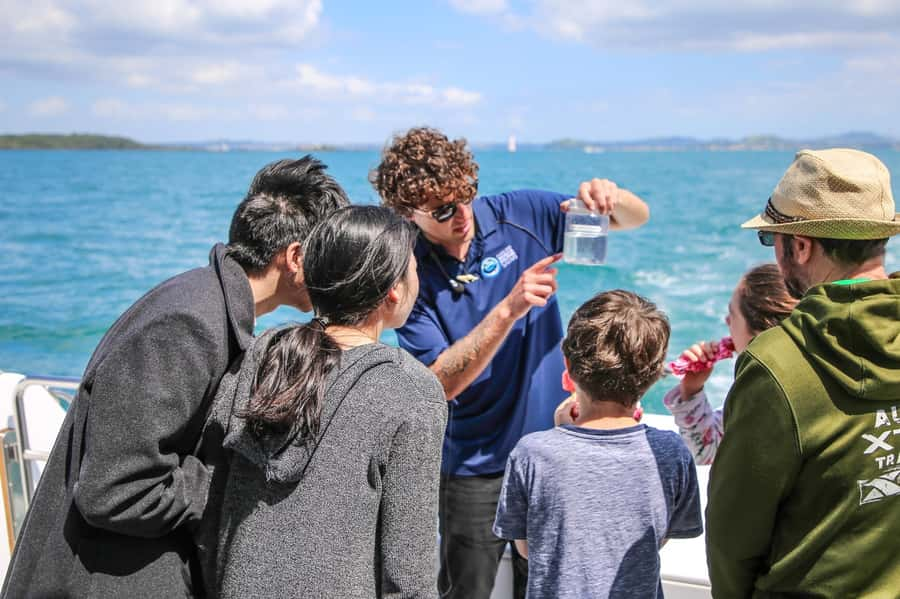
The crew receives the strongest praise for friendliness, enthusiasm, safety, and clear explanations. Several team members are named in the feedback, including Emily, Sanaa, John, Joseph, Toni, George, Jo, Jess, and Brittany.
Skipper John has been singled out for keeping the mood light while updating people about sightings. Other crew members have helped passengers feel safe and comfortable during windy conditions or changing weather.
The best sign is that the crew seems genuinely excited when wildlife appears. That matters on a long trip. You are more likely to stay interested when the team explains what you are seeing rather than simply pointing toward a distant splash.
The tone is educational without requiring a science background. You can ask questions, learn about local birds, and see how research takes place during the trip. Families may appreciate that extra layer, although young children can make it harder to hear commentary at times.
Who should book this cruise?
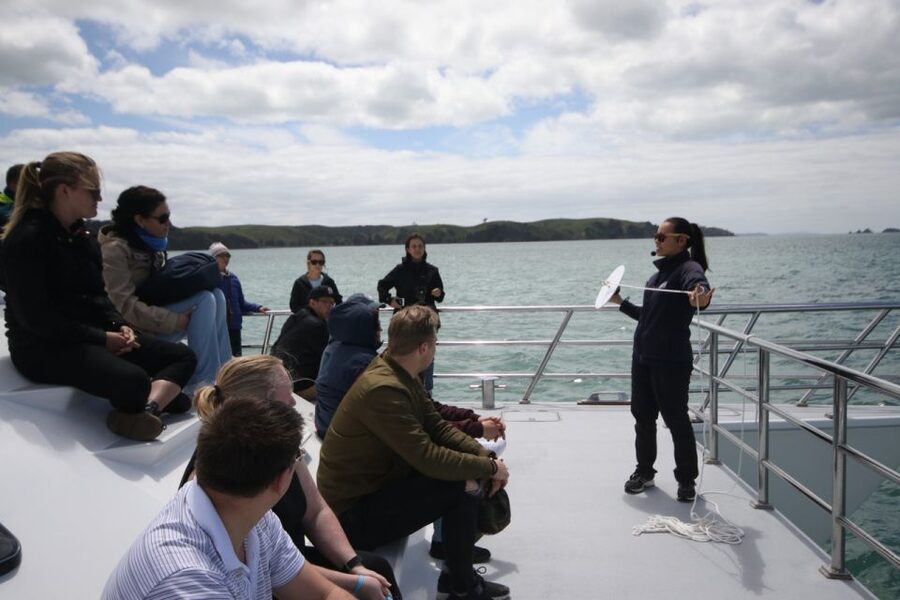
I would choose this experience if you have half a day in Auckland and want to spend it outdoors rather than in another indoor attraction. It suits people who enjoy wildlife, photography, marine science, seabirds, and changing coastal views.
It is also a good choice for visitors who want a conservation-minded activity close to the city. You do not need to travel far to reach the marine park, and the trip supports research and protection work as part of its operation.
Families can enjoy it, but you need to supervise very young children closely. People prone to seasickness should prepare carefully. Anyone needing step-free access should choose another activity.
I would be cautious if you have only one free morning and cannot accept a no-whale outcome. In that case, ask yourself if dolphins, birds, scenery, and the research element would still make the day worthwhile. If the answer is no, $130 is a gamble.
Should you book the Auckland Whale and Dolphin Safari?
Yes, if you can accept nature’s terms. The strongest reasons to book are the close dolphin encounters, the small-to-medium catamaran setting, and the marine science built into the outing. The crew’s care for the animals and the conservation contribution add substance beyond a standard sightseeing cruise.
Book with realistic expectations. You may see whales, orcas, and sharks, but you may also see only dolphins and seabirds. Wear warm layers, arrive early at Berth 9, take seasickness medicine before departure if needed, and leave room in your schedule for a second cruise if the first produces no marine mammals.
For an Auckland half-day, this is a worthwhile pick for curious, flexible people who would rather watch wild animals in their own waters than visit a captive-animal attraction.
FAQ
Where does the cruise depart from?
The boat departs from Berth 9 at Eastern Viaduct Marina in Auckland, opposite the Maritime Museum. The berth is accessed from the end of Quay Street heading west.
How early should I arrive?
You should arrive 30 minutes before departure to check in with the crew at the top of the boarding ramp. Check-in closes 15 minutes before the scheduled departure time.
What animals might I see?
Possible sightings include bottlenose dolphins, orcas, Bryde’s whales, common dolphins, blue penguins, sharks, gannets, shearwaters, and other seabirds. Wildlife sightings are not guaranteed.
What happens if I see no marine mammals?
You can take the cruise again for free if no marine mammals are seen. The offer does not guarantee that you will see whales on the second trip.
Is food available onboard?
Food and drinks are not included, but a small range of snacks, hot food, and drinks can be purchased onboard. Beer and wine are also available.
Is the boat wheelchair accessible?
No. The vessel is not wheelchair accessible because it has stairs and narrow doorways.
More Half-Day Boat Trips in New Zealand
- Palma de Mallorca: Half-Day Catamaran Tour with Buffet Meal
★ 4.5 · 3,190 reviews - Half-Day Exclusive Catamaran Cruise in Santorini with Meal and Open Bar
★ 5.0 · 2,975 reviews - From Venice: Murano and Burano Half-Day Island Tour by Boat
★ 4.6 · 2,489 reviews - Miami: Half-Day Open-Top Bus Tour Plus Biscayne Bay Cruise
★ 4.1 · 2,420 reviews
Just added around New Zealand
- Queenstown: Queenstown Lake Cruise and Walter Peak Farm Tour★ 4.8 · 950 reviews
- Queenstown: Milford Sound Small-Group Tour w Cruise & Lunch★ 4.9 · 523 reviews
- Queenstown: Lake Whakatipu Boat Trip★ 4.7 · 633 reviews
- Queenstown: Milford Sound Flight and Cruise★ 4.9 · 283 reviews
- Queenstown: Lake Wakatipu Scenic Cruise★ 4.7 · 264 reviews
- Queen Charlotte Sound Mail Boat Cruise from Picton★ 4.7 · 541 reviews
- Queen Charlotte Track: Cruise & Self-Guided Hike from Picton★ 4.8 · 383 reviews
- Paihia: Glass Bottom Boat Tour to the Hole in the Rock★ 4.7 · 319 reviews
Whale Watching Cruises, compared.
Eco-Yacht Whale and Dolphin Watching and Swimming
Read our review →
Los Cristianos Respectful No-Chase Whale and Dolphin Safari
Read our review →

Costa Adeje: Whale & Dolphin Eco-Cruise with Snacks & Drinks
Read our review →
Los Gigantes: Dolphin & Whale Watching Cruise with Swim Stop
Read our review →Browse the lists this tour appears in