
REVIEW · WHALE WATCHING CRUISES
Kailua-Kona: Whale Watching Cruise on the Big Island
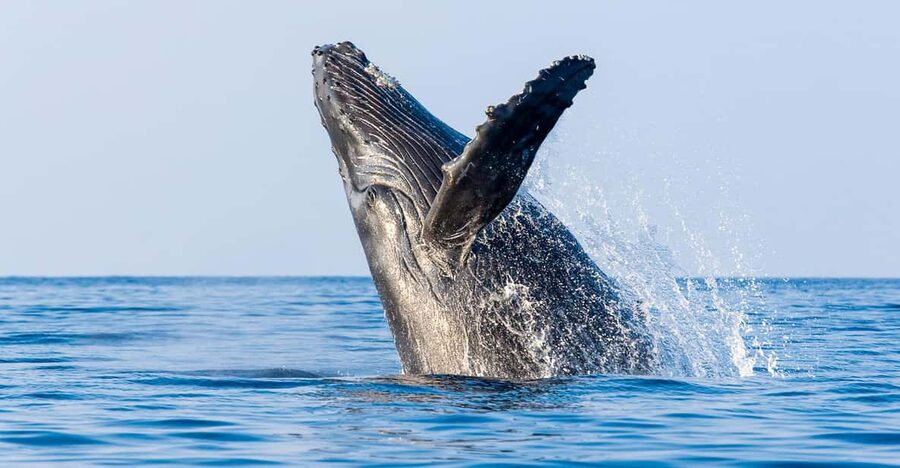
Big whales, small boat, real ocean suspense. The Kailua-Kona whale watching cruise gives you 150 minutes on the water, with humpbacks, dolphins, and the chance to hear whales sing through an underwater hydrophone. I especially like the close viewing opportunities and the friendly crews, including captains such as Bryce, Aidan, Jacob, and Simon. The main drawback is simple: whales are wild animals, so a spectacular breach is never promised.
I also like the free snacks and drinks, a small touch that matters when you are on a boat with children or anyone prone to getting hungry. The covered boat and attentive crew add comfort, but the public-address system has been hard to hear for some people, and loud music may distract you from the whales.
Key things to know before you book
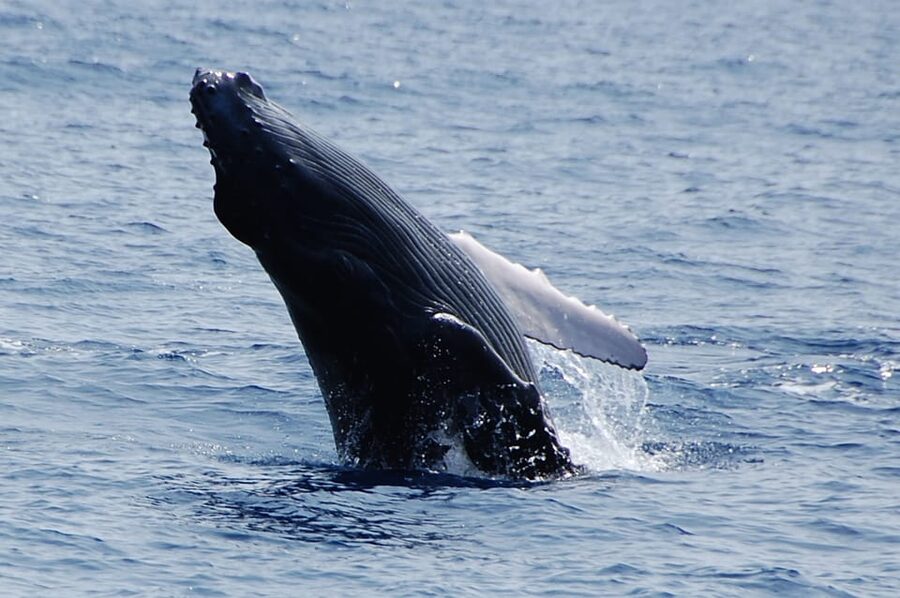
- You can hear whale songs underwater: A hydrophone speaker brings the sounds of humpbacks into the boat, not just the sights above the waves.
- The cruise leaves from Honokohau Harbor: The meeting point is about 4.5 miles south of Kona Airport and 3.5 miles north of Kailua-Kona.
- Sightings can include more than humpbacks: Dolphins, flying fish, sharks, rays, and even a whale shark have been reported during past trips.
- The boat carries about 24 people: A smaller boat can make it easier to follow sightings and hear the crew, though movement may feel more noticeable on the ocean.
- The crew works hard for sightings: Captains have repositioned the boat, stayed out longer, and kept searching when whale activity was slow.
- The $115 price is fair for a 2.5-hour outing: Snacks, drinks, narration, and the hydrophone are included, but transport to the harbor is not.
Why Hawaii is a winter nursery for humpbacks
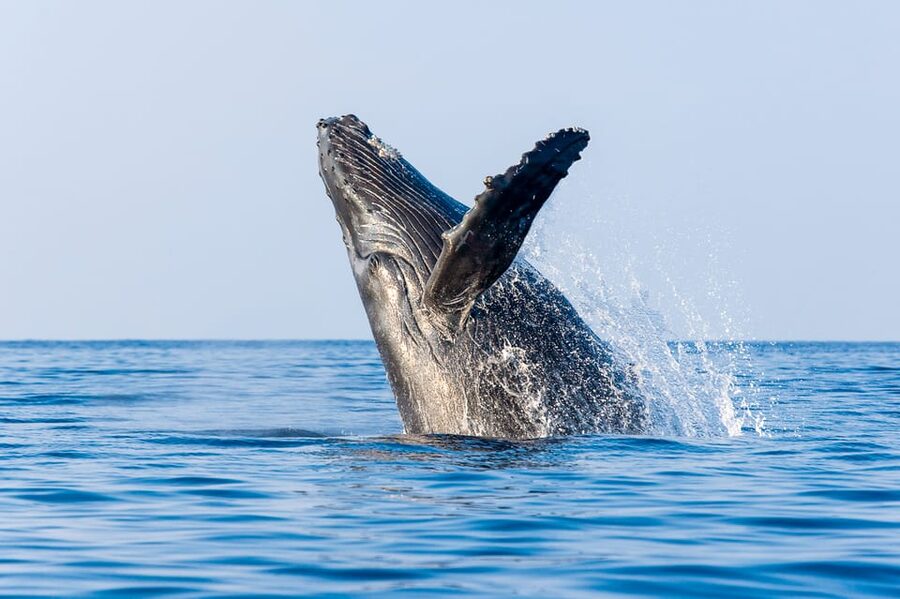
Hawaii is the only United States state where humpback whales mate, give birth, and nurse their young. The warm water, underwater visibility, different ocean depths, and lack of natural predators make these waters useful for mothers and calves.
That context changes what you are watching. You are not simply looking for a large animal passing by. You might see a mother swimming with a calf, a whale lifting its flukes, a breach, or males competing for access to females.
The most exciting moments are often brief. One cruise may bring a whale close to the boat, while another may offer distant blows and flukes. That uncertainty is part of the deal, and the crew is clear that no sighting can be guaranteed.
The activity offers another cruise if no whales are spotted, but it does not offer a refund for that reason. I would treat the extra cruise as useful protection if your schedule allows a second attempt, not as a promise that every departure will deliver a dramatic show.
More Whale Watching Cruises in the USA:
- Boston: City Cruises Whale Watching Cruise
★ 4.5 · 4,710 reviews - City Cruises Boston Whale Watching Cruise by High-Speed Boat
★ 4.5 · 3,115 reviews - San Diego Whale Watching Cruise
★ 5.0 · 2,317 reviews
Checking in at Honokohau Harbor
You meet the crew at Honokohau Harbor, near the pavilion and public restrooms. After turning into the harbor, take the first right, follow the road as it curves left, and continue to the large parking area. From there, drive left toward the boat ramp.
This is a self-drive outing. Hotel pickup and drop-off are not included, so allow enough time to reach the harbor, park, and find the pavilion. The meeting point is close to both Kona Airport and Kailua-Kona, which makes it practical for people staying in the Kona area.
The harbor itself is not the attraction. Think of it as a working launch point, not a sightseeing stop. The useful part is the clear meeting location and the short transfer from land to open water.
Arrive ready for sun and spray. Bring sunscreen, a hat, sunglasses, and a long-sleeve jacket or sweatshirt. Even a warm Hawaiian day can feel cool once the boat is moving, especially if you remain in a shaded area.
The first minutes on the water
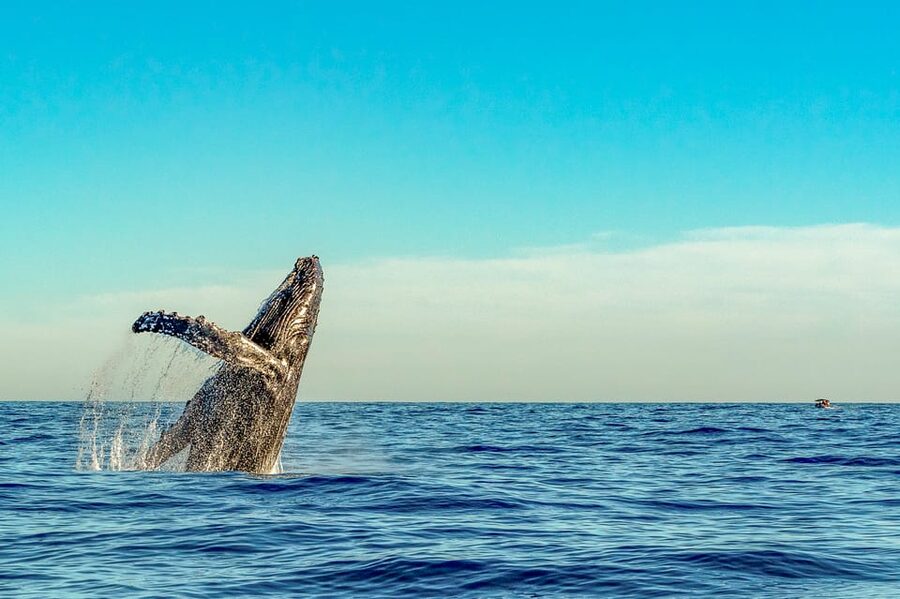
The 2.5-hour cruise begins with the boat leaving Honokohau Harbor and heading toward the areas where whales have been seen. There is no fixed sequence of whale encounters, since the captain must respond to reports and fresh sightings.
That makes the opening portion a mix of movement and watching. Keep your eyes on the water, but do not expect constant action. A blow can appear and vanish quickly, and several people may point in different directions at once.
The crew helps by directing your attention. Past captains have been praised for getting passengers into a good viewing position and continuing to search after the first sighting. That work matters because whales can surface on either side of the boat, and a few seconds can determine whether you see a back, a tail, or nothing at all.
Dolphins may also appear early in the trip. Some outings have included spinner dolphins near the harbor, along with flying fish and other marine life. These sightings are bonuses, not scheduled parts of the cruise, but they can make the ride interesting before the humpbacks appear.
Following whales from a small catamaran
A 24-person catamaran has a useful balance. It is large enough to feel stable and comfortable, but small enough that the crew can speak directly to people on board and reposition the boat for a sighting.
The boat is covered, which helps with intense sun and light rain. You still need sun protection, since open viewing areas can expose you to strong light reflected off the water. The setup also gives you a choice between staying under cover and moving to a better viewing angle.
The captain may turn the boat toward a whale, wait, then reposition as the animal surfaces again. You might see a whale several hundred yards away, or one may come much closer. One account described getting within roughly 400 to 500 yards, while other outings had whales come right beside the boat.
That range is a useful reality check. Close in whale watching does not necessarily mean the animal is beside your seat. The best viewing depends on the whale, the conditions, and the need to respect safe distances.
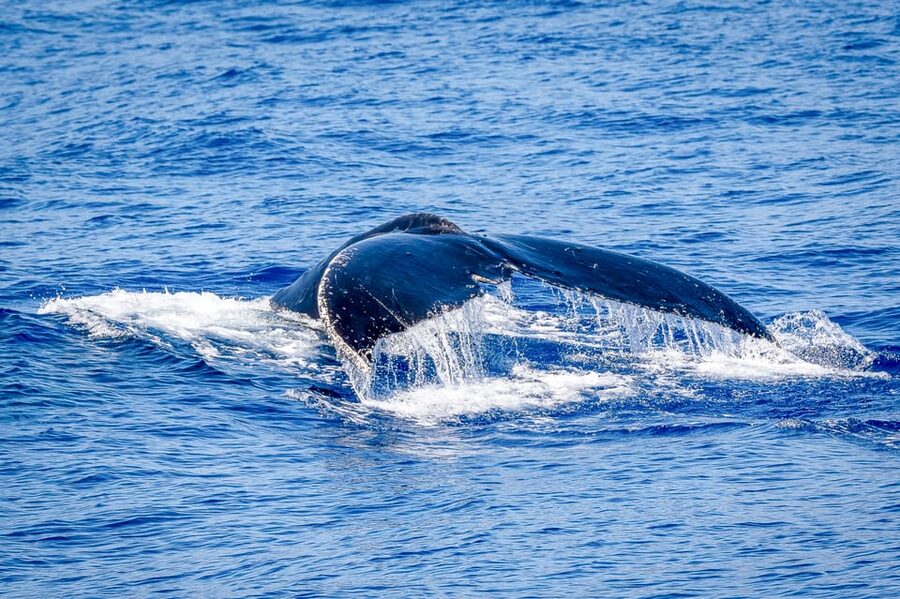
You may see a fluke disappear below the surface, a back rolling through the water, a breach, or a pectoral fin slapping the sea. A full breach is rare enough that you should not measure the cruise only by that event. Several good sightings can make a strong trip even without a movie-style jump.
A few more days afloat around the USA worth a look
- Chicago Architecture River Cruise
★ 5.0 · 15,756 reviews - Boston Duck Boat Sightseeing City Tour with Cruise Along Charles River
★ 4.5 · 9,378 reviews - Best Niagara Falls US Tour W/Boat Ride, Cave & More Wonders!
★ 5.0 · 8,372 reviews - NYC: Circle Line 2h Harbor Lights Cruise Skip-The-Box-Office
★ 4.6 · 8,222 reviews
Hearing the whales through the hydrophone
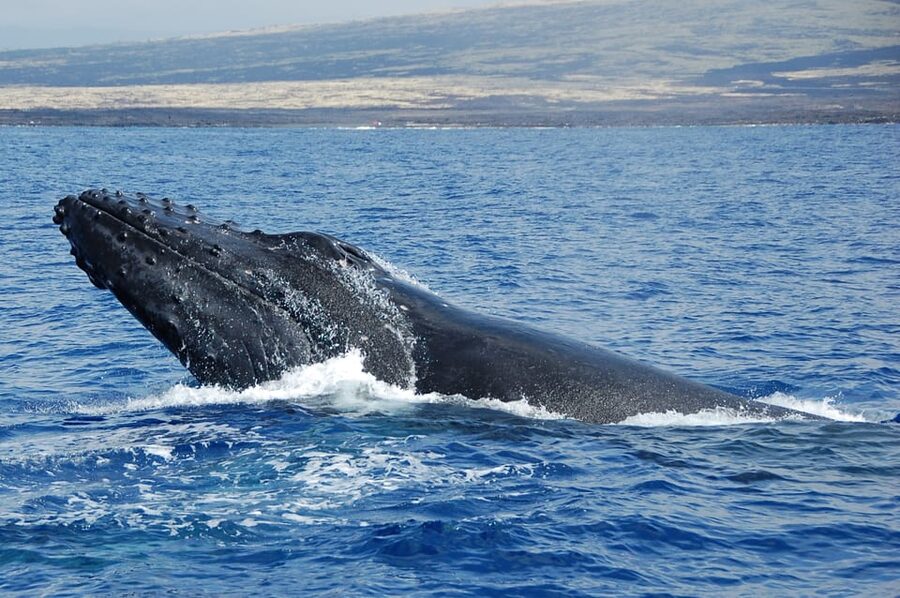
The hydrophone is one of the strongest reasons to choose this cruise instead of treating whale watching as a simple search for fins. It places an underwater microphone in the sea and sends the sounds through a speaker on the boat.
Humpback songs can be haunting, deep, and surprisingly clear. You may hear the sounds while watching for a whale at the surface, which connects the visible animal with the hidden world below the boat.
This part is especially good for children because it gives them something to follow even during a quiet stretch. Instead of waiting in silence for a breach, you can listen, watch, and learn how whales use sound.
The sound system has one weakness. One person found the public-address system difficult to understand from the main deck and felt that loud rock music interfered with whale watching. Other outings included island music and jokes, which some people enjoyed. If quiet observation matters most to you, tell the crew or choose a place where the narration is easier to hear.
What the crew adds to the outing
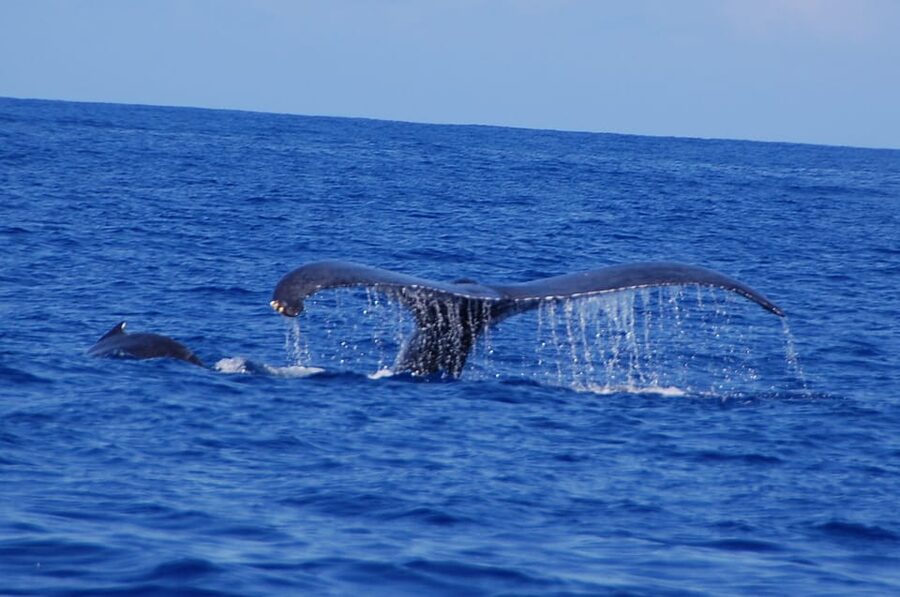
The crew is a major part of the experience. Captains and guides named in past outings include Bryce, Aidan, Jacob, Simon, Eloe, Ula, Hunter, Kiwami, Aj, Noel, Hayden, and Jonah.
The praise is consistent for their friendliness, humor, safety checks, and effort to point out sightings. Bryce was singled out for putting the boat in a good position, while Aidan was described as witty and entertaining. Jacob received praise for explaining whales and positioning the boat for strong views.
You can expect narration about whale behavior and local sea life in English. The crew may also help children stay engaged. One crew member entertained young children by blowing bubbles, and snacks were offered throughout the trip rather than simply placed out at the start.
That personal attention helps during slower periods. A captain cannot command a whale to surface, but a good crew can explain what you are seeing, keep you comfortable, and continue searching instead of giving up after one brief encounter.
Some trips have run longer than the planned time while the crew searched for better sightings. Do not assume every cruise will extend, but the reports suggest a strong effort to make the most of the time at sea.
Snacks, drinks, and family comfort
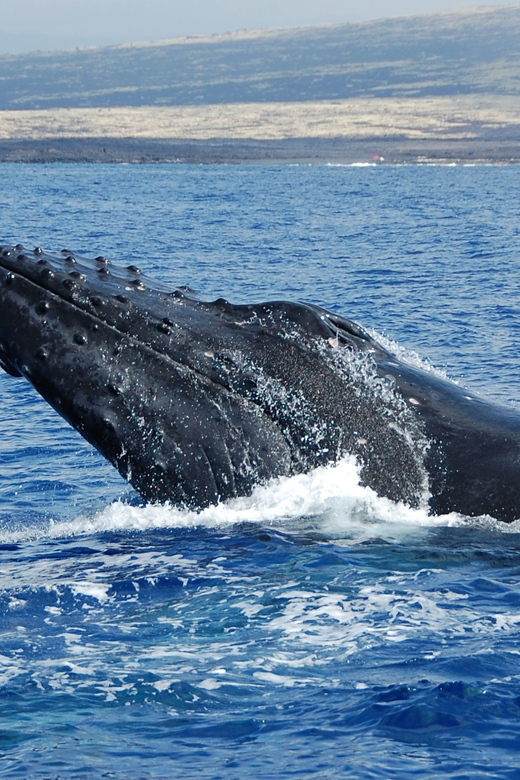
The included food is basic but practical: chips, granola bars, Rice Krispies treats, fruit snacks, water, juice, and ginger ale. This is not a meal, so eat beforehand if you need something substantial.
For a family, these supplies are useful. Children can have a snack during a quiet spell, and adults do not need to bring a full bag of food aboard. Drinks also help on a sunny outing, although you should still think about your own water needs.
The covered boat received praise for comfort, and the crew has been attentive about checking on people. That does not remove the physical demands of a boat ride. The experience is not suitable for pregnant women or people with heart or back problems.
Motion sickness deserves serious attention. Bring medication if you need it, with the most effective timing listed as the night before and at least one hour before departure on the day of the cruise. Waiting until you feel sick is usually a poor plan.
Is $115 a good value?
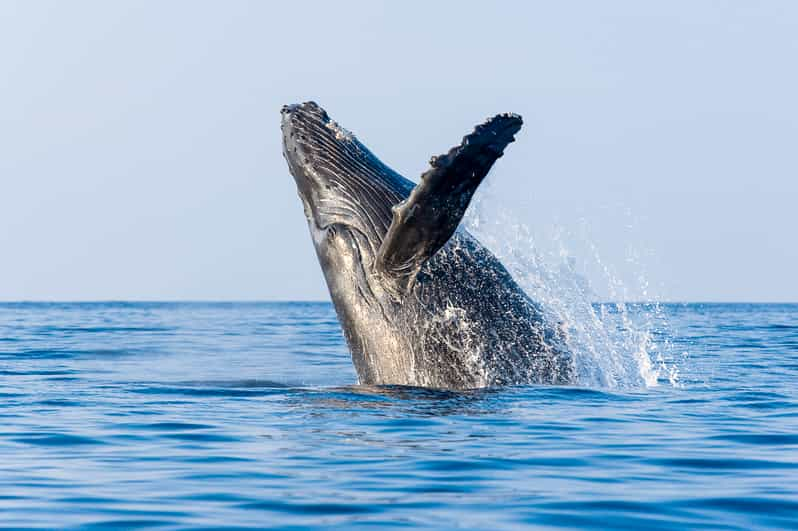
At $115 per person, this is not a cheap harbor ride, but it is a reasonable price for 150 minutes on the water with a captain, crew, snacks, drinks, and a hydrophone.
The value depends on what you want. If you only want a guaranteed close-up whale photograph, no boat can promise that. If you value the full outing, including the search, the sea views, the narration, and the possibility of dolphins or other wildlife, the price makes more sense.
The crew’s work is part of the value. They do not simply take you offshore and wait. They watch for blows, track movement, explain behavior, and adjust the boat. Several outings included repeated whale sightings, calves, breaches, slapping, dolphins, rays, or sharks.
You should still compare the cost with your schedule. A 2.5-hour cruise takes a meaningful part of your day, plus driving and check-in time. For most people staying near Kona, it is a manageable half-day activity. For someone based far from the harbor, the driving may reduce the appeal.
The best timing and what you might see
The supplied departure information does not identify one universally best time. One person felt a sunset outing offered more active whales than a morning trip, but that is personal experience rather than a guarantee.
I would choose the departure that fits your schedule and leaves room for a second attempt if needed. Whale behavior changes, and a morning cruise can be excellent while an evening cruise can be quiet.
Possible sightings include:
- Humpback whales, including mothers and calves
- Breaching, tail slapping, flipper slapping, and flukes
- Spinner dolphins
- Flying fish
- Sharks, including a hammerhead in one outing
- Manta rays
- A whale shark in one reported encounter
These animals are not part of a set program. The central subject is the humpback whale, and everything else is an added stroke of luck.
Practical booking details
The activity is conducted in English, with a live guide. The listed price is $115 per person, and the duration is 150 minutes.
The booking information allows cancellation up to 24 hours in advance for a full refund, but another condition says tours cancelled within 48 hours of departure are non-refundable. Because those terms do not line up perfectly, I would confirm the exact cancellation rule before paying.
You can reserve now and pay later, which helps if you are still arranging your Big Island schedule. If no whales are spotted, the stated remedy is another cruise at no charge, not a refund.
Bring the items that matter most:
- Sunscreen
- Hat and sunglasses
- Long-sleeve jacket or sweatshirt
- Motion sickness medicine if needed
- A camera or phone with a secure grip
Keep expectations realistic. The boat may get close, but the animals control the show. The most memorable moment could be a breach, a mother and calf, a sudden dolphin pod, or simply hearing a whale sing beneath the boat.
Who should book this cruise?
I would recommend it to families, couples, and anyone who wants a guided ocean outing without committing to a full day. The snacks, covered boat, humor, and attentive crew make it approachable for mixed-age groups.
It is also a good choice if hearing whales matters as much as seeing them. The hydrophone gives the cruise an extra layer that a standard wildlife search may not offer.
I would think twice if you are highly prone to seasickness, have a back or heart condition, are pregnant, or need a quiet boat with no music. The public-address issue is worth noting if clear narration is important to you.
Book it if you can accept uncertainty and appreciate the process of searching. Skip it if you need a guaranteed close encounter or if the open-water setting is likely to make you uncomfortable. At $115, the trip earns its value through the crew’s effort, the hydrophone, and the chance to witness wild whales in their Hawaiian nursery, not through a promise of constant action.
FAQ
Where does the whale watching cruise meet?
Check in at Honokohau Harbor near the pavilion and public restrooms. The harbor is about 4.5 miles south of Kona Airport and 3.5 miles north of Kailua-Kona.
How long is the cruise?
The cruise lasts 150 minutes, or 2.5 hours.
What is included in the price?
The cruise includes snacks, water, juice, ginger ale, and access to a hydrophone speaker for listening to whale songs.
Is hotel pickup included?
No. Hotel pickup and drop-off are not included, so you must make your own way to Honokohau Harbor.
What happens if no whales are spotted?
You receive another cruise for free if whales are not spotted. The stated policy does not provide a refund for missing whales.
What should I bring?
Bring sunscreen, a hat, sunglasses, a long-sleeve jacket or sweatshirt, and motion sickness medicine if needed. Motion sickness medicine is listed as most effective when taken the night before and at least one hour before the cruise.
Just added around the USA
- San Francisco: Bridge to Bridge Cruise (90-minutes)★ 4.7 · 1,010 reviews
- San Francisco: Skip-the-Line 1-Hour Bay Cruise by Boat★ 4.6 · 1,483 reviews
- San Francisco Bay Sunset Cruise by Luxury Catamaran★ 4.8 · 1,097 reviews
- San Francisco: Golden Gate Bridge Catamaran Cruise★ 4.9 · 499 reviews
- San Diego: Patriot Jet Boat Thrill Ride★ 4.8 · 395 reviews
- San Francisco: Inside Alcatraz Tour with Bay Cruise★ 4.5 · 1,577 reviews
- San Francisco: Alcatraz with San Francisco Bay Cruise★ 4.5 · 1,049 reviews
- Alcatraz Island Prison Tour & Bay Cruise Combined Package★ 4.6 · 399 reviews
Whale Watching Cruises, compared.
Eco-Yacht Whale and Dolphin Watching and Swimming
Read our review →
Los Cristianos Respectful No-Chase Whale and Dolphin Safari
Read our review →

Costa Adeje: Whale & Dolphin Eco-Cruise with Snacks & Drinks
Read our review →
Los Gigantes: Dolphin & Whale Watching Cruise with Swim Stop
Read our review →Browse the lists this tour appears in