
REVIEW · WHALE WATCHING CRUISES
Kaikoura: Whale Watching Cruise
Whales reward patience here. Kaikoura’s whale watching cruise takes you into the Pacific for close looks at giant sperm whales, with dolphins, seals, albatross, and dramatic mountain views filling out the trip. I like the excellent crew commentary and the spacious catamaran, which gives you room to watch from outside or warm up indoors. The main catch is rough water, and seasickness can be serious.
I also like the care built into the operation. The boat uses quieter engines, has nonpolluting toilets, and includes local Māori knowledge alongside marine science. Guides such as Caolan, Mikayla, and Captain Jack have been singled out for clear explanations and sharp wildlife spotting. Your $104 buys a three-hour-and-fifteen-minute outing, but nature still makes no promises.
Key points to know before you sail
- The target is the giant sperm whale: These huge toothed predators often appear at the surface for a short time before making a long descent, so keep your camera ready.
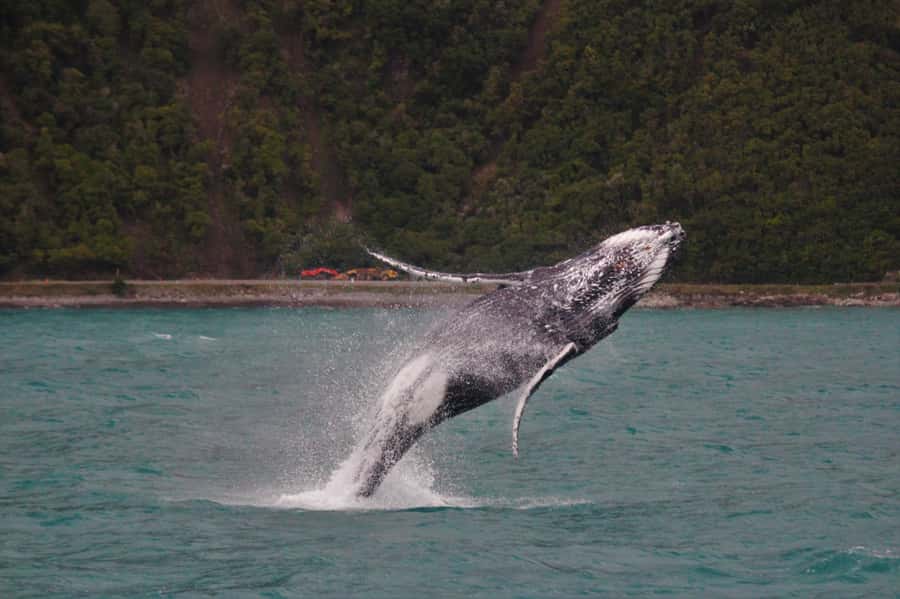
- Wildlife can go well beyond whales: Dolphins, fur seals, albatross, petrels, penguins, orcas, and even blue or humpback whales have appeared on different trips.
- Allow 210 minutes total: The cruise itself lasts just over two hours, with check-in, a safety briefing, and bus transfers taking up the rest.
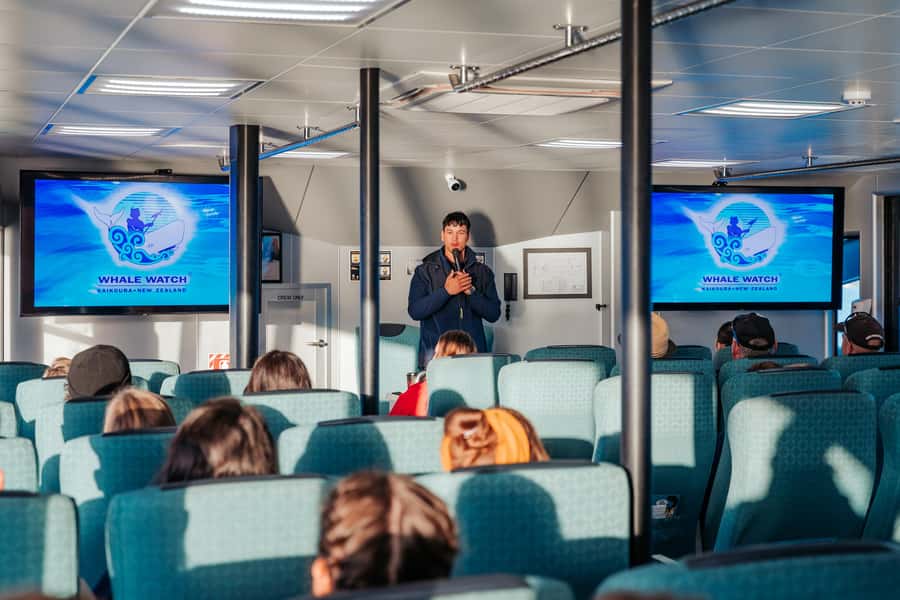
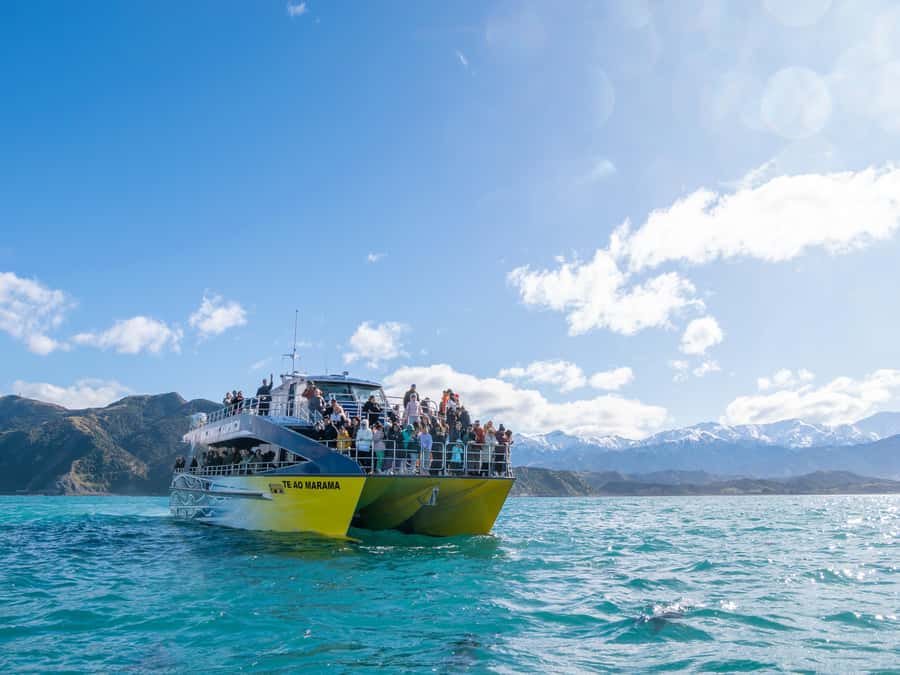
- Expect a modern, spacious catamaran: Outdoor viewing decks, air-conditioned seating, plasma screens, and plenty of room make this more comfortable than a cramped boat ride.
- Sea conditions matter: The cruise can be choppy, and motion sickness tablets are available at the office. Take precautions before arrival.
- Your whale sighting is not guaranteed: The operator has offered a substantial refund when no whale was found, but you should still book for the experience of being at sea, not only for a photograph.
Why Kaikoura is such a good place for whale watching
Kaikoura sits beside a deep underwater canyon close to shore. That setting brings nutrient-rich water and a steady supply of food for marine life. You do not need to spend a full day at sea to reach whale habitat, which is one reason this outing fits neatly into a South Island road trip.
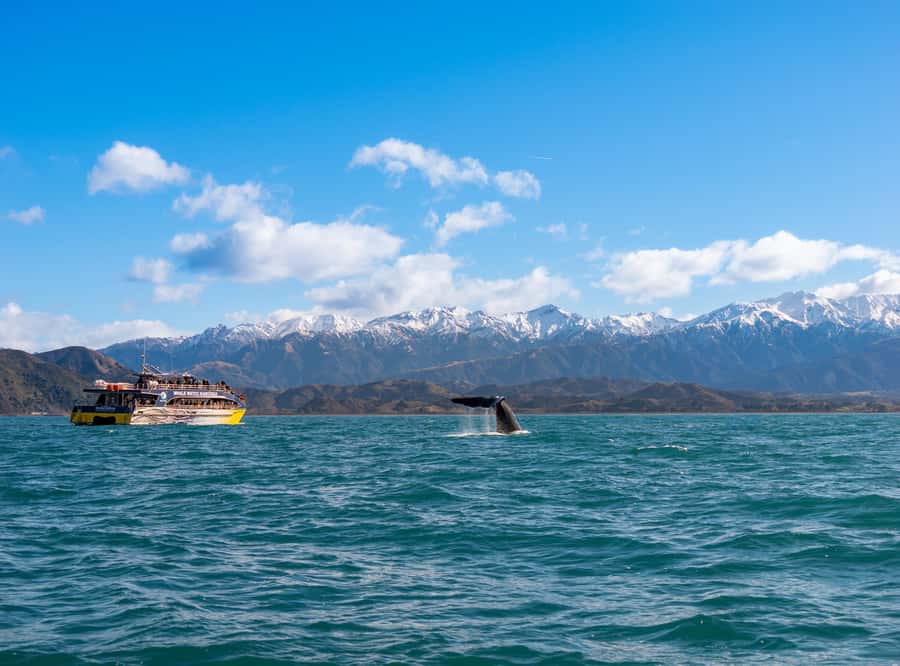
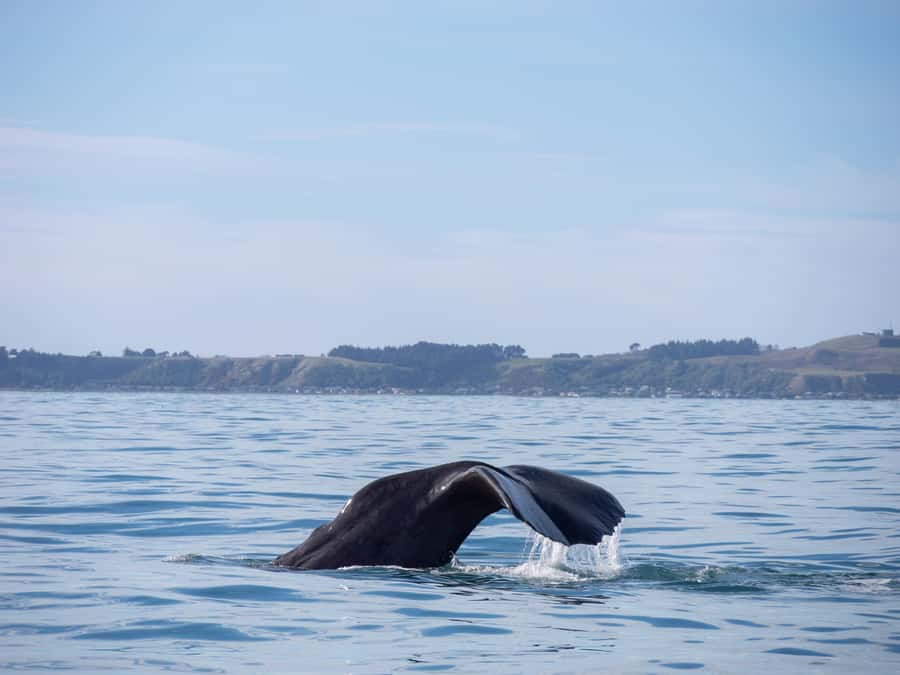
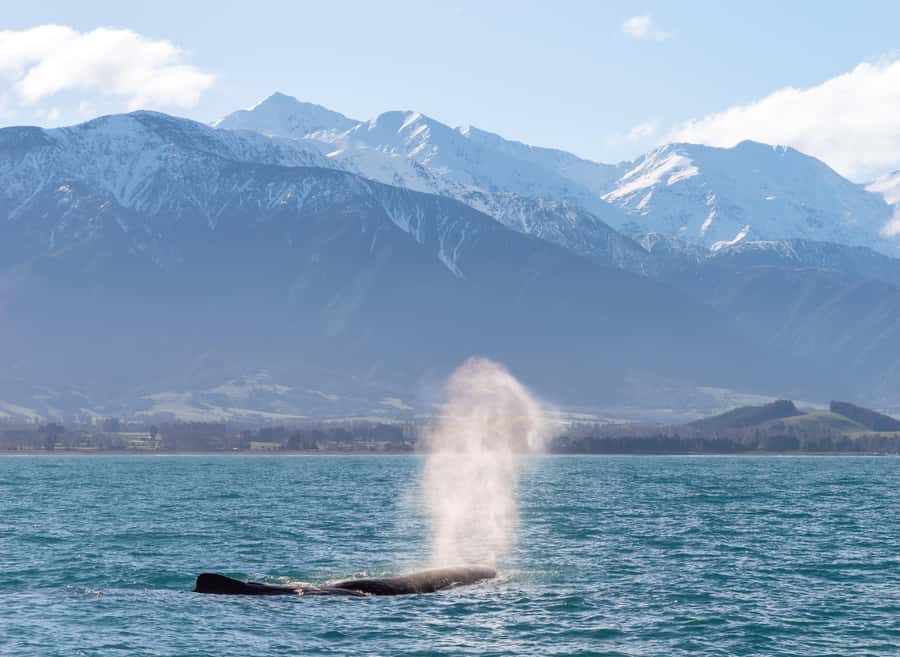
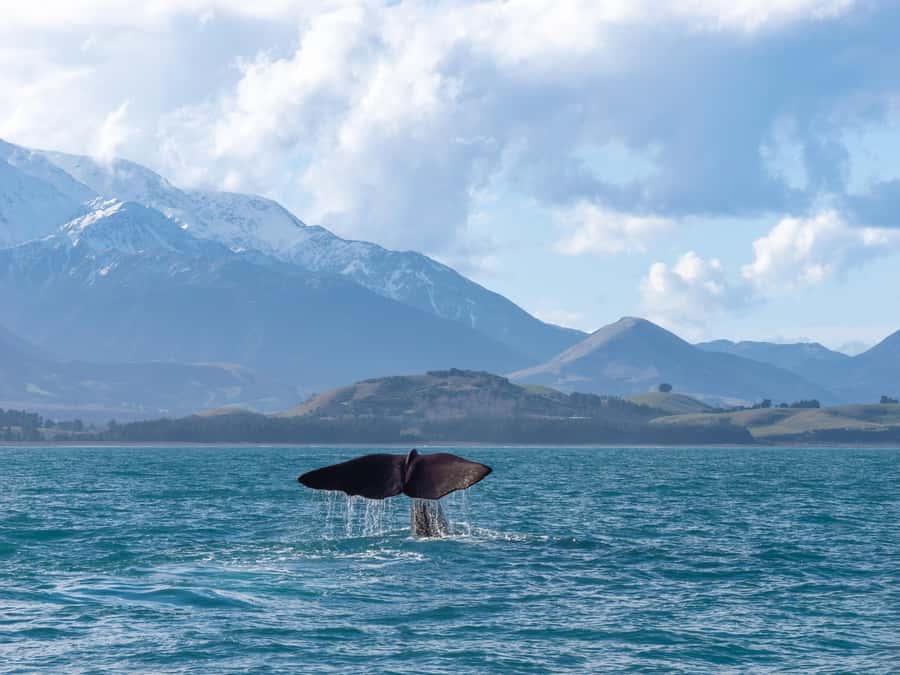
The star is the giant sperm whale. These animals are the world’s largest toothed predators, and their appearance is very different from the dramatic breaches people often picture. You may first see a dark back, a breath at the surface, and then the tall tail lifting clear as the whale heads down for another feeding session.
That quiet tail moment can be more memorable than a staged show. The crew warns you when a whale is preparing to leave the surface, giving you a fair chance to watch instead of frantically pointing a phone at empty water.
More Whale Watching Cruises in New Zealand:
- Whale Watching in Kaikoura by Boat
★ 4.5 · 2,906 reviews - Auckland: Whale and Dolphin Watching Half-Day Eco Cruise
★ 4.5 · 1,072 reviews - Auckland: Tikapa Moana Whales, Dolphins and Islands Cruise
★ 3.9 · 292 reviews
From the Kaikoura office to the open sea
Your experience begins at the Whale Watch Kaikoura office, not directly at the boat. Check-in, the safety briefing, and a short bus transfer are part of the schedule, so allow the full 210 minutes rather than counting only the advertised cruise time.
The exact sailing time can change because of availability and weather. After booking, the local operator confirms the time by email, so check your messages before setting out. Arrive prepared for a schedule adjustment, especially if your South Island plans are tightly packed.
The bus transfer keeps the waterfront process orderly. Once aboard, the crew provides information about the animals, the local habitat, and the rules for responsible viewing. The commentary continues as you move between possible wildlife locations, so the travel time is not simply dead time.
Passenger numbers are kept below the catamaran’s full capacity. That matters because wildlife watching works best when you can move between viewing areas without fighting for a rail position. The boat has large outdoor decks, comfortable indoor seats, air conditioning, and plasma screens showing marine wildlife animation.
The catamaran ride: comfortable, fast, and sometimes rough
The vessel has been widely praised for being clean, modern, powerful, and spacious. The engines are designed to reduce underwater noise, an important detail when the purpose of the trip is to observe marine animals without adding unnecessary disturbance.
You can spend the trip outside for fresh air and a clear view, or sit inside during the briefing and animated presentations. The indoor space is useful if the wind rises, though you will want to step outside quickly when the crew announces a whale.
The boat handles wind and waves well, but that does not mean the ride will be gentle. Some departures are smooth, while others are properly choppy. One particularly candid account described many passengers becoming sick in rough conditions, even though the service remained helpful and well run.
Take that warning seriously. If you are prone to motion sickness, use the precautions you normally trust before reaching the office. Tablets are available for purchase there, but waiting until you already feel ill is a poor strategy. The crew helps passengers who become unwell, yet seasickness can consume the very experience you paid to enjoy.
Finding a sperm whale at the surface
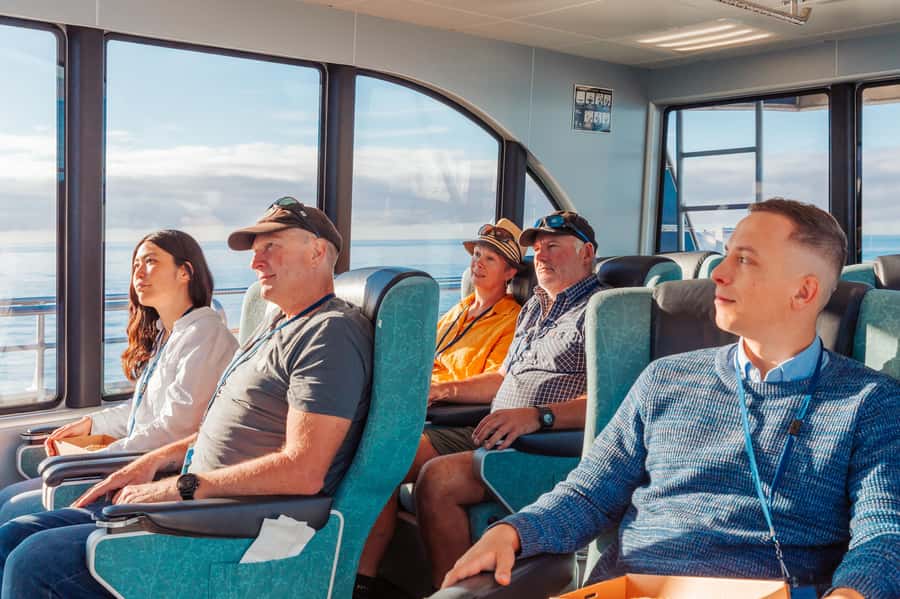
The crew uses experience, communication, and underwater sound to locate whales. Some trips include sonar-based announcements about a whale’s movement, and a hydrophone has allowed passengers to hear whale clicks. That gives the trip a useful scientific edge instead of reducing it to a simple hunt for a fin.
Once a sperm whale appears, the viewing pattern is usually brief but rewarding. You may watch it breathe for several minutes, see the back roll forward, and then catch the distinctive tail as it heads below. Keep your eyes on the water and your camera ready, but do not let photography take over.
Sightings vary widely. Some outings have produced one sperm whale. Others have seen two or three, with one whale appearing more than once. A few fortunate trips have included five whale sightings, but you should treat those as exceptional days, not a promise.
Distance also varies. One outing produced two sperm whales that were visible but farther away than hoped, while another included close views. The crew can find and approach wildlife, but it cannot control where an animal surfaces or how long it stays there.
That is the central bargain of any whale trip. You are paying for skilled searching, a safe boat, interpretation, and access to the habitat. You are not buying a guaranteed performance.
A few more days afloat around New Zealand worth a look
- Waitomo: Glowworm Caves Guided Tour by Boat
★ 4.5 · 4,908 reviews - Premium Milford Sound Small Group Tour & Cruise from Queenstown
★ 5.0 · 3,001 reviews - Cruise Milford NZ Small Boutique Cruise Experience
★ 5.0 · 2,930 reviews - Queenstown: Walter Peak Gourmet BBQ & Lake Whakatipu Cruise
★ 4.8 · 2,713 reviews
Dolphins, seals, and birds add variety
Dolphins often turn the trip from a whale search into a full marine wildlife outing. Large pods of dusky dolphins have been seen swimming beside the boat, leaping, and performing repeated acrobatics. One pod numbered around 300 and held attention for 15 to 20 minutes.
Dolphins may become your favorite part of the day. They are active, visible, and easier to follow than a whale that surfaces once before disappearing. Keep looking in several directions because a pod can spread across the water around the catamaran.
Fur seals are another common addition, often seen close to the boat. Their presence gives you a better chance of seeing wildlife even during a quiet whale period. Blue penguins have also appeared on some outings, along with pilot whales, orcas, and humpback whales.
Birdwatching is not an afterthought. The area can produce wandering albatross, other albatross species, Cape petrels, and additional seabirds. The crew helps identify them, making the ride worthwhile for anyone who enjoys marine birds as much as marine mammals.
You might see only the main target and a few birds, or you might encounter dolphins, seals, several whale species, and an orca on the same morning. That range is part of the appeal, but it also shows why no two sailings are identical.
Commentary that connects science with Māori knowledge
The onboard narration is one of the strongest parts of the outing. Guides explain whale behavior, the local marine environment, and what you should watch for before each animal surfaces. The tone can be informative and light without turning the trip into a long lecture.
The operation also includes indigenous knowledge connected to the creatures and the area. The business is owned by the Ngāi Tahu iwi, and the trip presents Māori values and the community’s relationship with whales as part of the experience.
I value that context because it places the animals in a living cultural setting. You are not simply ticking off a whale from a list. You are learning why the area matters to the local community and how responsible viewing fits into that relationship.
Named crew members have received particular praise for their ability to explain what is happening. Caolan was noted for an excellent presentation, Mikayla for warmth and strong marine knowledge, and Captain Jack for locating whales and timing the boat well. Guides cannot manufacture a sighting, but a good guide makes a quiet stretch at sea much more interesting.
The commentary may repeat some information on the return journey. That is a minor weakness, especially if you have already heard the explanation earlier. Still, the scientific detail, local perspective, and live updates add real value to the fare.
The value of the $104 price
At $104 per person, this is not a cheap add-on. It is a substantial activity cost, especially for a family, and food and drinks are not included. You should budget for the fare as a dedicated half-day experience.
The price makes more sense when you count what is included: transport from the office to the boat, a modern catamaran, more than two hours on the water, expert narration, safety support, wildlife interpretation, and access to one of New Zealand’s best-known whale habitats.
A whale sighting makes the value feel strong. Two sperm whales, a large dolphin pod, seals, and seabirds can turn the outing into one of the best parts of a South Island itinerary. A quiet day still gives you the boat ride, coastal scenery, and commentary, but the value feels less certain if the animals remain distant.
The operator’s approach to missed sightings also matters. On one no-whale departure, an 80 percent refund was provided. That is not a stated guarantee for every sailing, so do not treat it as automatic, but it shows an effort to recognize when the main purpose of the trip has not been met.
Mountain views and the rhythm of the trip
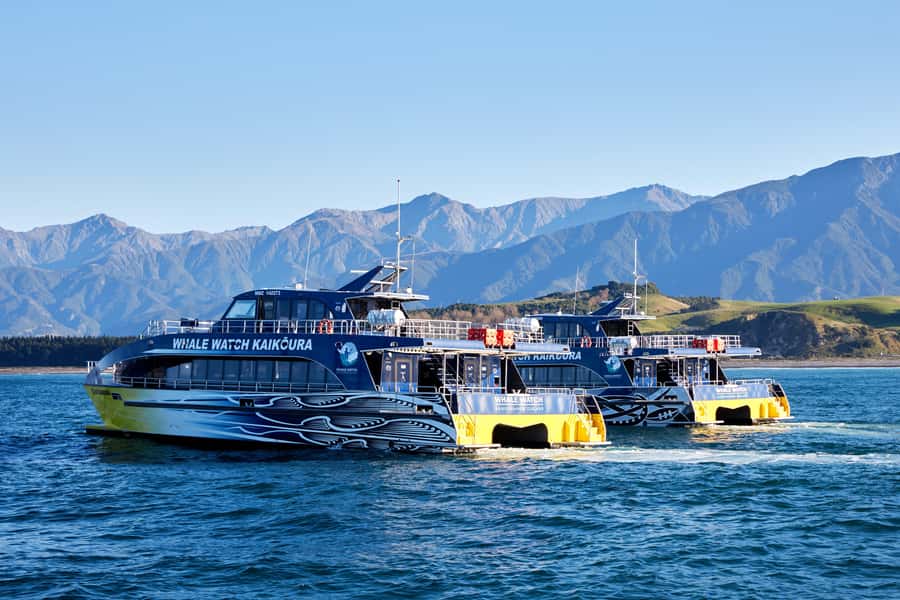
The sea is the focus, but the views back toward Kaikoura are part of the experience. The mountainous coastline gives you a striking setting while you wait for a whale to surface. Keep your camera pointed toward land occasionally, especially during longer stretches between sightings.
The trip has a natural rhythm. You leave the harbor area, listen to an explanation of the habitat, travel toward likely wildlife locations, stop when something is found, and then move again. You may spend time scanning empty water, and that is normal.
The crew tries to make each pause useful with commentary and tracking information. Still, patience is required. If you need constant action, a whale cruise may feel slow during a quiet period. If you enjoy watching the sea and being alert to sudden movement, the waiting becomes part of the fun.
Who should book this cruise
I would choose this for anyone who wants a serious wildlife outing rather than a short scenic boat ride. It suits couples, families with children aged three and older, photographers, birdwatchers, and anyone eager to see sperm whales in their natural setting.
The trip is wheelchair accessible, which makes the modern vessel useful for more visitors. Children under three cannot join, and the minimum age can also depend on sea and weather conditions at check-in.
You should think twice if you suffer badly from motion sickness, have only a narrow window in Kaikoura, or need a guaranteed close-up encounter. Rough water can be difficult, and wildlife sightings cannot be scheduled like a museum visit.
The cruise does offer free cancellation up to 24 hours before departure and a reserve-now, pay-later option. Those terms help if your South Island route is still moving around, but weather can still force a reschedule. When that happens, the operator has been prompt about providing new options.
My verdict: book it with realistic expectations
I would book the Kaikoura whale watching cruise if you can spare the time, tolerate open water, and accept that nature sets the timetable. The strongest reasons are the skilled crew, spacious boat, thoughtful Māori and scientific interpretation, and the real chance of seeing a sperm whale raise its tail above the Pacific.
Bring warm layers, prepare for motion sickness before check-in, and leave room in your schedule in case weather changes the sailing time. Choose a later departure only if it fits your plans, since one account found that earlier trips can help the crew locate whales for later outings, though no time guarantees better sightings.
Book it for the entire experience: the mountain-backed coast, dolphin pods, seals, birds, live narration, and the possibility of a giant sperm whale appearing beside the boat. If you need certainty, save your money. If you can enjoy a wild encounter on nature’s terms, this is one of Kaikoura’s most worthwhile outings.
FAQ
How long does the Kaikoura whale watching cruise take?
Allow 210 minutes, or about three hours and fifteen minutes, for the full experience. This includes check-in, the safety briefing, bus transfers, and just over two hours on the water.
How much does the cruise cost?
The listed price is $104 per person. Food and drinks are not included.
What animals might I see?
The main target is the giant sperm whale. You might also see fur seals, dolphins, wandering albatross, other seabirds, penguins, orcas, pilot whales, humpback whales, blue whales, and sharks.
Is the whale sighting guaranteed?
No. The cruise depends on favorable weather and the natural movements of marine life. Sightings can be close or distant, and some departures may not find a whale.
What should I do if I get seasick?
Take your usual motion sickness precautions before arriving at the office. Motion sickness tablets are available for purchase there, and the crew can assist passengers who become unwell.
Can young children join the cruise?
Children under three cannot join. The minimum age is three, but this can also depend on sea and weather conditions at check-in.
Is the cruise wheelchair accessible?
Yes, the experience is listed as wheelchair accessible. The vessel also has indoor seating, air conditioning, outdoor viewing decks, and nonpolluting toilets.
Just added around New Zealand
- Queenstown: Queenstown Lake Cruise and Walter Peak Farm Tour★ 4.8 · 950 reviews
- Queenstown: Milford Sound Small-Group Tour w Cruise & Lunch★ 4.9 · 523 reviews
- Queenstown: Lake Whakatipu Boat Trip★ 4.7 · 633 reviews
- Queenstown: Milford Sound Flight and Cruise★ 4.9 · 283 reviews
- Queenstown: Lake Wakatipu Scenic Cruise★ 4.7 · 264 reviews
- Queen Charlotte Sound Mail Boat Cruise from Picton★ 4.7 · 541 reviews
- Queen Charlotte Track: Cruise & Self-Guided Hike from Picton★ 4.8 · 383 reviews
- Paihia: Glass Bottom Boat Tour to the Hole in the Rock★ 4.7 · 319 reviews
Whale Watching Cruises, compared.
Eco-Yacht Whale and Dolphin Watching and Swimming
Read our review →
Los Cristianos Respectful No-Chase Whale and Dolphin Safari
Read our review →

Costa Adeje: Whale & Dolphin Eco-Cruise with Snacks & Drinks
Read our review →
Los Gigantes: Dolphin & Whale Watching Cruise with Swim Stop
Read our review →Browse the lists this tour appears in