
REVIEW · WHALE WATCHING CRUISES
Hermanus: Whale and Dolphin Watching Boat Trip
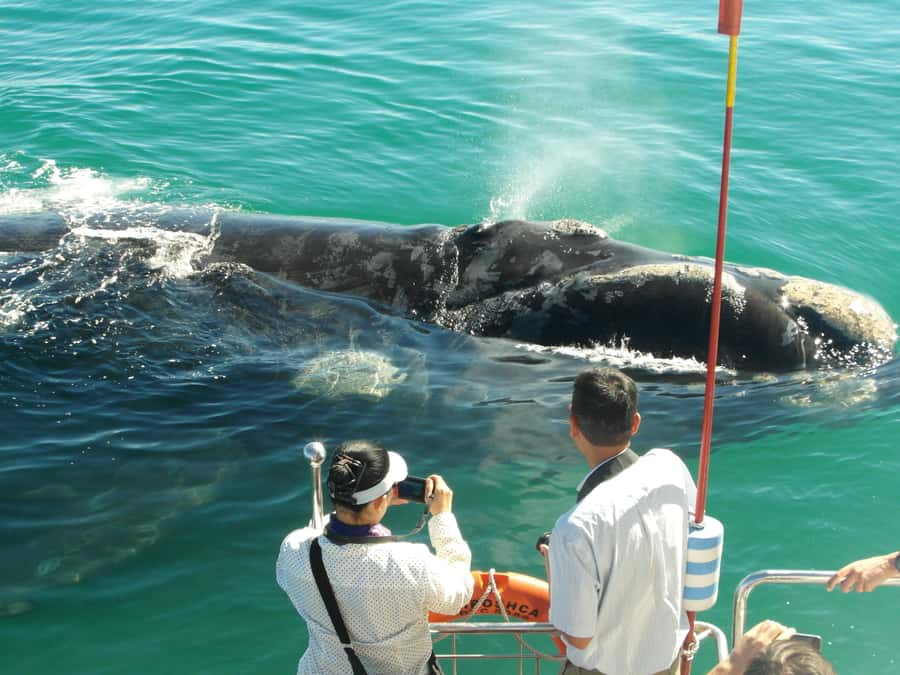
Whales can make a two-hour cruise feel very short. This Hermanus outing gives you a close look at southern right, humpback, and Bryde’s whales, along with dolphins and sometimes seals, from a purpose-built catamaran. I like the specialist guide, who explains animal behavior while you watch it happen, and I like the crew’s careful, conservation-minded approach. The main catch is simple: wildlife follows its own schedule, so a boat trip can end with few or no whales, especially late in the season.
I also like the wide viewing areas and the small touches, such as tea, coffee, cupcakes, soft drinks, and crisps. The boat is large enough that a full group does not necessarily feel cramped, though the best rail positions can be claimed early. Sea sickness is a real possibility on the ride back, so take precautions before boarding if you know you are sensitive.
Key points at a glance
- Southern right whales are the main seasonal prize: June through December is the broad whale-watching period, with the strongest reports concentrated around winter and spring.
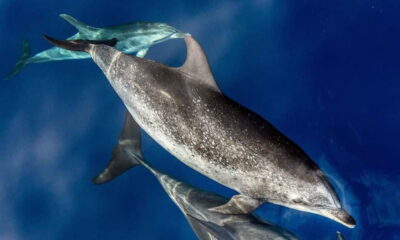
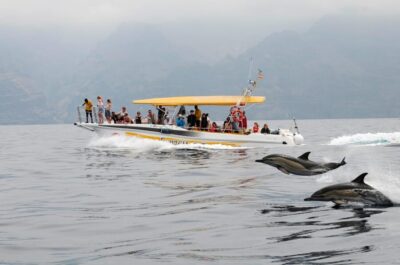
- Dolphins can save a quiet whale day: Large pods, sometimes numbering in the hundreds, have been seen swimming near the boat.
- The catamaran gives you room to move: You can spread out across several viewing areas, but the front edge may become crowded.
- The guide adds real value: Names noted on different departures include Ken, Jacques, David, and Josh, with explanations covering whales, behavior, and local marine life.
- The crew puts safety first: Children under 12 must wear life jackets throughout, and staff have helped passengers who felt seasick or had difficulty standing.
- Budget about $98 per person: The price includes the cruise, guide, and light refreshments, but harbor entry and optional video cost extra.
Why Hermanus is such a strong whale-watching base
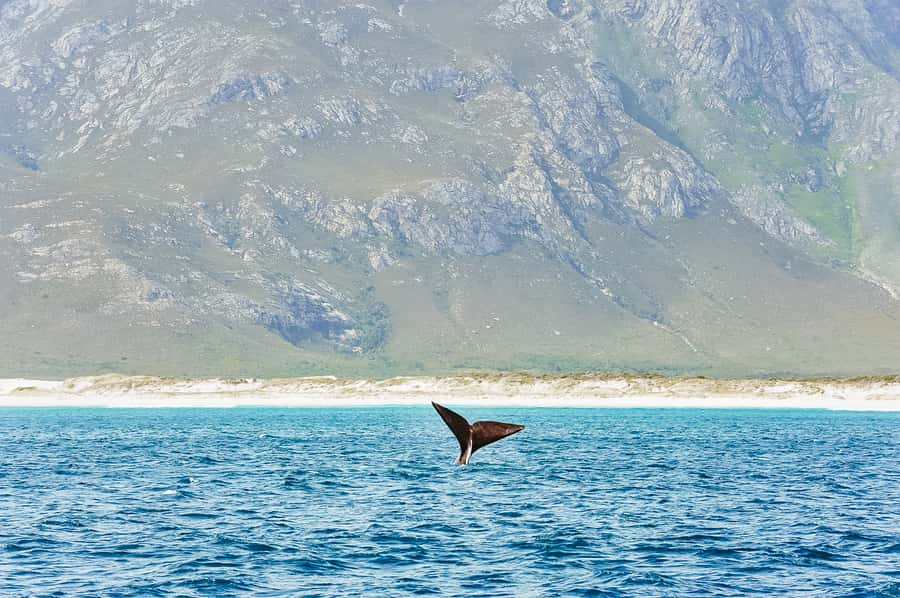
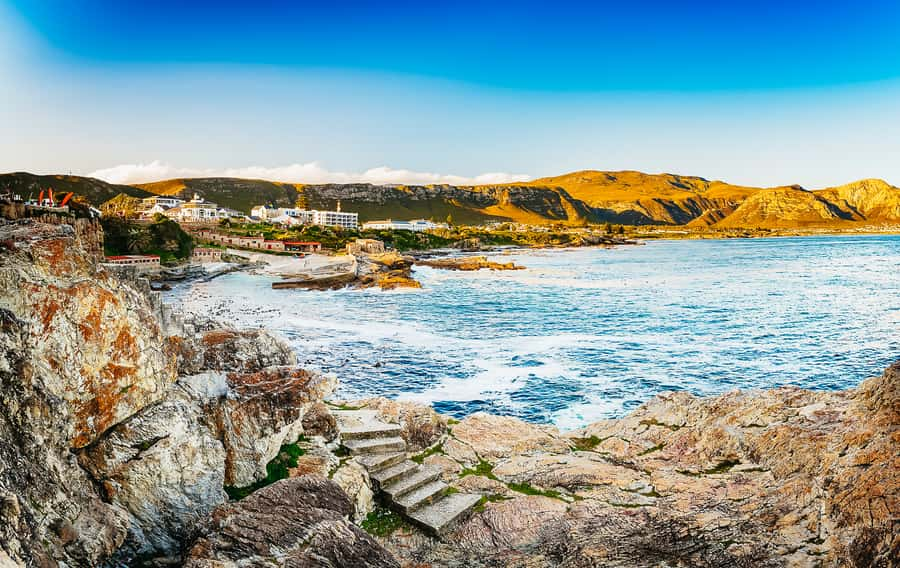
Hermanus sits beside Walker Bay, a stretch of coast famous for seasonal whale sightings. You do not need to rely only on a boat here. Whales can sometimes be seen from shore, which gives the town a useful advantage: if the sea is rough, or if you prefer land-based watching, your day is not entirely tied to the vessel.
The boat trip gives you a different view. From the water, you can watch a whale surface, roll, or swim alongside the catamaran rather than seeing only a distant back from the cliffs. Reports from different departures include southern right whales with calves, groups of four whales, Bryde’s whales, dolphins, and seals. Breaching has also occurred, but you should treat dramatic behavior as luck, not a promise.
Southern right whales are the main seasonal attraction. Humpback whales may also visit during the appropriate period, while Bryde’s whales are present year-round according to the tour information. That makes the trip worthwhile outside the peak southern right period, but your odds and sightings can change sharply with the month.
More Whale Watching Cruises in South Africa:
- Hermanus: Boat Based Whale Watching Experience
★ 4.4 · 1,180 reviews - From Cape Town: Hermanus Whale Watching Boat Trip
★ 4.4 · 378 reviews - Plettenberg Bay: Whale Watching Boat Cruise
★ 4.4 · 362 reviews
Checking in at the Whale Shack
You check in 30 minutes before departure at Southern Right Charters’ welcome center, called the Whale Shack. It is on the lower level of Hermanus New Harbour. Allow time to find the harbor and walk to the correct level, since arriving at the last minute gives you less time to settle in or ask questions.
There is a R5 harbor entrance fee, payable when you enter. That small charge is not included in the $98 price, so keep a little cash or suitable payment method ready.
The pre-boarding period is more useful than a simple queue. A whale specialist gives an introduction to Hermanus whales and the marine life you may encounter. Tea and coffee have been available before departure, and one account also notes cupcakes. This short briefing helps you understand what to look for once you are offshore, especially if you are new to whale watching.
Boarding the purpose-built catamaran
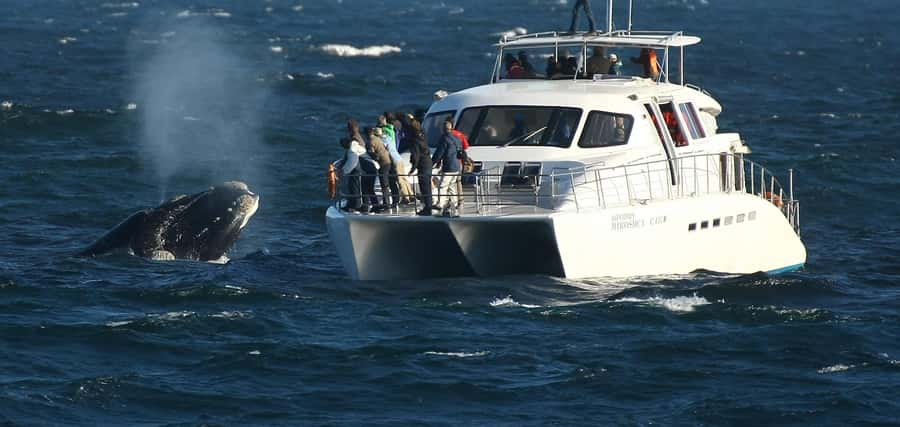
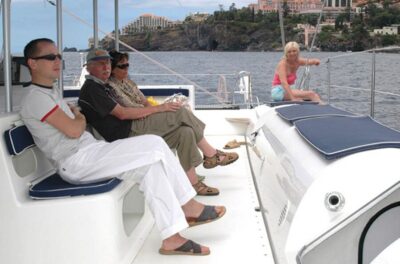
The vessel is designed for passenger comfort and viewing. It is not a tiny fishing boat with everyone squeezed onto one side. You have several places to spread out, and the broad catamaran layout gives you a better chance of seeing wildlife from different angles.
That said, do not expect every passenger to have an unobstructed front-row view. The forward deck can become popular, and some people may hold their position there for much of the trip. I would move around rather than treating one rail as your personal viewing station. The crew can also help passengers find a better place, especially if standing is difficult.
Flat, sensible footwear is recommended. Wear clothing suitable for the weather and bring a windbreaker, even if the harbor feels warm. Conditions on open water can feel much cooler, and the ride back may be bouncy. Several accounts point to motion sickness as the main physical challenge, not because the boat is poorly run, but because the sea can change.
Take sea sickness tablets before the trip, following the packet directions, if you need them. One passenger who became ill received help from the sailors, and the crew has also assisted people who struggled to stand. Still, prevention is much better than spending your two hours staring at the deck.
The two-hour search for whales and dolphins
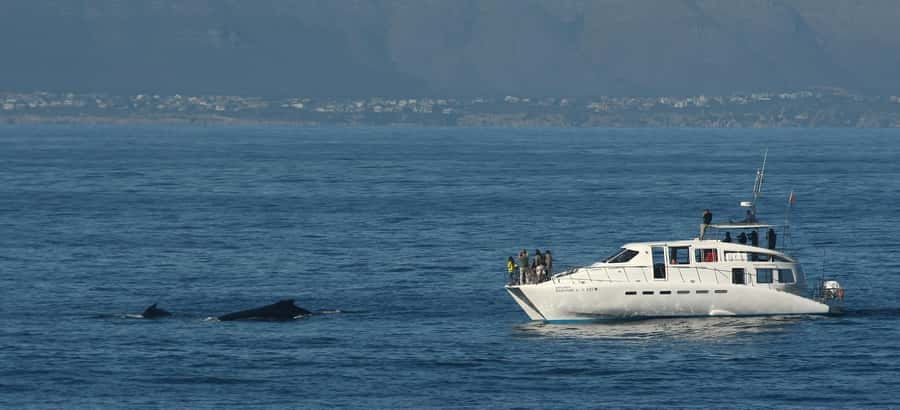
Once the catamaran leaves the harbor, the guide begins interpreting what appears around you. This is not simply a boat ride with a crew pointing at distant fins. The specialist explains behavior as the action unfolds, helping you understand why a whale may surface in one place, turn away, or remain close to the vessel.
The crew searches areas visited by southern right and humpback whales at different times of year. Bryde’s whales and dolphins may be seen throughout the year, and seals are another possible sighting. The exact route depends on where marine life is found, so the itinerary is naturally flexible.
That flexibility matters. A good skipper does not follow a fixed sightseeing loop if animals are elsewhere. The crew has been praised for finding the right spots while giving whales room to approach. One particularly strong feature is the stated effort not to chase animals. You may wait, reposition, or watch from a respectful distance rather than getting a guaranteed close pass on demand.
When conditions line up, the experience can be remarkable. Whales have swum right beside the boat, with dolphins moving toward a southern right whale and calf. Other departures have seen large dolphin groups, several whale species, seals, and mothers with young. Those moments are why the price can feel fair.
But I would keep expectations honest. One departure produced no whale sightings or other wildlife, and the company provided a 50 percent refund. That was an unusually disappointing result for someone who had driven a long distance, but it also shows the basic truth of nature watching: the operator can search well, but cannot summon whales.
More Dolphin Watching Boat Trips in South Africa:
- Tenerife: Eco-Yacht Whale and Dolphin Watching and Swimming
★ 4.7 · 15,619 reviews - Los Cristianos Respectful No-Chase Whale and Dolphin Safari
★ 4.6 · 12,782 reviews - From Funchal: Ecological Catamaran Dolphin Whale Watching
★ 4.5 · 8,204 reviews - Albufeira: Benagil Caves & Dolphin Watching Speed Boat Tour
★ 4.6 · 6,316 reviews
The guide and crew make the difference
The strongest part of this outing is the human side. The guide is not there only to announce a sighting. You get background on Hermanus, southern right whales, and animal behavior before and during the cruise.
Specific guides named on different departures include Ken, Jacques, David, and Josh. David was praised for spotting every movement around the boat, while Josh was remembered for his passion and clear explanations. Since staffing can change, I would not book around one particular name, but these examples show the level of personal attention the operator aims for.
The crew also handles the unglamorous work that makes a boat trip pleasant. They help with photography, serve refreshments, watch for marine life, and assist passengers who need a steadier viewing position. Safety receives repeated attention, including life jackets and clear supervision for children.
The operator’s conservation focus is another positive. The boat company has been described as contributing marine-life data to international agencies. I would not treat the excursion as a formal research trip, but this suggests your wildlife encounter supports more than sightseeing.
Refreshments, photography, and the optional film
Light refreshments and crisps are included. Depending on the departure, you may also receive tea, coffee, cupcakes, or soft drinks. These are modest extras, but they help during a windy morning on the water.
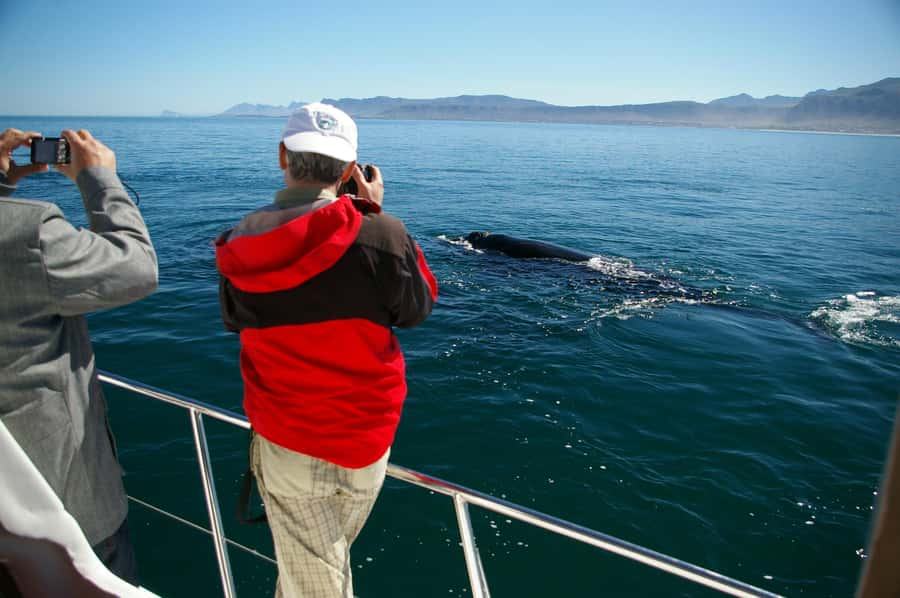
Bring a camera, but leave the tripod and binoculars at home. Binoculars are specifically not advised, likely because the boat’s movement makes them awkward and because sightings may happen close enough for the naked eye. Keep your camera secure and use a windbreaker pocket or bag that will not blow open.
An expert videographer and drone may record the trip. The resulting movie or short film can be purchased afterward. The footage offers an unusual angle, since aerial video can show the whole boat and the animals from above.
The optional video is not included, and one price mentioned for it is R440. I would decide before the trip how much that souvenir matters to you. If you want a polished record of the experience, it could be worthwhile. If you already have good camera equipment and mainly want the live encounter, the added cost may feel steep after paying for the cruise.
How much value do you get for $98?
At $98 per person, this is not a cheap harbor ride. You are paying for a licensed whale-watching operation, a two-hour catamaran cruise, a specialist guide, crew support, and refreshments. The price makes the most sense if you value interpretation and a comfortable viewing platform, not just transportation to the bay.
The boat size helps. A sizeable group does not automatically mean a cramped experience, and the viewing areas allow you to move around. The guide also adds something you would not get from watching whales from shore: an explanation of what you are seeing in real time.
Still, value depends heavily on sightings. A morning with close whales, calves, dolphins, and seals can feel like money well spent. A quiet sea can make the same price harder to swallow, especially if you have driven from Cape Town and paid for a full day around the trip.
I would build some flexibility into your schedule. The operator has rearranged trips after bad weather, with good communication, and cancellation is free up to 24 hours before departure. You can also reserve now and pay later, which helps if your plans are still moving. These policies do not guarantee wildlife, but they reduce the risk of being locked into a poor-weather departure.
Timing, children, and access
Early departures can be rewarding. A 6 a.m. trip has produced plenty of whale sightings, and sunrise over Walker Bay can add a special quality to the outing. An early boat may also suit you if you want the rest of the day free for Hermanus or the Cape route.
All ages are welcome, but the child rules are strict. Every child under 12, including infants, must wear a life jacket for the entire cruise and remain under adult supervision. For children under two, the jacket may be uncomfortable, and the operator strongly advises motion sickness syrup for infants.
No prams are allowed. The vessel is not wheelchair accessible, and non-folding or electric wheelchairs cannot be accommodated. Baby strollers and drones are also prohibited. If you have limited mobility but can stand and board without a wheelchair, contact the operator before booking so you are not surprised at the harbor.
Who should book this cruise?
I would recommend it to anyone who wants a close marine-life encounter with useful explanation rather than a silent sightseeing ride. It suits families with older children, photographers who can work without a tripod, couples looking for a memorable coastal outing, and first-time whale watchers who want staff to point out behavior they might otherwise miss.
It is also a good match for you if you can accept uncertainty. You may see whales close to the catamaran, but you may instead get dolphins, seals, Bryde’s whales, or a quiet run across the bay. That uncertainty is part of wildlife watching, not a flaw unique to this company.
I would think twice if you become very seasick, need wheelchair access, or have only one rigid day in Hermanus and would be upset by a poor sighting. In those cases, shore viewing may be a better backup, since whales can sometimes be seen from the coast.
Should you book Southern Right Charters?
Yes, if whales are high on your Western Cape list and you want a well-run boat with strong guiding, safety, and room to watch from different spots. The 4.6 rating from 807 bookings reflects consistently strong satisfaction, with particular praise for the crew, close sightings, guide quality, and calm handling of weather changes.
Choose the season carefully if southern right whales are your main goal. June through December is the stated season, but late-season trips can bring more dolphins and fewer whales. If you book near the edge of that period, do so because you are happy to see marine life generally, not because a whale is guaranteed.
FAQ
Where does the whale-watching boat trip begin?
Check in at Southern Right Charters’ Whale Shack welcome center on the lower level of Hermanus New Harbour.
How early should I arrive?
You should check in 30 minutes before your scheduled departure.
How long is the boat trip?
The cruise lasts two hours, although one departure ran about 30 minutes longer to allow time for a whale sighting.
What animals might I see?
Possible sightings include southern right whales, humpback whales, Bryde’s whales, dolphins, and seals.
When is the whale-watching season?
The stated whale-watching season runs from June through December. Southern right and humpback whales are seasonal, while Bryde’s whales may be seen year-round.
Is food included?
Light refreshments and crisps are included. Tea, coffee, cupcakes, and soft drinks have also been served on some departures.
Is the tour suitable for children?
Yes. All ages are welcome, but children under 12 must wear life jackets for the full time onboard and remain under adult supervision.
Can I bring a stroller or pram?
No. Baby strollers and prams are not allowed onboard.
Is the boat wheelchair accessible?
No. The vessel is not wheelchair accessible, and wheelchair users are not considered suitable for this activity.
What should I wear and bring?
Wear weather-appropriate clothing, a windbreaker, and flat sensible shoes. Bring a camera, but do not bring a tripod or binoculars. Take sea sickness tablets in advance if needed.
Is the harbor entrance included in the price?
No. A R5 entrance fee is payable when you enter the harbor.
Can I buy a video of the trip?
Yes. A movie or short film of the tour may be purchased separately. It is not included in the cruise price.
Just added around South Africa
- Plettenberg Bay: Whale Watching Boat Cruise★ 4.4 · 362 reviews
- Knysna: 75-Minute Lagoon Boat Cruise★ 4.5 · 445 reviews
- From Cape Town: Hermanus Whale Watching Boat Trip★ 4.4 · 378 reviews
- Hermanus: Boat Based Whale Watching Experience★ 4.4 · 1,180 reviews
- Hartbeespoort: 2-Hour Dam Cruise with South African Food★ 4.4 · 621 reviews
- Durban: 30-Minute Harbor Boat Cruise★ 4.7 · 665 reviews
- Durban Point Waterfront: Luxury Canal Boat Cruise★ 4.4 · 298 reviews
- Cape Town: Sunset Catamaran Cruise on Table Bay with Bubbles★ 4.6 · 591 reviews
Whale Watching Cruises, compared.
Eco-Yacht Whale and Dolphin Watching and Swimming
Read our review →
Los Cristianos Respectful No-Chase Whale and Dolphin Safari
Read our review →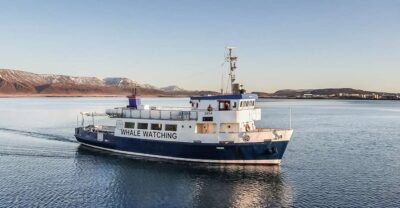

Costa Adeje: Whale & Dolphin Eco-Cruise with Snacks & Drinks
Read our review →
Los Gigantes: Dolphin & Whale Watching Cruise with Swim Stop
Read our review →Browse the lists this tour appears in